PM POSHAN sets calorie and protein targets but does not mandate specific foods like eggs.
States decide school meal menus, leading to variation in whether eggs are included or replaced.
Nutrition experts and global models emphasise overall dietary quality rather than single-food choices.
How India's Mid-Day Meal Nutrition Rules Actually Work
PM POSHAN sets nutrition targets for school meals, but states decide menus — including whether eggs are served or replaced with vegetarian protein.

Summary
Every few months, a debate over eggs in school meals resurfaces somewhere in India. One side argues that eggs are an inexpensive source of protein for children. The other points to dietary preferences, religious beliefs or the availability of vegetarian alternatives. The discussion often becomes a political argument. What receives less attention is the policy framework that governs school meals in the first place.
The answer lies in PM POSHAN, the Centre's flagship school feeding programme. Contrary to popular perception, the scheme does not require schools to serve specific foods such as eggs. Instead, it sets nutritional targets and leaves states with considerable flexibility in deciding how those targets are met.
Understanding that distinction is key to understanding why some states serve eggs several times a week, others offer vegetarian alternatives, and all of them operate within the same national framework. This explainer looks at what PM POSHAN actually requires, who decides school menus, and where eggs fit into the policy.


What Is PM POSHAN And How Does It Work?
PM POSHAN, short for Pradhan Mantri Poshan Shakti Nirman, is the school meal programme run by the Union government through the Ministry of Education. It replaced the Mid-Day Meal Scheme in 2021 but retained the core objective of providing nutritious meals to children studying in government and government-aided schools.
According to PM POSHAN guidelines issued by the Ministry of Education, the programme is intended to address classroom hunger while supporting the nutritional needs of schoolchildren. The Centre lays down nutritional norms that states are expected to meet through cooked meals served during the school day.
The guidelines specify that primary school children should receive meals providing around 450 calories and 12 grams of protein. For upper-primary students, the prescribed norm is about 700 calories and 20 grams of protein.
Advertisement
Funding is shared between the Centre and states, while implementation is largely handled by state governments. That includes menu planning, procurement of ingredients and decisions on what foods are served. In effect, the Union government sets the nutritional benchmarks, while states decide how those benchmarks are achieved within the framework laid down by PM POSHAN.
Are Eggs Mandatory In Mid-Day Meals?
PM POSHAN guidelines do not make eggs compulsory. Parliamentary replies by the Ministry of Education have repeatedly stated that the responsibility for deciding menus rests with states and Union Territories.
The Centre's position, as reflected in responses to questions in Parliament, is that meals should meet prescribed nutritional norms. States may decide which foods to include based on local requirements, dietary practices and administrative considerations.
This means that the national scheme does not prescribe eggs, milk, paneer or any other specific protein source as a universal requirement. The obligation is to meet the nutritional standards set under PM POSHAN.
Advertisement
That distinction is often lost in public debates. The policy question is not whether a state is following a national egg mandate; there is no such mandate. The question is whether children are receiving the nutrition that the scheme requires.
Which States Serve Eggs To Children?
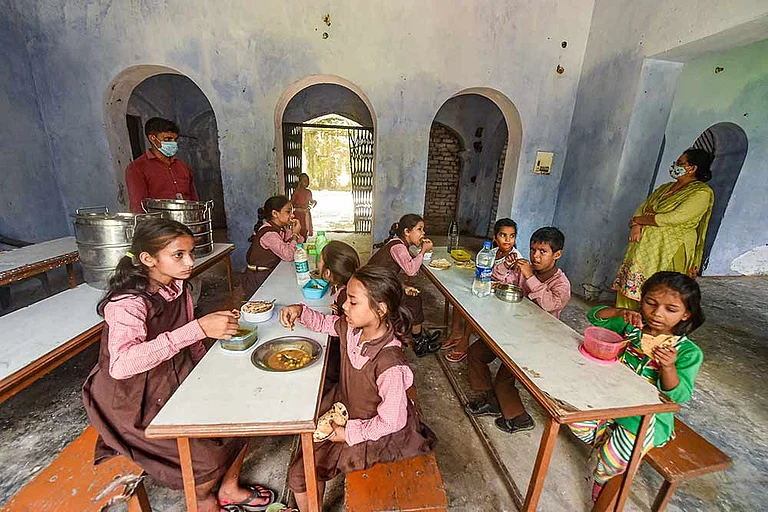
According to a Down To Earth report titled ‘Children have the right to eat eggs, onions and garlic’, states such as Tamil Nadu, Andhra Pradesh, Telangana and Odisha have included eggs in school meal menus, though frequency and implementation vary across districts and programme cycles.
It also added how different states have adopted different approaches. Some provide eggs only in selected districts or to particular categories of children. Others rely primarily on vegetarian menus while offering alternative protein sources.
Advertisement
The decisions on eggs often reflect a mix of nutritional considerations, local food habits and political choices. As a result, children in different parts of the country may receive markedly different menus despite being covered by the same national programme.
Can States Replace Eggs With Vegetarian Protein?
The flexibility built into PM POSHAN allows states to use different foods to meet the nutritional requirements prescribed by the scheme.
Parliamentary replies from the Ministry of Education have stated that states may provide alternatives where eggs are not included in school meals. Depending on local policy, these alternatives can include pulses, milk, soy products, groundnuts or paneer.
From the Centre's perspective, the critical issue is whether meals meet the prescribed calorie and protein norms. The scheme focuses on nutritional outcomes rather than mandating a particular ingredient.
However, nutrition specialists often caution against assuming that different foods are interchangeable simply because they contain protein. The broader nutritional profile of a food also matters.
Advertisement
What Nutrition Experts Say About Eggs Vs Paneer
Guidance issued by the Indian Council of Medical Research's National Institute of Nutrition (ICMR-NIN) stresses the importance of balanced diets that provide adequate protein as well as essential vitamins and minerals.
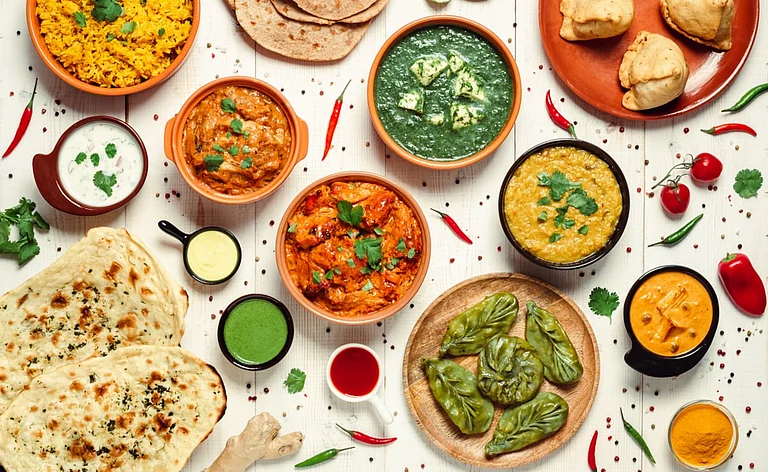
According to ICMR-NIN dietary guidance, eggs are a high-quality source of protein and also provide nutrients such as vitamin B12, vitamin D and choline, all of which play important roles in growth and development.
ICMR-NIN guidance also recognises paneer as a useful source of protein that contributes calcium and other nutrients to children's diets. However, the institute's broader dietary guidance indicates that the focus is on ensuring adequate intake of protein, energy and micronutrients among children, rather than treating the source of those nutrients as interchangeable in all cases.
For that reason, many nutrition experts argue that the debate should not be reduced to a simple eggs-versus-paneer contest. The more relevant question is whether a child's overall diet supplies sufficient protein, calories and micronutrients.
Where undernutrition remains a concern, nutritionists generally focus on ensuring that children have access to nutrient-dense foods in whatever form is locally acceptable and practically available.
How Other Countries Feed Schoolchildren
According to the World Food Programme’s guidance on school feeding programmes, it varies widely across countries depending on local diets, agricultural systems and public health priorities.
The School Meals Coalition highlights Brazil's emphasis on locally sourced food and dietary diversity, while Japan's school lunch system combines meals with nutrition education and typically includes a mix of staples, vegetables, dairy products and protein-rich foods.
The World Food Programme has also documented how several school feeding programmes in Africa aim to improve nutrition and school attendance while increasingly sourcing food from local farmers.
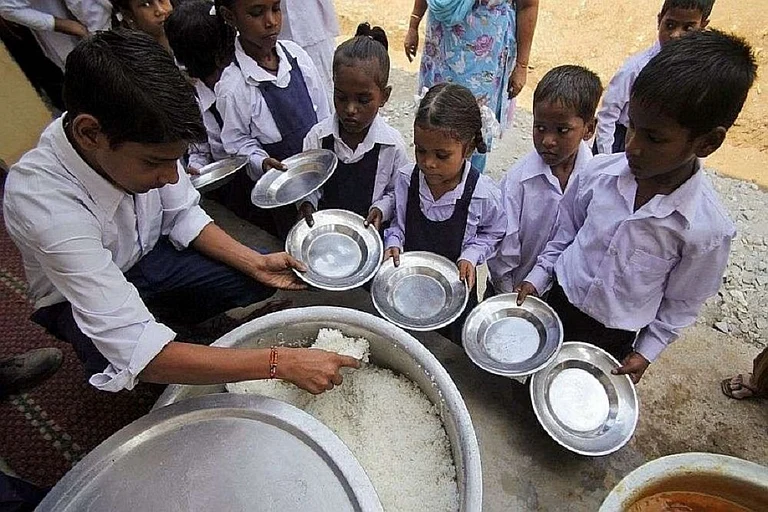
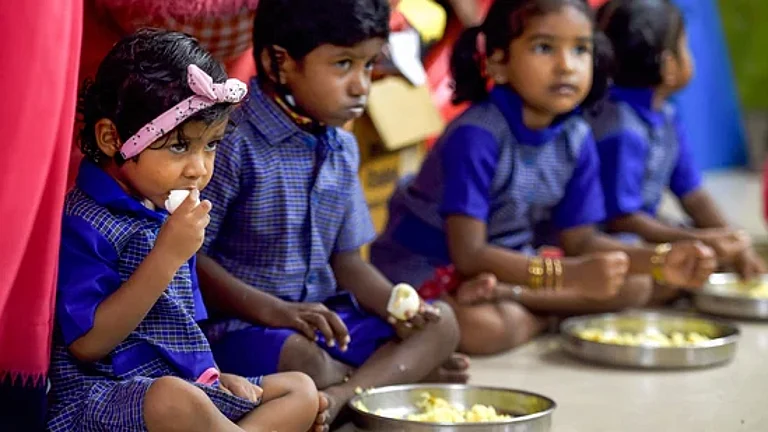
The details differ from country to country, but a common principle runs through many of these programmes: school meals are treated as part of a broader public health and education strategy rather than simply a welfare intervention.
India's PM POSHAN scheme operates on a similar principle. The Centre establishes nutritional standards, while states retain significant discretion over menus within the programme's framework.
The recurring political dispute over eggs often obscures a simpler reality: PM POSHAN does not require states to serve eggs, but it does require them to meet nutritional benchmarks designed to support children's nutrition.
Published At:
Tags