Feeds the massive irrigation network essential for Pakistan's food security and economy
Powers critical nationwide hydropower and fills vital reservoirs like the Tarbela and Mangla dams
Serves as a non-negotiable strategic asset with no viable alternative water sources
Outlook Explains | How Dependent Is Pakistan On The Indus River System?
Pakistan is existentially dependent on the Indus River System, which acts as the country's strategic lifeline by driving its agriculture, sustaining its food security, and powering its energy grid

Summary
Pakistan’s economy, food security and rural livelihoods are deeply tied to the Indus river system, making the waters flowing from the Himalayas among the country’s most critical strategic resources. The Indus basin supports one of the world’s largest contiguous irrigation networks and provides water to farms, cities, industries and hydropower projects across Pakistan.
The issue has gained renewed attention after India put the treaty in abeyance following the Pahalgam terror attack last year. While Pakistan has repeatedly described the treaty as vital to its survival, experts say its dependence on the river system is also shaped by decades of limited investment in water storage, inefficient irrigation and a rapidly growing population.

How Much Of Pakistan’s Agriculture Depends On The Indus?
Pakistan’s agriculture is heavily dependent on irrigation because rainfall is limited and unevenly distributed across much of the country. The Indus Basin Irrigation System supplies water to Punjab and Sindh, Pakistan’s main agricultural regions, where wheat, rice, cotton and sugarcane are cultivated on a large scale.
Agriculture contributes significantly to Pakistan’s economy and employs a major share of its workforce. The country’s food production is therefore closely linked to the availability of water in the Indus and its tributaries. Any disruption in supplies during crucial sowing or harvesting periods can affect crop output, farmer incomes and food prices.
Punjab, which produces a substantial portion of Pakistan’s wheat and cotton, relies on canals fed by the Indus system. Sindh, meanwhile, depends on downstream flows for agriculture as well as for preventing seawater intrusion into the Indus delta.
Why The Treaty Is Called Pakistan’s Lifeline
The Indus Waters Treaty, signed by India and Pakistan in 1960 with the World Bank’s support, divided the waters of the six major rivers of the basin. India received control over the eastern rivers Ravi, Beas and Sutlej, while Pakistan was allocated the western rivers Indus, Jhelum and Chenab.
Pakistan calls the treaty its lifeline because the western rivers form the backbone of its irrigation and water supply network. These rivers feed major reservoirs, canals and barrages that sustain agricultural activity across the country.
Advertisement
How Much Water Does Pakistan Receive Under The Deal?
Pakistan receives the bulk of the water from the Indus basin under the treaty because the western rivers carry a much larger volume of water than the eastern rivers. The Indus, Jhelum and Chenab together account for around 80 per cent of the water allocated under the agreement.
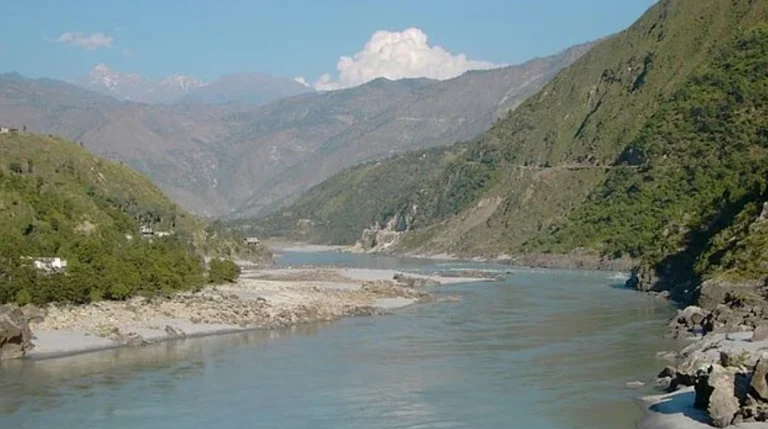
The Indus itself is Pakistan’s largest river and flows through Gilgit-Baltistan, Khyber Pakhtunkhwa, Punjab and Sindh before reaching the Arabian Sea. The river system is fed by snowmelt, glaciers and seasonal rainfall, making it vulnerable to climate change and changing weather patterns.
Pakistan has built major storage projects such as Tarbela and Mangla dams to regulate water supplies and generate electricity. However, its overall storage capacity remains limited compared to its annual water requirements.
What Happens If Flows Are Reduced?
Advertisement
A reduction in river flows could have immediate consequences for Pakistan’s farming sector, particularly during the kharif and rabi crop cycles. Lower water availability could reduce wheat, rice and cotton production, increase dependence on groundwater and push up food prices.
Reduced flows could also affect hydropower generation, which is important for Pakistan’s energy system. Cities and industries that rely on the Indus basin could face greater water stress, while downstream areas in Sindh may experience worsening salinity and seawater intrusion.
Can Pakistan Find Alternative Sources?
Pakistan has few easy alternatives to the Indus system. Groundwater is widely used, but excessive extraction has caused declining water tables and rising salinity in several regions. Rainwater harvesting, wastewater recycling, improved canal management and modern irrigation methods could reduce pressure on the river system.
Pakistan can also increase water storage through small and medium reservoirs, repair ageing canals and shift towards crops that require less water. But these measures require sustained investment and policy reforms.
Advertisement
For Pakistan, the Indus is more than a river system. It remains central to agriculture, energy and national stability, which is why water sharing with India continues to be among the most sensitive issues in bilateral relations.
Published At: