Thousands joined the CJP’s Parliament march demanding Dharmendra Pradhan’s resignation.
Police used tear gas and lathi charge after protesters breached barricades.
Opposition leaders criticised the crackdown, while JP Nadda met CJP representatives.
From Slogans To Tear Gas: How Delhi's CJP Protest Ended In Clashes And Detentions
A timeline of the CJP protest, from the morning march and police barricades to evening talks with the Centre

Summary
Thousands of protesters gathered at Jantar Mantar on Monday to participate in the Cockroach Janta Party’s ‘Sansad Chalo March’, demanding the resignation of Union Education Minister Dharmendra Pradhan over alleged irregularities in the NEET-UG examination.
Delhi Police had clarified before the demonstration that no permission had been sought or granted for a march to Parliament and warned that any unauthorised gathering would invite legal action.
Ahead of the protest, authorities deployed barricades, riot-control vehicles and more than 1,200 Delhi Police personnel across the city’s borders and VIP areas. Prohibitory orders were also imposed under Section 163 of the Bharatiya Nagarik Suraksha Sanhita, the equivalent of the erstwhile Section 144 of the Code of Criminal Procedure, across the New Delhi district.
The march towards Parliament began at around 10 am, with protesters raising slogans such as ‘Inquilab Zindabad’, ‘Vande Mataram’ and ‘Jai Bhim’ as they attempted to cross police barricades.
The demonstration later descended into chaos near Parliament House after protesters breached the barricades. Security personnel used tear gas and resorted to a lathi charge to disperse the crowd.
The government also ordered the suspension of mobile internet services in parts of central Delhi until 6 pm as more people continued to join the protest. Demonstrators reported disruptions to mobile internet connectivity as early as 10 am, when police began preventing them from marching towards Parliament.
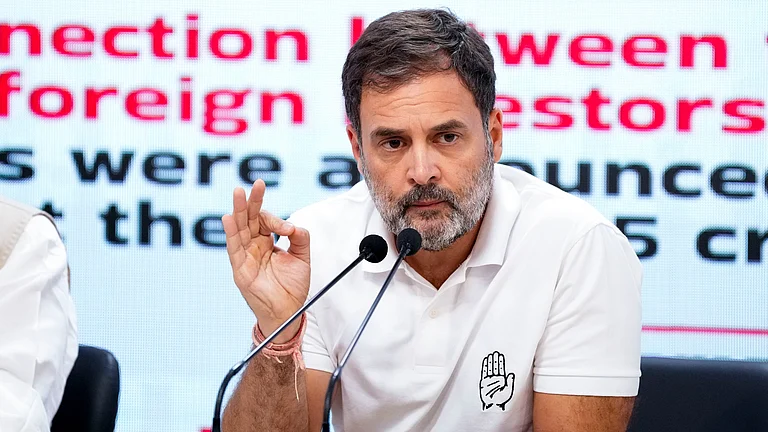
Rahul Gandhi Calls PM ‘Youth-Hostile’
Lok Sabha Leader of Opposition Rahul Gandhi described Narendra Modi as the “most youth-hostile Prime Minister in India’s history” while criticising the police action against the protesters.
In a post on X, Gandhi supported the students, who he said were “raising valid issues”, while those responsible for examination paper leaks continued to roam free.
“52 paper leaks. 7.5 crore students victimised. And not a single guilty person punished. Who got the punishment? The hardworking youth. And when these children raised legitimate questions about education, they were met with batons and detention in response. The criminals who leaked the papers roam free, and the students raising valid issues are dragged around, beaten,” he said.
Advertisement
Congress MP Priyanka Gandhi Vadra also questioned the police action against the protesters.
“There are problems and major issues with the education policy. Yet, you are unwilling to discuss it; instead, you are using tear gas on the students and beating them up. For what? They are our children,” she said.
Samajwadi Party chief Akhilesh Yadav accused the government of being driven by “ego” rather than a commitment to public welfare.
“They are keeping protesters in police stations and beating students outside. What kind of government is this that talks about ‘Sabka Saath, Sabka Vikas’ but doesn’t want to listen to children? Is it a government or is it your ego? If it were a government, it would listen to the children,” Yadav told ANI.
Azad Samaj Party (Kanshi Ram) national president Chandrashekhar Azad also backed the protesters and urged police personnel not to “tarnish their uniform by wielding batons against these innocent, studious young people”.
Advertisement
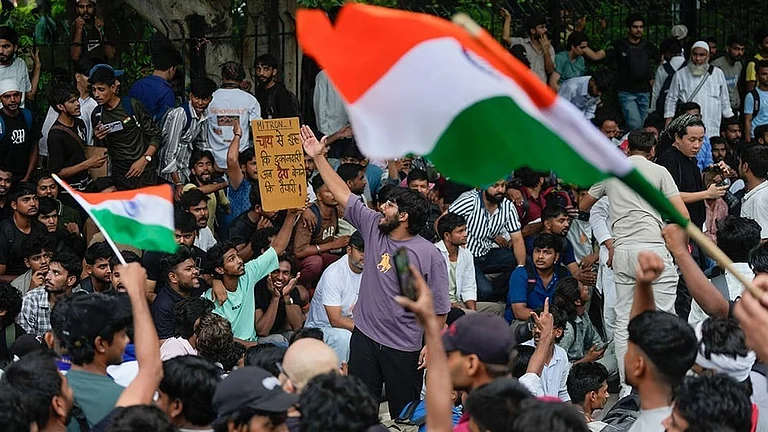
Nadda Holds Talks With CJP
Union Minister JP Nadda held talks with a delegation from the group over its demands, including the resignation of Dharmendra Pradhan.
Nadda met CJP spokespersons Saurav Das and Ashutosh Ranka at his residence, where the delegation submitted a written memorandum outlining its demands.
“The meeting was held in a cordial atmosphere. We first had a detailed oral discussion with the delegation, following which they submitted a written petition to me at around 4 pm,” Nadda said.
CJP spokesperson Saurav Das said the delegation had submitted its demands in writing and that Nadda had assured them he would discuss the matter internally.
“While we submit a written letter with our demands, he has assured us that he will meanwhile speak internally. We are in that process...” Das said in a post on X.
He added that the minister had assured the delegation that the matter would be discussed at the appropriate level, but no firm commitment had been made.
Advertisement
“The peaceful protesters will not rest until the demand is met,” Das added.
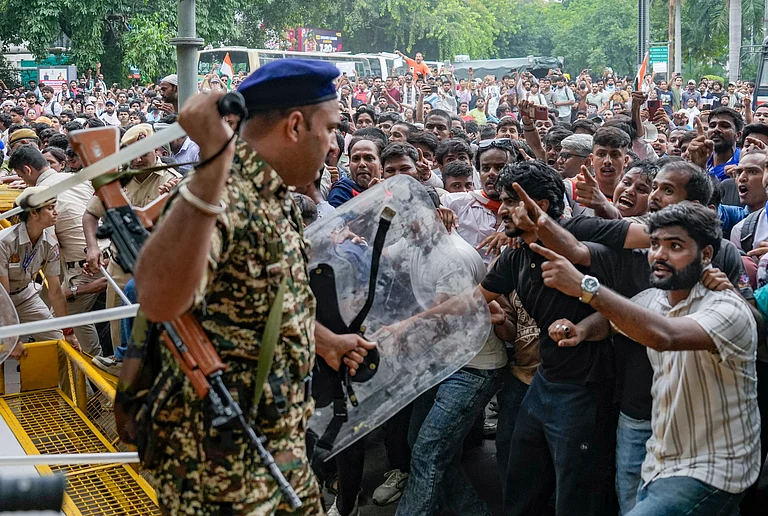
Sit-In Protest Continues
CJP representatives said the sit-in demonstration was continuing near Kerala House in central Delhi.
“Abhijeet Dipke, Saurav Das, Ashutosh Ranka and Gitanjali Ma’am, Sonam sir’s wife, are still continuing the sit-in protest at Jantar Mantar. They are right now in front of Kerala House,” a CJP spokesperson said.
Over 50 Police Personnel Injured
More than 50 police personnel were injured during clashes with CJP protesters in the New Delhi district, according to police sources cited by news agency PTI.
The injured personnel were taken to hospitals for treatment, while police said the situation was subsequently brought under control.
Security was further tightened at key locations across the New Delhi district, and legal action was initiated against those allegedly involved in the clashes, the sources added.
Advertisement
The number of protesters injured in the clashes was not immediately known.
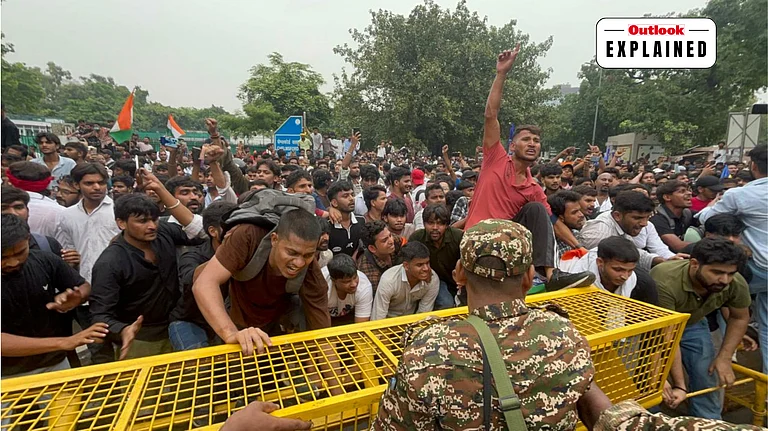
Amit Shah, Dharmendra Pradhan Hold Meeting
Union Home Minister Amit Shah and Union Education Minister Dharmendra Pradhan held a nearly four-hour meeting in the national capital on Monday amid the ongoing protests, news agency ANI reported.
Further details about the issues discussed during the meeting were not immediately available.
Sonam Wangchuk Vows To Continue Fast
Activist Sonam Wangchuk said he would continue his hunger strike until representatives of the protesting students were allowed to meet members of Parliament or permitted to visit him at the Delhi hospital where he is admitted.
Wangchuk’s wife, Gitanjali Angmo, shared a photograph of his handwritten message on social media.
“I will continue my fast (day 23). Seeing the brutality with which peacefully protesting youth are being dealt with, I have decided to continue my fast until the youth leaders are allowed to meet the Parliamentarians at the Sansad Bhawan or I am allowed to meet them here at the hospital,” Wangchuk said in the signed note.
The CJP campaign, which began on social media, has expanded into a nationwide movement seeking government accountability and education reforms following the alleged NEET paper leak.
Published At: