Lawrence Bishnoi gang faces renewed scrutiny after Tiger Shroff shooting.
The network allegedly uses overseas handlers and local shooters.
Past attacks have raised questions about its operations and motives.
From Overseas Handlers To Local Shooters: How Lawrence Bishnoi’s Gang Operates
The Tiger Shroff shooting has renewed focus on Lawrence Bishnoi’s gang, its alleged international network, the role of overseas handlers and the investigation into attacks on high-profile figures

Summary
Jailed gangster Lawrence Bishnoi has once again drawn attention to his criminal network, with a fresh shooting incident bringing the operations of his gang into focus. Despite being behind bars, Bishnoi’s name has repeatedly surfaced in investigations into shootings, extortion threats and attacks targeting prominent personalities, raising questions about how his network operates, recruits shooters and coordinates criminal activities beyond prison walls.
Tiger Shroff, 36, came under fire on Sunday evening as he left a football ground in Mumbai’s Juhu area. Videos of the incident showed at least two men firing several rounds at close range towards the front passenger seat as his car moved slowly past a crowd.
Police said two people, including Shroff’s driver, suffered injuries. Three suspects were detained in Rajasthan on Monday in connection with the shooting.
How Does The Lawrence Gang Operate From Abroad?
According to media reports, the network of Lawrence Bishnoi operates through several layers, meaning those who select a target may never meet the attackers sent to carry out the job.
A handler based overseas passes on instructions, while local associates arrange funds, weapons, accommodation and surveillance. Recruits carry out the shooting and receive directions on where to go afterwards.
This arrangement helps shield senior members of the network. A shooter may know who supplied the weapon but remain unaware of who financed the attack.
The investigation into the April 2024 shooting outside Salman Khan’s Galaxy Apartments residence in Bandra revealed several links in this chain.

How Did Accused Escape?
Kota Police detained three suspects in the firing incident involving actor Tiger Shroff after Mumbai Police alerted them that the men might be travelling on a train scheduled to stop at Kota Junction.
Kota SP Tejaswini Gautam said police teams in plain clothes secured the station and detained the suspects within 15–20 minutes. Mumbai Crime Branch DCP Rajtilak Roshan said the accused left their motorcycle near Andheri West railway station after the shooting, took a local train to Borivali and then travelled by cab to Surat. From there, they boarded the Jaipur Express to Kota, he added.
Advertisement
Kota Police will present the three accused in the firing case involving Tiger Shroff’s car before a court.
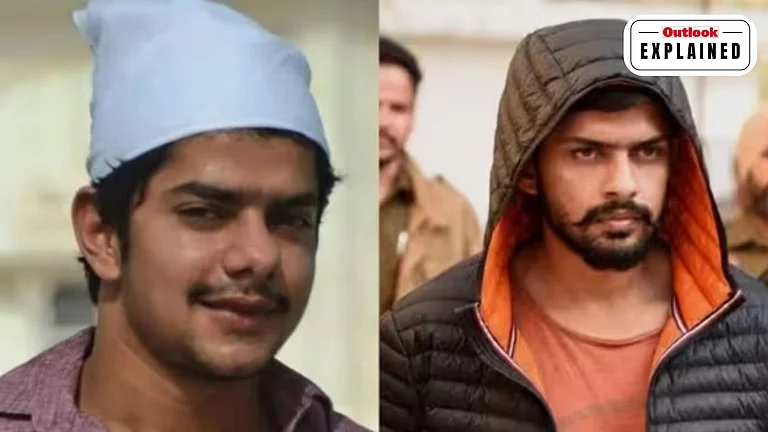
Who Is Anil Pandit?
A man claiming to be Anil Pandit has taken responsibility for the incident, renewing scrutiny of his alleged ties to the gang.
In an audio clip allegedly linked to US-based gangster Anil Pandit, the speaker claimed that he and Harman Sandhu had planned the attack. He alleged that Shroff had ignored an earlier warning and threatened other Bollywood figures working with Salman Khan. The speaker also demanded that Khan apologise to Lawrence Bishnoi and the Bishnoi community.
Originally from Panipat in Haryana, Pandit reportedly entered the United States in 2024 through the illegal migration route commonly called the dunki route. Reports say he later became associated with the Bishnoi gang.
He had no criminal cases registered against him when he left India, but several cases were filed against him afterwards.
Advertisement
The FBI refers to the outfit as the Lawrence Bishnoi Organized Crime Group (OCG). The gang also threatens businessmen to raise funds for its activities.
Former Minister Killed Earlier
On October 12, 2024, gunmen killed former Maharashtra minister Baba Siddique outside his son Zeeshan’s office in Bandra. The murder came six months after shots were fired outside Salman Khan’s residence and drew attention to the Bishnoi gang’s alleged activities in Mumbai’s political and film circles.
Siddique shared a close bond with Khan, was connected to several prominent Bollywood personalities and had police protection at the time of his death. Soon after the killing, a social media account associated with the gang took responsibility.
Police investigations focused on the alleged roles of shooters, coordinators, and those arranging money and safe locations. Investigators also named Mohammad Zeeshan Akhtar as a suspected conspirator who allegedly helped organise logistical support for the attack.
Siddique’s family, however, called for a wider probe into the motive. His son asked investigators to look into possible links to property disputes and slum redevelopment projects in Bandra, rather than relying solely on the gang’s claim.
Advertisement
Published At: