Delhi recorded a citywide AQI of 288 at 1 am on November 17, although several monitoring stations reported readings above 300.
Stronger winds and light rainfall had temporarily improved air quality on Monday, bringing the 24-hour average AQI down to 290 from 367 on Saturday.
The Air Quality Early Warning System has forecast ‘very poor’ conditions, while GRAP Stage III restrictions remain in force across the NCR.
Delhi Air Pollution: AQI Forecast Signals Return to ‘Very Poor’ Category After Brief Respite
Delhi is expected to return to the ‘very poor’ air quality category after a brief improvement on Monday, with unfavourable weather conditions and continuing pollution prompting authorities to maintain GRAP Stage III restrictions

Summary
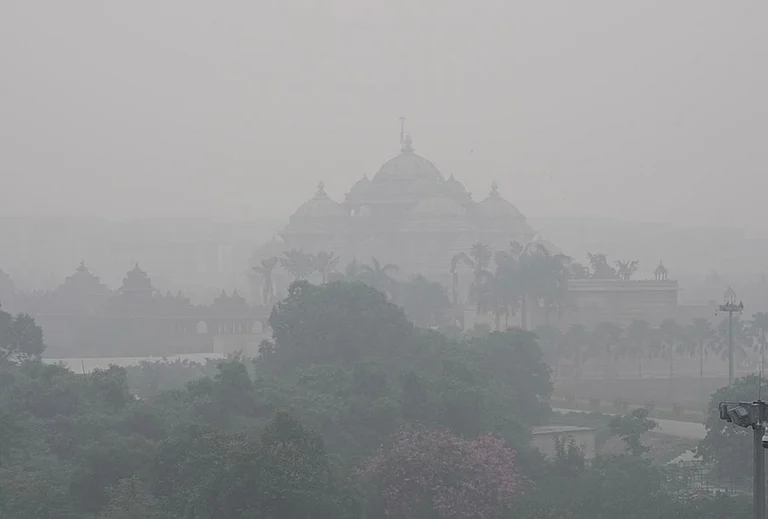
Delhi’s brief respite from toxic air appears to be fading, with the national capital expected to return to the ‘very poor’ air quality category on Tuesday, November 17. The Commission for Air Quality Management (CAQM) recorded a citywide Air Quality Index (AQI) of 288 at 1 am, placing it in the ‘poor’ category. However, several monitoring stations had already reported ‘very poor’ readings around midnight, indicating that pollution levels remain uneven across the city.
The Air Quality Early Warning System has forecast ‘very poor’ conditions from Tuesday, with the category likely to persist over the following six days. The deterioration comes a day after stronger winds and light rainfall brought temporary relief to residents.

Several Monitoring Stations Record Very Poor Air Quality
The latest station-level readings from the IITM dashboard, recorded at midnight on November 17, showed considerable variation across Delhi. Sirifort recorded an AQI of 393, followed by Pusa at 381 and ITO at 374. IIT Delhi registered 362, while Talkatora Garden recorded 363. Several other locations, including Chandni Chowk, Burari Crossing, North Campus and Commonwealth Sports Complex, also reported readings above 300, placing them in the ‘very poor’ category. PM2.5 was the dominant pollutant at most of these stations.
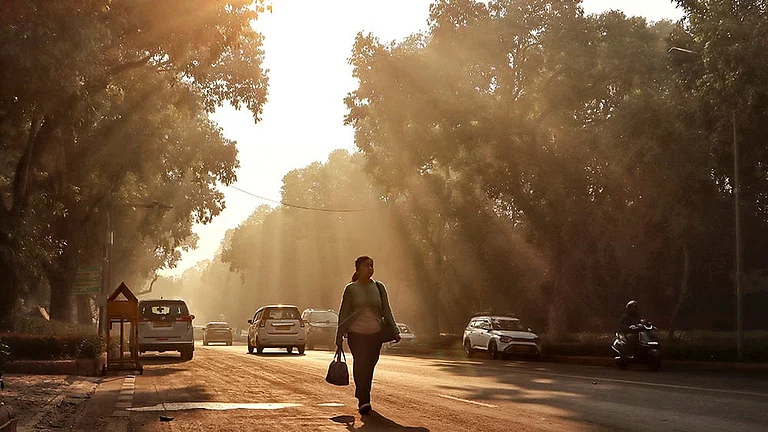
The readings follow a temporary improvement on Monday, when Delhi’s 24-hour average AQI settled at 290 at 4 pm, compared with 367 on Saturday, according to the Central Pollution Control Board (CPCB). The improvement was attributed to stronger winds and the influence of a western disturbance, which helped disperse pollutants. The India Meteorological Department (IMD) also reported very light rainfall and drizzle at several places in the capital during the preceding 24 hours. However, experts had cautioned that the relief would be short-lived as weather conditions became less favourable for pollutant dispersion.
Advertisement
GRAP Stage III Curbs Continue as Forecast Signals Deterioration
The CAQM dashboard continues to show Stage III restrictions under the Graded Response Action Plan (GRAP) as active across the National Capital Region, with the measures having come into force on November 6. These include restrictions on dust-generating construction and demolition activities, stone-crushing operations and certain categories of polluting vehicles. Authorities have also advised residents to use public transport, avoid open burning and follow measures aimed at reducing exposure to polluted air.
The Air Quality Early Warning System has forecast that Delhi will experience ‘very poor’ air quality on November 17, with similar conditions likely over the subsequent six days. The IMD’s weather bulletin has forecast mainly clear skies, with north-westerly winds shifting towards the north-east and reaching speeds of up to 15 kmph. The ventilation index, an indicator of how effectively pollutants disperse in the atmosphere, is also expected to decline compared with earlier readings. These conditions could limit the dispersal of accumulated pollutants and contribute to a further deterioration in air quality.
Advertisement
With pollution levels expected to remain elevated, the coming days will be crucial for the capital’s air quality management efforts. While the improvement on Monday offered some temporary relief, the latest forecasts suggest that Delhi is yet to see a sustained change in its pollution conditions. Residents have been advised to limit prolonged outdoor exposure and follow official health and pollution-control advisories.
Published At: