The District Development Council (DDC) elections are set to be delayed due to calls for a fresh delimitation exercise in Jammu and Kashmir
Politics has heated up ahead of the end of the tenure of DDCs, with the opposition leaders noting that the ruling NC-Congress alliance would mostly get the projects of their workers done
The tenure of the Panchayats and Block Development Council chairpersons in Jammu and Kashmir ended in 2024, and since then, polls have not been conducted for these elected bodies
DDC Polls Unlikely In J&K Before End Of Term As Calls For Delimitation Grow Louder
The District Development Council (DDC) elections are set to get delayed amid calls over fresh delimitation, even as Chief Minister Omar Abdullah says government is making necessary arrangements to hold elections to urban local bodies and Panchayats

Summary
The District Development Council (DDC) elections are set to be delayed due to calls for a fresh delimitation exercise. The tenure of DDCs is ending on February 24.
With the expiry in the tenure of DDCs, all the elected offices under the three-tier Panchayati Raj structure remain vacant in Jammu and Kashmir. Earlier, the tenure of municipal corporations ended in 2023.
A total of 280 DDC members were elected across 20 districts of Jammu and Kashmir for a term of 5 years in November 2020, but the councils were constituted a few months later in February 2021.
The elections for the offices of the Block Development Council (BDC) chairperson and the Panchs and Sarpanchs have also not been held since their term expired in 2024. Earlier, after the Panchayat elections, BDC elections were held separately. For the election of chairperson of the BDC, all the elected Panchs and Sarpanchs of the Panchayat in the particular bloc constituted the electoral college with the chairpersons for the 316 blocks elected in 2024. The Panchayat elections were held in 2018 in 9 phases from 17th November to 11 December, and a total of 23,000 Panchs and 3652 Sarpanchs were elected. The terms of the BDCs and the Panchayats ended in Jammu and Kashmir in January 2024.
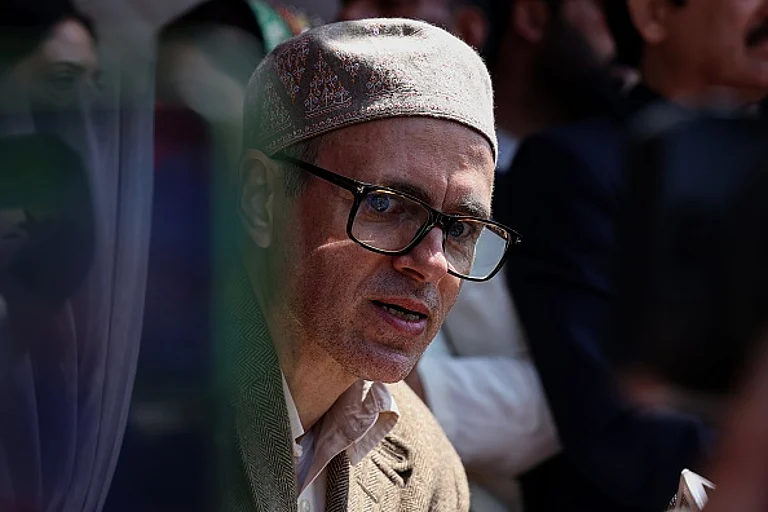
On Monday, Chief Minister Omar Abdullah, in a written reply to a question by Congress MLA Tariq Hameed Karra in the Legislative Assembly, said that the government was making necessary arrangements to hold elections to urban local bodies and Panchayats at the earliest. However, the position of the State Election Commissioner is vacant.
Calls Grow for Delimitation
Ahead of the end of the tenure of DDCs, calls have grown for carrying out the delimitation before the elections. Pawan Singh, Incharge of the BJP’s Urban Local Body cell, says that a fresh delimitation exercise must be done before polls are held in Jammu and Kashmir. “There are some DDC constituencies in Jammu where the number of voters is proportionately higher than that of the Kashmir region, which needs to be rectified,” he says. Anil Sharma, President of All Jammu and Kashmir Panchayat Conference, says that the delimitation exercise should be carried out at the level of Panchayats as well as the wards of municipal corporations. “The voter numbers need to be rationalised. In some municipal wards, there is a difference of a few thousand votes, and we have also submitted a proposal to the government on this,” he says.
Advertisement
Politics Over DDC polls
Politics has also heated up before the term of DDCs expires here. The Opposition has raised concerns that the ruling parties, National Conference (NC) and Congress, would go ahead with their own projects to benefit workers after the tenure of the DDCs ends this month. Members of the ruling alliance have dismissed these allegations , affirming that the DDCs only left the elected legislators disempowered. The verbal duel between the ruling alliance and the Opposition has however come at a time when MLAs from the ruling parties have entered into public spats with the bureaucrats related to the issues of developmental plans in their constituencies. With the tenure of the DDCs expiring, the bureaucrats would have a greater say in devising development plans of the districts and assembly constituencies.
Earlier, when the DDC elections were held in Jammu and Kashmir in 2020, the polls came even as the elections to the legislative assembly were delayed after the revocation of Article 370 on August 5, 2019. Back then, the elections to DDCs were also seen by some politicians in Kashmir as a means to disempower the MLAs. In the DDC election results that were announced in December 2020, the Peoples Alliance for Gupkar Declaration ( PAGD), a coalition of Kashmir parties, won 110 seats while the BJP bagged 75 seats, independents became victorious on 50 constituencies, Congress bagged 26 seats, while Apni party and Peoples Democratic Front won 12 and 2 seats respectively. Among the PAGD, NC won 67 seats, PDP 27, People’s Conference 8, CPI (M) 5, and Jammu Kashmir Peoples Movement 3 seats.
Advertisement
Since last year’s assembly elections in which the National Conference and the Congress together won the majority, enabling Omar Abdullah to become the CM, the tussle between the different DDCs representing the political parties has only sharpened.
Congress party’s Bandipora MLA, Nizamuddin Bhat, says that although the MLAs have recommended developmental works to be included in the Union Territory’s capex budget, the discretion of approval of these works remained with officials. “There is indeed an issue of protocol of MLAs being subordinate to the DDC chairpersons, and the government is seized of the matter and could be working out some arrangement so that when in the future new DDCs are constituted, this does not happen,” he adds.
However, former District Development Council chairperson Budgam, Nazir Ahmed Khan, says as part of the DDC arrangements developmental boards were constituted across different districts, which had MLAs also as members whose views were “respectfully taken into consideration during the formulation of the developmental plan of the district.” He, however, says that a no-confidence motion was also brought against him as he was trying to control the corruption in the execution of development workers in the district.
Advertisement
Possibility of Revival of District Development Boards
Panchayati Raj Minister Javed Dar says that the government could look at the possibility of reviving the District Development Boards, which existed prior to the revocation of Article 370, which were headed by the Minister and also had MLAs as its members. Alternatively, Javed Dar says that the development plans would be formed at the Panchayat level by the officials, who will conduct the gram sabhas, and these plans will be forwarded by them to the Block Development Officers (BDOs) and the office of Deputy Commissioners for the formulation of the district capex plan.
A senior government official says that “even as the term of the Panchayats has expired, the Gram Sabhas exist and the mechanism has been utilised for the framing of development plans earlier.”
Former minister and People's Democratic Front chairperson Hakim Yasin, says that the formulation of the developmental plan at the Panchayat and district level should happen transparently, noting that the District Development Councils enabled the elected representatives to frame the developmental plans based on the needs of the people. “A transparent mechanism should be adopted for framing of developmental plans and the benefits should not only go to the workers of particular political parties," he says.
Advertisement
Shafiq Mir, former BDC chairperson, says that when the elected Panchayats and the Block Development Councils were in place, the developmental plans were framed by them and were later forwarded to the District Development Council to be part of the overall development budget of the entire district. “Developmental plans were framed as part of the three-tier Panchayati Raj mechanism that existed in Jammu and Kashmir after the District Development Council elections were held for the first time in the Union Territory,” he says.
Published At: