WHO sought India’s report on Rajasthan maternal deaths case.
Oxytocin supplied by Jackson Laboratories is under regulatory scrutiny.
Centre cancelled Jackson Laboratories’ licences after GMP inspection findings.
Could One Drug Trigger a National Health Scare? Rajasthan Maternal Deaths Explained
WHO has now asked India for details into the maternal deaths, while the Centre has sought a report from the Rajasthan government

Summary
The Rajasthan maternal deaths case has turned into a major test of India’s drug-safety system. The controversy centres on oxytocin, a common injection used to control post-partum haemorrhage after childbirth.
Reports of deaths and kidney complications have triggered investigations into product quality, manufacturing standards and hospital supply chains.
WHO has now asked India for details, while the Centre has sought a report from the Rajasthan government and taken regulatory action against Jackson Laboratories, according to an Indian Express report
.
Why WHO Asked India For Answers
The World Health Organisation (WHO) has sought details from the Government of India after media reports linked oxytocin injections manufactured by Jackson Laboratories to maternal deaths and serious complications in Rajasthan.
According to the Indian Express report, WHO's request is part of its routine global pharmacovigilance process. The organisation regularly asks national regulators to determine whether a reported safety concern is confined to one location or could affect other countries where the medicine may have been supplied.
What Is The Allegation Around Oxytocin?
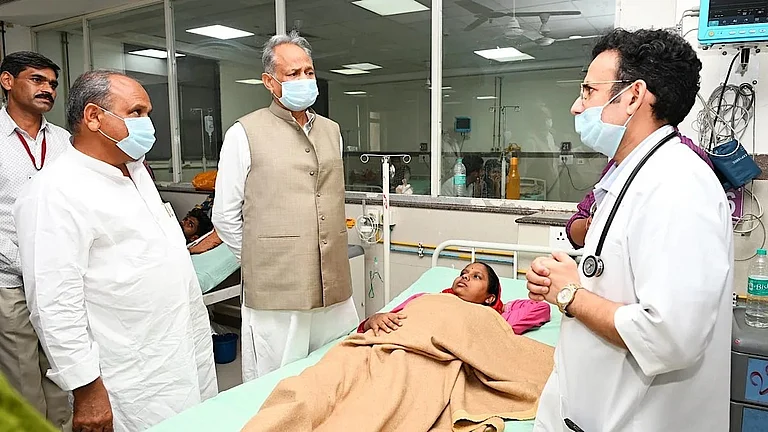
The case stems from a series of maternal deaths and illnesses reported after Caesarean section surgeries in Rajasthan.
In early May, at least five women died at a government medical college in Kota, while several others developed acute kidney complications after C-sections. Similar cases were later reported in Bikaner and Jodhpur.
A regional investigation alleged that oxytocin injections supplied by Jackson Laboratories, which are routinely administered to control post-partum haemorrhage (PPH), contained only water and lacked the active pharmaceutical ingredient.
Authorities are still investigating whether the medicine directly contributed to the deaths and complications.
How Drug Quality Is Tested In India
Drug quality is monitored jointly by the Central Drugs Standard Control Organisation (CDSCO) and state drug regulators.
When a safety concern is reported, authorities inspect manufacturing facilities, collect samples for laboratory testing and assess compliance with Good Manufacturing Practices (GMP). They also investigate the entire supply chain before deciding on regulatory action.
Advertisement
The Centre has also sought a detailed report from the Rajasthan Government to establish the sequence of events surrounding the case.
What Regulators Found During Inspections
Following joint inspections by the CDSCO and state drug regulators, the manufacturing licences of Jackson Laboratories' units in Punjab and Himachal Pradesh were cancelled.
Officials said the inspections found deficiencies in compliance with Good Manufacturing Practices. Based on these findings, the respective state licensing authorities revoked the company's manufacturing licences

Could Similar Risks Exist Elsewhere?
One of the reasons WHO contacted India is to assess whether the reported incident is limited to Rajasthan or whether the product may have been distributed to other countries.
At present, there is no official finding that the issue extends beyond the reported cases. However, the government has already initiated regulatory action, and investigations into the quality of the medicines supplied and compliance with manufacturing standards are continuing.
Advertisement
Officials have reiterated that both the Centre's inquiry and the WHO's communication are part of an ongoing regulatory process, and the final conclusions will depend on the outcome of the investigation.
Published At: