India is becoming a major consumer market for drugs, with Punjab at the centre of the crisis.
Sophisticated drones are smuggling heroin and arms from Pakistan into Punjab.
Drug addiction is taking a heavy toll on Punjab’s youth, demanding sustained state action.
Column | Punjab’s Drug Crisis And India’s New 'Death Traffic'
India’s growing drug crisis, from cross-border drone smuggling to rising addiction in Punjab, demands a sustained national response

Summary
From the opium trade that devastated China to the drone-borne narcotics corroding Punjab, India confronts a menace that demands more than rhetoric.
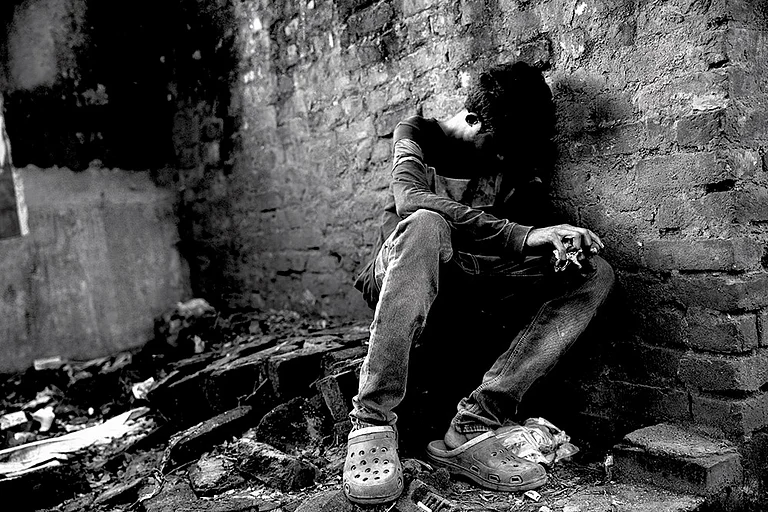
Gurudev Rabindranath Tagore called it the “death traffic”: the British Empire’s coercive supply of Indian opium to China to offset its eighteenth-century trade imbalance. China’s agony eventually stirred an international moral outrage comparable to that provoked by the slave trade.
By conservative estimates, millions of Chinese people became addicted to opium, leaving one of the world’s oldest civilisations vulnerable on several fronts. The suffering caused by this trade moved stalwarts of the Indian National Congress, including Mahatma Gandhi, to denounce British imperialism.
China took a long time to free itself from the curse.
A New “Death Traffic” Takes Hold
When Union Home Minister Amit Shah pledged to rid Punjab—and eventually the country—of the menace of opiate and synthetic drugs by 2029, the promise sounded audacious, even like election rhetoric. After all, the Punjab polls are around the corner.
The question is whether this is merely a political declaration or the beginning of a sustained national campaign.
Yet Shah is not known for making casual public announcements, and there is reason to believe that he intends to walk the talk. The Union Home Ministry appears to have prepared a comprehensive strategy against a menace that is eating into the vitals of society.
The challenge is formidable: India lies between Asia’s two largest drug-producing regions—the Golden Crescent, comprising Pakistan, Afghanistan and Iran, and the Golden Triangle, comprising Myanmar, Laos and Thailand.
In the past, India was largely a transit point for drugs destined for Western markets, where they commanded higher prices. That distinction is disappearing as domestic consumption rises manifold. The price fetched by 10 grams of heroin in Mumbai is now almost comparable to that in major global cities such as New York or London.
India now finds itself at the receiving end of a new “death traffic”. The North-Eastern states bordering Myanmar remain particularly vulnerable to illegal trafficking, and officials privately admit that conditions in some areas are grave. But Punjab—the granary of the nation—presents the starkest warning: addiction there is approaching a scale that recalls the damage inflicted on eighteenth-century China by the British opium trade.
Advertisement
Drones Across the Border
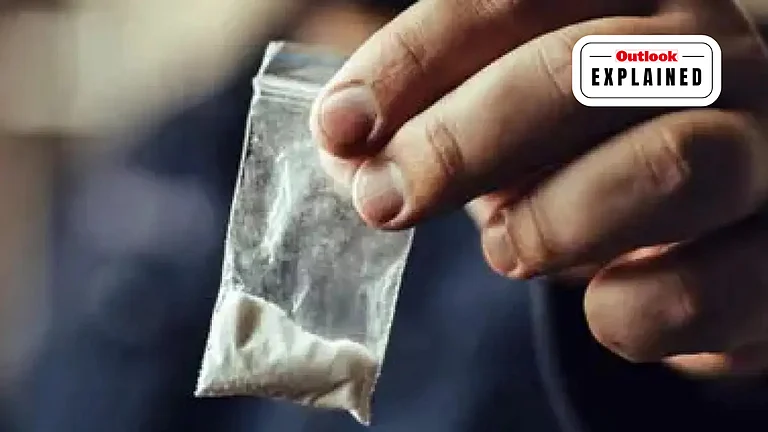
The stories from Punjab are frightening, but they must be told if the gravity of the crisis is to be understood. The enemy is largely invisible, though its presence is palpable. The Army and Punjab Police have joined forces to track drones crossing from Pakistan with payloads of arms and heroin for villages around Ferozpur and Faridkot—two heavily garrisoned border districts.
A newly acquired tracking instrument recorded 29 sorties by 10 highly sophisticated drones in just 12 hours. They crossed into Indian territory and dropped their payloads with impunity. An official involved in the operation said the drones were precise enough to leave a consignment at the intended recipient’s door. He estimated that enforcement agencies seize barely 10% of what is delivered.
During my recent visit to Ferozpur and Faridkot, I sensed that narcotics were no longer treated as an aberration in Punjab’s social life. Without determined state action, many people appeared to have accepted the curse as a way of life. Punjab is now at the receiving end of the “death traffic”: opium-derived and synthetic drugs are readily available, while Pakistan’s Inter-Services Intelligence is alleged to run an efficient cross-border operation through drug syndicates.
Advertisement
One episode illustrates how confidently these syndicates are believed to operate. Indian security agencies identify Lahore-based drug figure Shahzad Bhatti as a front for the ISI; police officials even suspect that he may be an ISI operative masquerading as a gang leader. Five months ago, Bhatti allegedly called a Deputy Superintendent of Punjab Police and asked him to release a key peddler.
“Release him, and I will ensure that you get a prized recovery of grenades and firearms in return,” he is said to have offered. The officer refused. Even so, the episode points to the depth and reach of drug networks spanning India and Pakistan.
When Punjab’s Youth Pay The Price
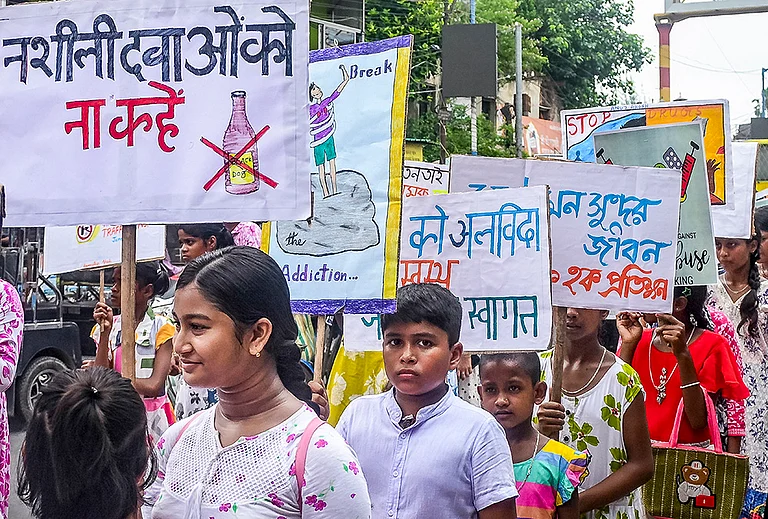
The deepest alarm lies in the damage the drug culture has inflicted on Punjab’s youth. Ferozpur Cantonment, one of India’s most fortified and strategically placed garrisons, houses the Army’s 7th Infantry Division, the Golden Arrow Division. Its General Officer Commanding, Major General R. S. Manral, has launched a sustained campaign to wean young people away from drugs. He was particularly disturbed by the lack of enthusiasm among Punjabi youth during military recruitment—a striking reversal of the popular belief that Punjab dominates the armed forces’ intake.
Advertisement
“When I arrived here, I was told of peddlers attacking people even inside the cantonment,” General Manral told me. He introduced stringent measures that helped contain such incidents and worked with the police to curb trafficking. Yet he offered no easy reassurance: “These efforts are inadequate. What we are facing is nothing less than a war.”

A War India Cannot Fight Half-Heartedly
In this context, Amit Shah’s pledge to eradicate drugs from Punjab and, eventually, the country should not be viewed only through the prism of politics. Tagore’s “death traffic” helped awaken international conscience and mobilise opinion against British imperialism.
India’s present war against drugs demands a similar political unanimity. The Home Minister must be held to his word—and every institution capable of protecting India’s youth must lend its strength to the fight.
( Disclaimer: The views expressed in this column are those of the author and do not necessarily reflect the views of Outlook India.)
Advertisement
Published At: