There is a fresh clash between the opposition and the government over Section 118 of the HP Tenancy and Land Reforms Act 1972.
The section safeguards local interests, opens the doors wider to facilitate large-scale investment, and allows outside players.
Earlier this month, the Congress government, led by Chief Minister Sukhwinder Singh Sukhu, introduced an amendment bill in the state assembly during its winter session.
Is Himachal’s Land Law Relaxation Doing Away With Key Legal Safeguards?
Congress government’s proposed amendments to Section 118 trigger political clash and public concern over land, ecology, and outsiders’ entry

Summary
“Himachal on Sale” was the Congress’s most potent election narrative against the incumbent BJP governments in both 2012 and 2017. The slogan struck an emotional chord while also reflecting a widely shared concern: that relaxations granted in the land laws had weakened legal safeguards, enabling the unchecked entry of outsiders into the state’s land market.
The party had questioned the rapid expansion of the real estate sector, hotel projects, and hydropower ventures, alleging grave land violations and favours granted to outsiders.
The state is once again in the eye of a storm, with a fresh clash over Section 118 of the HP Tenancy and Land Reforms Act 1972—a law that safeguards local interests, opens the doors wider to facilitate large-scale investment, and allows outside players.
Earlier this month, the Congress government, led by Chief Minister Sukhwinder Singh Sukhu, introduced an amendment bill in the state assembly during its winter session at Dharamshala, aimed at amending some key provisions of Section 118 of the Himachal Pradesh Tenancy and Land Reforms Act, 1972, to grant relaxations to non-agriculturists to invest in short-term ventures in the state's rural areas.
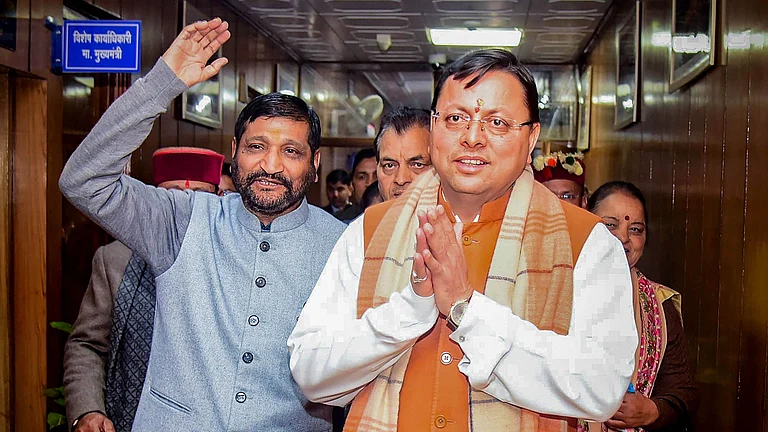
The opposition BJP has fiercely opposed the move.
“You are not only going to breach the legal safeguards, well-intended by the founders like Dr Y.S. Parmar, the state’s first Chief Minister, but also trying to put Himachal Pradesh on sale,” argued Randhir Sharma, BJP’s senior MLA in the House.
The opposition’s protests compelled the state government to agree to refer the bill to the selection committee, which will have members of the ruling party and the BJP. The legislation, however, has sparked a broader public debate on the contentious issue of granting a “blanket” exemption for outsiders and non-agriculturists to purchase land for commercial ventures in the state's rural areas.
What is Section 118, and the Proposed Amendments?
Section 118, which the government seeks to amend, concerns the transfer/purchase, or lease of agricultural land by non-agriculturists. The proposed changes would exempt buyers and investors from seeking government permission to take over any buildings or property in rural areas for commercial purposes for 10 years, with the option to extend for another 10 years, for a total of 20 years.
Advertisement
The purposes as such will include setting up small enterprises, rural tourism, village-level business ventures, real estate, and cooperative ventures.
The bill also seeks to permit non-agriculturists to purchase flats developed by private real estate developers. In addition, it proposes to extend exemptions for the purchase of land and flats created by the Himachal Pradesh Housing and Urban Development Authority (HIMUDA) to subsequent purchasers.
For residential buyers, non-agricultural buyers would be allowed to buy flats or buildings up to 500 m² in RERA-registered projects without Section 118 permissions.

The bill also provides for cooperative societies comprising only farmers to purchase land, subject to the condition that all buyers are genuine agriculturists. “Any violation of these conditions would invite action, including reversion of the land to the government,” explains Revenue Minister Jagat Singh Negi.
Advertisement
Negi says the government has not compromised with the basic spirit of the law, which remains in force in its original form. Still, the changes are intended to encourage business activities and strengthen the rural economy by allowing short-term leases of buildings up to 10 years, exempted from Section 118 of the bill. It also proposes enabling cooperative societies to buy land and expand their businesses in the state.
“In fact, a lot of the people who have properties and buildings in the rural areas have been involved in the lease of the buildings, a few with permissions under section 118 and others without it. The government is losing revenue,” he claims.
But the BJP’s fears are very different.
“It appears the Congress government is driven primarily by revenue considerations. We are opening the floodgates for outsiders to set up and run their businesses in our rural areas without any permission. This act undermines the very purpose and spirit of Section 118, which Dr Parmar had intended in the larger interests of the innocent people of this gentle state. There is an attempt, through this bill, to remove vital legal safeguards,” Randhir Sharma laments, adding, “It is time to think about its consequences instead of using it as a means for revenue.”
Advertisement
What Would be the Ecological Impact?
Another BJP MLA, Trilok Jamwal, points to the ecological impact of such a move in rural areas, given that the state is experiencing disasters. Opening the rural regions to outsiders will mean more construction activity, hill cuttings, increased landslide risk, tree felling, the sale of agricultural land, and stress on water sources.
Moreover, do you think someone who sets up a business will wind it up and return for the lease expiry? Never.
“If the Bill is put to a vote and passed, the very purpose of the Himachal Pradesh Tenancy and Land Reforms Act will stand defeated. Our future generations will not pardon us for this kind of short-sighted and irreversible dilution of land safeguards,” he cautions.
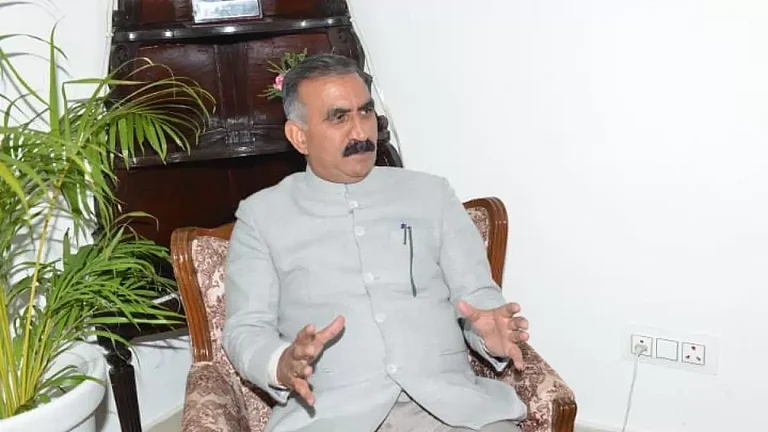
Chief Minister Sukhwinder Singh Sukhu rejects the opposition's apprehensions, asserting that the government has brought the amendments very thoughtfully. We have proposed amendments for the cooperative societies composed entirely of agriculturists.
Advertisement
“The amendment regarding the extension of time is for the investors, who acquire land with bona fide intent, as occasionally they are unable to complete projects within the stipulated period, maybe due to factors beyond their control. We are open to a debate. I am not averse to sending the bill to the select committee,” he offered to the opposition.
Employment Generation In Rural Areas?
The proposed changes will also contribute to employment generation and increase per capita income in rural areas, and, in turn, strengthen the state’s economy by attracting investment in the tourism and infrastructure sectors.
A retired IAS officer, who also remained secretary (Revenue), feels that outsiders eyeing lands in the state will gradually gain control over prime land, and locals will get displaced and lose ownership.
Journalist and apple orchardist Saurabh Chauhan says Section 118 has acted as an unbreakable iron dome: no non-agriculturist—whether a billionaire from Mumbai, a businessman from Chandigarh, or even a salaried Himachali who did not till the soil—could purchase agricultural land without government permission. The sole purpose of the law was to save the small and marginal farmer, who forms 88.86% of the farming community and survives on small holdings in a state.
The move to make changes in Section 118 is bound to create fresh apprehensions among a large section of the people, the agriculturists.
Published At: