India’s 43 million rural enterprises represent a significant untapped source of jobs.
Nearly 93% remain owner-operated, while only 7% employ paid workers.
Report says even modest scaling could meaningfully raise rural employment and incomes.
Can 43 Million Rural Firms Ease India's Job Crisis? A New Report Suggests So
A new report argues that helping growth-oriented rural businesses scale and hire workers could turn India’s vast enterprise base into a stronger source of employment

Summary
India’s jobs challenge may not only be about creating new businesses, but helping millions of existing ones grow. A new report says the country’s 43 million rural enterprises could become an important employment lever if more owner-run businesses are able to invest, expand and begin hiring workers.
The State of Rural Entrepreneurship in India 2026, developed by Transform Rural India (TRI) in collaboration with IDInsight, argues that rural non-farm enterprises are among India’s under-used instruments for generating employment and raising incomes. But its conclusion comes with an important qualification: rural enterprises cannot solve India’s employment challenge on their own. The opportunity lies in helping a relatively small share of existing businesses become more productive, expand and begin employing people.
The employment challenge itself is substantial. The report notes that 46 per cent of India’s workforce remains in agriculture, which contributes only around one-fifth of national income. It estimates that India needs 7 to 8 million jobs annually until 2036, while rural consumption is simultaneously expanding, with monthly per-capita consumption expenditure growing 9.2 per cent in 2023-24, faster than the 8.3 per cent increase in urban India.

43 Million Enterprises, But Very Few Employers
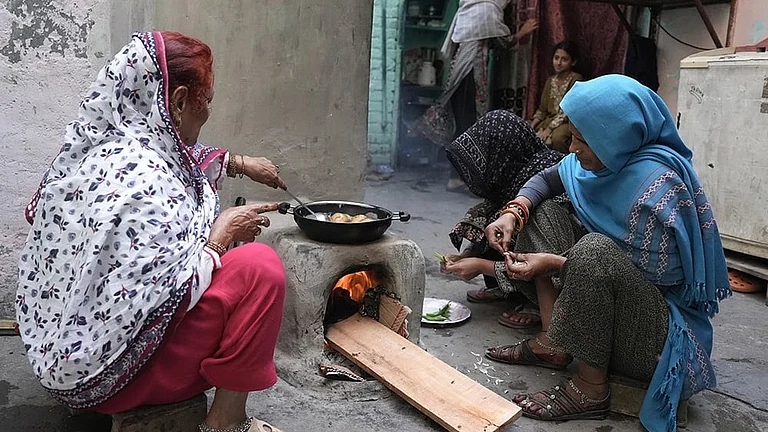
Using unit-level data from the Annual Survey of Unincorporated Sector Enterprises (ASUSE) 2025, the report estimates that India has 43.1 million mini and nano rural enterprises with investments of up to Rs 25 lakh. Around 41.8 million are nano enterprises with investments below Rs 5 lakh, while 1.2 million fall in the Rs 5 lakh to Rs 25 lakh mini-enterprise category.
The bigger challenge is that most of them do not create paid employment.
Around 40 million, or 93 per cent, are own-account enterprises, meaning they are operated by the owner alone or with unpaid family labour. Only around 3 million, or 7 per cent, employ at least one paid worker. Yet this small group of hired-worker enterprises already employs about 8.4 million hired workers.
This is where the report sees the potential for job creation. Rather than adding millions of new tiny businesses, it argues that policy should focus more closely on helping suitable existing enterprises cross the line from self-employment to employer status.
Advertisement
What Changes When Rural Firms Start Hiring?
The difference between owner-operated and employer enterprises is significant. Hired-worker enterprises record value added per worker of around Rs 1.88 lakh, compared with Rs 0.99 lakh among own-account businesses. Their value added per establishment is roughly seven times higher, while their fixed assets are around six times larger. An employer enterprise has an average of 4.5 workers.
The report is careful not to claim that hiring workers itself causes higher productivity. Rather, it says businesses that have managed to move from self-employment to employing others have substantially different characteristics.
Its central proposition is therefore not simply “more entrepreneurship”, but a transition from low-capital, owner-operated units towards more productive businesses capable of generating jobs and higher incomes.

Why Aren’t More Rural Businesses Hiring?
Money is one obvious constraint, but the report argues it is far from the only one.
Advertisement
Only 11.8 per cent of mini and nano rural enterprises have an outstanding loan, while just 4.6 per cent borrow from a commercial bank. Although the Pradhan Mantri MUDRA Yojana has expanded collateral-free lending, 78 per cent of its loans are below Rs 50,000. The report says such small loans may sustain self-employment but may not be enough to buy equipment, increase production or employ workers.
Market access is similarly restricted. Only around 8.5 per cent of rural enterprises manufacture under contract for a larger buyer, and 90 per cent of those depend entirely on one buyer. Franchising accounts for only 0.1 per cent, while direct exports are negligible. The report also flags an estimated Rs 7-8 lakh crore locked up in delayed payments to MSMEs, limiting working capital available for expansion.
Digital penetration has also not translated into digital business at scale. While 30.9 per cent of enterprises use the internet and 17.2 per cent use internet banking, only 3 per cent use computers and 2.7 per cent sell online. The report argues that simply connecting entrepreneurs to digital platforms is insufficient without logistics, working capital, quality assurance, fulfilment and business support.
Advertisement
Women-Owned Enterprises Face A Steeper Climb
The challenge of scaling is particularly visible among women entrepreneurs.
Women own around 28 per cent of rural enterprises, but only 1.1 per cent of women-owned businesses employ workers, against 9 per cent of enterprises owned by men. Average productive assets in women-owned units stand at about Rs 14,500, compared with Rs 1.2 lakh in men-owned businesses.
The report says the gap indicates that barriers go beyond finance and may involve unequal access to productive assets, technology, networks and control over business decisions. Hired-worker enterprises are also less likely to be owned by women or members of Scheduled Castes and Scheduled Tribes.
Not Every Business Needs To Become An Employer
The report also warns against assuming that all 40 million own-account businesses can, or even want to, expand into firms employing workers.
Some may exist primarily because households lack sufficient wage employment or face underemployment in agriculture. For such enterprises, the objective may be income supplementation rather than building a larger company.
Advertisement
Its proposed solution is to “segment and aggregate”.
Enterprises with the potential and intention to grow should receive intensive support involving capital, business capabilities, technology, market access and shared production infrastructure. For smaller businesses where individual expansion is unrealistic, cooperatives, Farmer Producer Organisations and producer companies can help achieve scale collectively through shared infrastructure, value addition and stronger bargaining power.
Can 43 Million Rural Enterprises Solve India’s Jobs Problem?
Not by themselves, according to the report. But the arithmetic makes them difficult to ignore. With around 43 million enterprises already operating, even a relatively small proportion expanding and creating paid employment could have a significant effect on rural jobs and incomes.
The report therefore calls for a shift in how enterprise policy measures success. Instead of primarily counting loans sanctioned, businesses registered or entrepreneurs trained, programmes should track productive investment, productivity, entry into larger markets and the creation and retention of paid jobs.
It also cautions that evidence remains incomplete. ASUSE provides a snapshot rather than tracking the same businesses over time, making it difficult to establish which enterprises survive, expand or successfully move from owner-operated to employer status. The report proposes a longitudinal rural-enterprise panel or a tracking component within ASUSE to better understand those transitions.
The opportunity, therefore, is not simply that India possesses 43 million rural enterprises. It is whether policies can help the right ones become larger, more productive and capable of hiring.
As the report concludes, rural businesses are no silver bullet for India’s employment challenge. But with millions already embedded in local production and consumption networks, making even a fraction of them stronger employers could turn rural entrepreneurship into a much more consequential source of jobs.
Published At: