US-Iran peace agreement aims to reopen Hormuz and restore energy flows
Deal includes $24 billion asset release and nuclear talks framework
India gains strategic lessons as conflict-driven energy pressures begin easing
US-Iran Peace Deal: What Lessons Does It Hold For India?
What started as a targeted campaign rapidly expanded into a regional confrontation, with Iran retaliating through missile and drone attacks on US military facilities across the Gulf and allied fronts opening in Lebanon

Summary
The United States and Iran have reached a peace agreement to end four months of war that disrupted global energy supplies, pushed oil prices above $100 per barrel and brought the broader West Asia to the edge of a wider regional conflict. President Donald Trump announced the deal on June 14— his 80th birthday — declaring it "complete" on Truth Social. The formal signing ceremony is scheduled for June 19 in Geneva.
The agreement provides for the immediate lifting of the US naval blockade on Iran and the reopening of the Strait of Hormuz, through which roughly one-fifth of global oil trade and substantial volumes of LNG and LPG pass. Pakistani Prime Minister Shehbaz Sharif, who mediated alongside Qatar, Saudi Arabia and Türkiye, said the deal mandates an immediate and permanent cessation of military operations across all fronts, including Lebanon.
Iranian officials confirmed that a 14-point memorandum of understanding has been finalised. Its reported provisions include reopening the strait, technical talks on clearing mines from regional waterways, a 60-day framework for negotiations on Iran's nuclear programme and the phased release of up to $24 billion in frozen Iranian assets — including an initial $12 billion before formal negotiations begin.
The conflict began on February 28 when the US and Israel launched coordinated military operations against Iran over its nuclear programme. What started as a targeted campaign rapidly expanded into a regional confrontation, with Iran retaliating through missile and drone attacks on US military facilities across the Gulf and allied fronts opening in Lebanon.
Diverging POV
Washington has framed the agreement as a diplomatic breakthrough that restores regional stability and secures global energy flows. Tehran has presented the outcome rather differently. Iranian military leaders claimed the deal demonstrated their ability to sustain resistance and impose significant costs on adversaries, effectively forcing the US and Israel to the negotiating table. Deputy Foreign Minister Kazem Gharibabadi confirmed the agreement while maintaining that posture publicly.
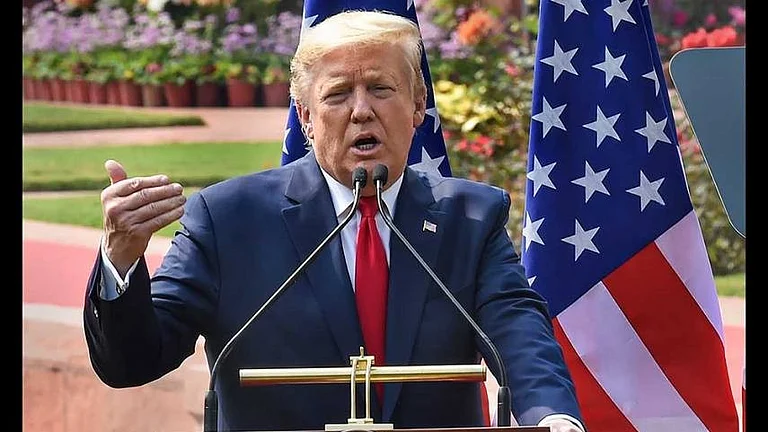
Israel has been openly critical. Prime Minister Benjamin Netanyahu and Defence Minister Israel Katz argued the framework leaves Iran's missile programme, regional proxy networks and nuclear capabilities largely intact. Israeli officials also opposed the release of frozen assets and other economic concessions granted to Tehran — objections that underscore the fragility of the accord and the difficulty Washington will face in preventing Israeli actions from undermining the peace process in the weeks ahead.
Advertisement
Analysts have also flagged the considerable uncertainty that remains. The 60-day window to negotiate Iran's nuclear programme is narrow for issues that eluded resolution for years. The mechanics of reopening the strait have not been fully finalised, and trust between the two sides remains paper-thin after a conflict in which the US struck Iran twice during the negotiation period itself.
Lesson For India
New Delhi based policy think tank, the Global Trade Research Initiative (GTRI) said that the broader lesson for India is strategic. “The US did not embrace peace out of goodwill; it did so because the costs of war became too high. Iran's ability to disrupt energy supplies, raise global oil prices, and impose economic and military costs forced Washington to negotiate,” it pointed out.
GTRI founder Ajay Srivastava noted that India should draw a clear lesson from this outcome: engage the US as an equal partner, not a subordinate one. Whether in trade, technology, energy, or foreign policy, India must reject arrangements that undermine its interests, he added.
Advertisement
Published At: