US denial of contributions to the UN is perhaps a result of its vanity being challenged in the world order
Maybe the US stepping back is a good thing. Other nations now have an opportunity to save the institution
The US has used financial contribution to the UN as a power move to showcase its economy
UN Financial Crisis: The Need For A Structural Overhaul
Why UN Secretary-General Antonio Guterres sounded an alarm about an “imminent financial collapse” due to unpaid dues of UN members

Summary
According to the United Nations Charter, the UN General Assembly approves the budget of the UN and its specialised agencies like WHO, World Food Programme (WFP), UNRWA and the expenses are borne by the member states through mandatory financial contributions. The distribution of contributions to the UN is based on the economy of each nation—bigger the economy, higher the contribution. Under Article 19 of the UN Charter, a member who fails to pay their financial contributions for two years loses out on their right to vote in the UN General Assembly, unless the failure to pay is due to conditions beyond the control of the member. In January 2026, UN Secretary-General Antonio Guterres sounded an alarm about the UN facing an “imminent financial collapse” due to unpaid dues of members of the UN. He is said to have sent out letters to all the ambassadors of member states stating the danger.
Interestingly however, according to a UN statement in October 2025, out of 193 UN member states, 152 members paid their contributions in full in 2024, 142 in 2023 and 146 in 2022. As of 30 September 2025, 136 member states had paid their regular-budget contributions in full. 57 member states owed $1.87 billion out of the $3.5 billion in mandatory contributions, of which $1.5 billion was unpaid dues from the United States alone. The US also owes $2.36 billion towards UN peace keeping operations. In his letter to the ambassadors, the UN Secretary General appealed that “Member States honour their obligations to pay in full and on time or Member States must fundamentally overhaul our financial rules to prevent an imminent financial collapse.” The financial collapse the UN Secretary-General speaks of simply highlights how much the UN has been dependent on the US for its functioning. The UN needs an overhaul. But the overhaul needed is not financial; it is structural.
Advertisement
Contribution And Control
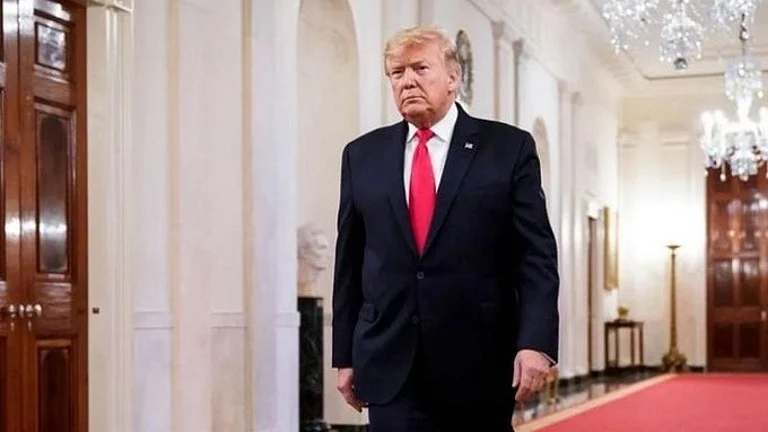
The US has used financial contribution to the UN as a power move to showcase the ginormous status of its economy. This has also been used as a leverage to tilt the UN in favour of the US and its allies. Compounded with the fact that the US holds a veto power in the UN Security Council as a permanent member, the UN over the years has been a playing ground of the US and its favourite allies. In January this year, US President Donald Trump announced the withdrawal of the US from several UN entities, including the World Health Organization (WHO), UN Framework Convention on Climate Change (UNFCC), UN Entity for Gender Equality and the Empowerment of Women, International Law Commission, Office of the Special Representative of the Secretary-General of Violence Against Children and others. The reason for the withdrawal of US from the WHO was the accusation of the WHO being too “China-centric.” Meanwhile, US seems to have forgotten that the policies of the IMF and World Bank have been US-centric for as long as these institutions have existed.
Advertisement
It is no news that the permanent members of the UN Security Council have an elevated footing than other nations. UN Security Council resolutions are binding and a single veto by any one of the five members means the resolutions will not pass. Thus, any resolution that could negatively impact them or their allies are conveniently vetoed. The Permanent members have perpetuated global conflicts and geopolitical relations are formed based on the proximity of nations to any of the permanent members. It is also not news that the votes in the UN Security Council are a silent divide between USA, UK and France against Russia and China. But considering the US has been a major contributor to the UN over the years, it has functioned almost as an extended arm to the US. China and Russia’s financial contribution is way less than what the US contributes. China paid around 600 million, and Russia paid 70 million in 2025 in financial contributions.
Advertisement
The UN Secretary General’s appeal for a financial overhaul is real. The financial overhaul needed is of the rule where the UN is expected to return money that was not spent by the Organisation, which essentially come off as arrears that were never received in the first place, which in turn deplete reserves. However, any such financial overhaul must also be followed by diminishing the control of the US over the UN. Failure to fulfil financial contributions for two years prevent member states from voting in the UN General Assembly. But even if the US refuses to pay its dues, as a permanent member the US will continue to have voting rights in the UN Security Council. And because UN General Assembly resolutions are not binding, the US can continue to ignore pleas for contribution, risk losing General Assembly voting rights and still have claim over whether a binding resolution is passed or not in the UN Security Council. This system in itself reeks of violation of the principle of sovereign equality of nations. US denial of contributions to the UN is perhaps a result of its vanity being challenged in the world order not only by China, but so-called smaller economies like South Africa and Brazil. South Africa and Brazil are few of the countries who have openly accused US of complicity in the genocide of Palestinians in Gaza.
Advertisement

The downfall of the UN is as much related to finance as it is related to having been used as a tool for western hegemony. However, in the past three years, US and its favourite ally, Israel stood isolated in the UN General Assembly on several issues, including the issue of Palestinian statehood and ceasefire in Gaza. With a fractured relation even with the European Union on the issue of Greenland, the US isolation can be used to humble an entity that keeps pushing the world to the edge of war. US threats to Iran, US threats to Venezuela, US threats to Denmark—it seems the world is sitting on a ticking time bomb about if or when Russia and China will decide to retaliate based on allyship, and nations will be forced to take sides and scamper to protect political borders. Maybe the US stepping back is a good thing. Perhaps, that could save the institution. Other nations now have an opportunity of stepping up and taking control of the functioning of the UN on equal footing. The disregard towards UN General Assembly resolutions is a major cause of disappointment towards the UN. The UN General Assembly is the true representation of global opinion. Asia, Africa and South American nations once had an alliance that challenged western hegemony. It is time to honour that alliance again. Understandably, the world is not the same anymore with several nations reeling under populist regimes. Transnational corporations and corporate individuals have more say in global decision making than some states. Even then, the UN charter that talks about the sovereign equality of states continue to hold relevance.
Do We Let The UN Collapse?
As per recent reports, the US has agreed to make initial payment towards billions owed to the UN. But so long as the US keep pulling the strings in the name of contributions, the UN will keep facing an identity crisis. The relevance of the Organisation depends on how much the Organisation is ready to honour its principles. There is a valid general sentiment that the UN has lost its relevance and does not need to exist anymore. Instances of UN failures to prevent genocide, war crimes, forced displacement, illegal occupation are several. There is an option to let the Organisation collapse altogether. But the last time the world allowed such an institution to collapse, the result was the Second World War. The League of Nations was doomed to failure from the beginning, but it should have been a lesson on what could happen when states refuse to cooperate. This again is not to say that millions are not already dying due to inaction. What can be avoided right now is nations being put in a position where the actions of only certain countries threaten to pull the trigger to a world war. We can always look towards the possibilities of what can be achieved—a chance to start on equal footing. The UN needs a structural overhaul where the power is removed from the UN Security Council. So long as financial contribution is compounded with unhinged power at the UN Security Council, the UN will have to continue pleading for financial contribution from its biggest funder.
Published At: