Trump threatened a forceful response after the US said it intercepted an Iranian missile attack targeting troops in Jordan
The remarks came even as Washington and Tehran continue indirect diplomatic negotiations
The incident highlights the administration's strategy of combining military deterrence with diplomacy
Trump Threatens To 'Beat The F*ing St Out Of Iran' After Missile Attack On US Bases
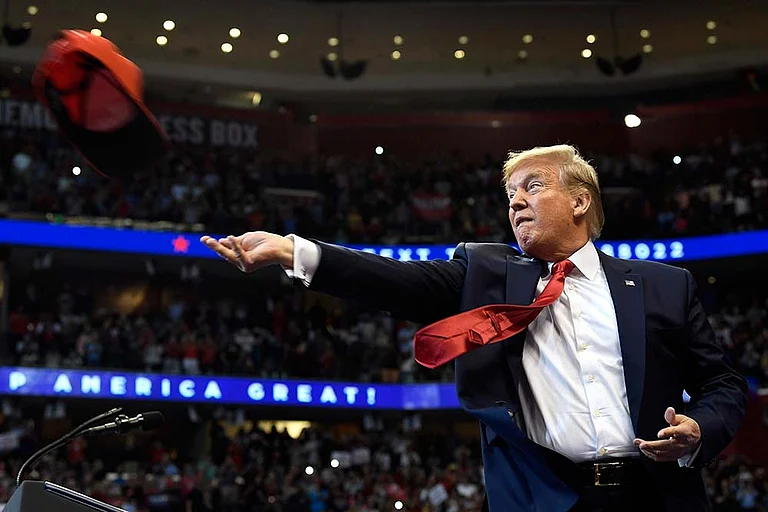
US President Donald Trump has said the United States will respond with overwhelming force against Iran after what he described as a surprise Iranian missile attack on US forces in Jordan, even as he acknowledged ongoing diplomatic talks with Tehran.
Summary
US President Donald Trump has said the United States will "beat the fing s out of Iran" after what he described as a surprise Iranian missile attack on US forces in Jordan, while acknowledging that diplomatic talks with Tehran were ongoing.
In an interview with Fox News, Trump said US forces had only minutes to intercept incoming ballistic missiles and praised their real-time coordination in successfully shooting them down, according to a video posted on Instagram.
"We're going to beat the f****** s*** out of them," Trump said in the interview.
The comments came after the Islamic Revolutionary Guard Corps launched multiple ballistic missiles from Iran in an attempted surprise attack on US forces based in the Middle East on Tuesday, according to a statement by US Central Command (CENTCOM). All Iranian missiles were successfully intercepted, CENTCOM said.
The remarks reflect Trump's dual approach to Iran: pursuing diplomatic negotiations while threatening overwhelming military force. On Monday, Trump had indicated that Washington and Tehran were making progress in backchannel negotiations. "We're having good talks," he said, while cautioning that American air strikes would resume if the diplomatic push did not yield results.
Context Of The Attack
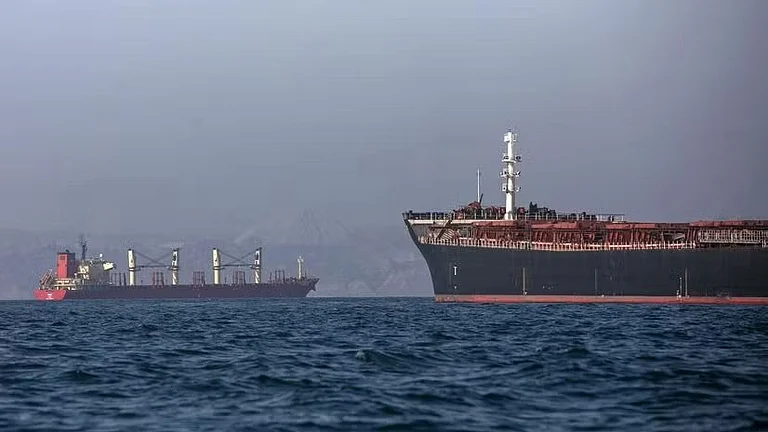
The attempted missile attack came amid renewed military escalation in the region. Iran has rejected Oman's proposal for joint management of the Strait of Hormuz, insisting the entire inbound route through the strait and part of the outbound route must be under Iranian control.
Iran effectively shut the strait after the US and Israel attacked Iran on February 28, 2026. A deal in June 2026 between the US and Iran partially reopened the strait, but the agreement collapsed in early July after Iran fired on vessels using a shipping channel that it does not recognise.
The US and Saudi Arabia launched strikes on Iran-backed groups in Iraq, stating they were responsible for drone attacks on Saudi oil facilities. The strikes occurred hours after the US military stated its air defences had averted a surprise Iranian attack on US troops in the region.
Advertisement
Diplomacy And Military Pressure
Trump's comments at a rally in Michigan earlier this week took a harder line, arguing that Iran only responds to force rather than incentives, even as he acknowledged that discussions behind the scenes were going well. Iranian Foreign Ministry spokesperson Esmail Baghaei confirmed that communication through intermediaries was continuing and that Tehran had not walked away from diplomacy.
The two-week US bombing campaign against Iran, which ended on Saturday, left significant destruction in Iran, killing a large number of people and damaging bridges, tunnels and military installations across the south. Four American troops died in retaliatory attacks on US bases in the region, while Iran also struck civilian sites in Gulf states.
Domestic dissatisfaction with the war has become a political liability for Trump and Republicans heading into November's midterm elections, with a Reuters/Ipsos survey showing only a third of Americans backing the Iran campaign — the lowest figure recorded since the war began.
Advertisement
The two countries had agreed in June on a roadmap for talks aimed at resolving core disputes, including Iran's nuclear programme, by the end of August, but disagreement persists over how to interpret that agreement's language on the strait.
Published At: