Trump says "good talks" are ongoing with Iran; sees a real chance of a deal, but warns strikes resume if talks fail.
Despite this, Saudi Arabia, Jordan and Iraq reported drone attacks on Monday, a test of the fragile pause.
US had suspended its two-week bombing campaign on Iran on Saturday.
Trump Says US 'Having Good Talks' With Iran, But Warns More Strikes Will Resume
The de-escalation followed Washington's decision to halt its two-week bombing campaign against Iran on Saturday, the latest in a series of policy reversals by Trump through the five-month conflict

Summary
US President Donald Trump indicated on Monday that Washington DC and Tehran were making progress in backchannel negotiations. "We're having good talks," he said. However, he cautioned that American air strikes would resume if the diplomatic push does not yield results.
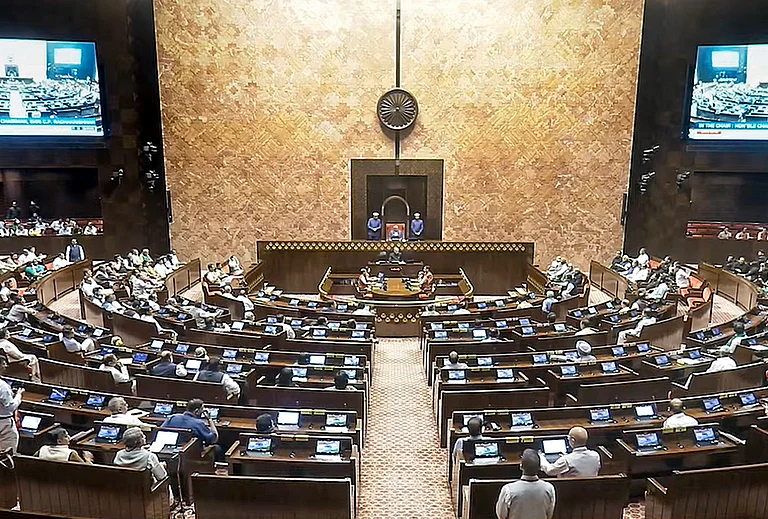
The comments came even as Iran appeared to push back against the informal truce, with Saudi Arabia, Jordan and Iraq each reporting drone strikes on their territory the same day.
The de-escalation followed Washington's decision to halt its two-week bombing campaign against Iran on Saturday, the latest in a series of policy reversals by Trump through the five-month conflict, per Reuters.
Hours later, at a rally in Michigan, Trump took a harder line, arguing that Iran only responds to force rather than incentives, even as he acknowledged that discussions behind the scenes were going well.
Iranian Foreign Ministry spokesperson Esmail Baghaei confirmed that communication through intermediaries was continuing and that Tehran had not walked away from diplomacy, while denying claims that the negotiations were staged.
Fighting Continues On Several Fronts
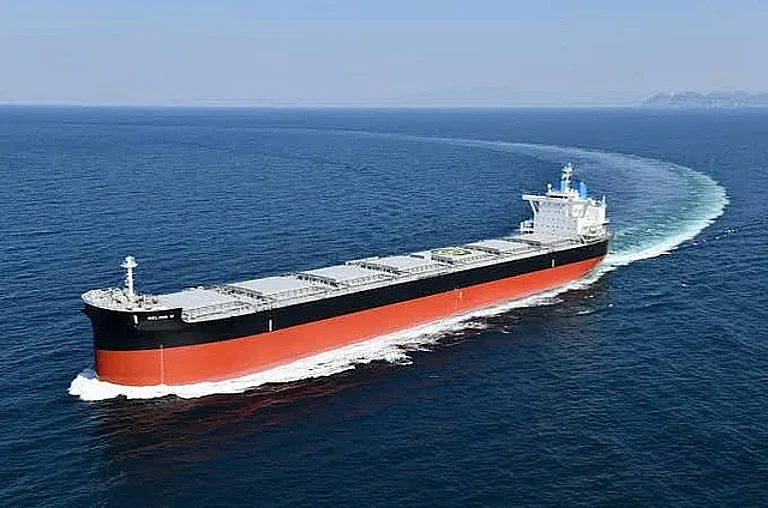
Iran's military leadership accused Washington on Monday of menacing tankers and vessels in Iranian waters and attempting to enforce what it called an unlawful naval blockade, actions it described as a further escalation.
Riyadh said its air defences had intercepted drones targeting oil facilities, including near the capital, attributing the launches to Iran-aligned militias operating out of Iraq and warning it retained the right to retaliate. Meanwhile, Yemen's Houthi movement, allied with Iran, claimed responsibility for hitting a pipeline that feeds Saudi oil exports through the Red Sea port of Yanbu, framing it as payback for Saudi drone strikes.
Iran also reiterated its claim to authority over the Strait of Hormuz, the critical corridor for global oil shipments that Trump has insisted must stay open to all traffic.
Trump's Ratings Slip and Ceasefire
Domestic dissatisfaction with the war has become a political liability for Trump and Republicans heading into November's midterm elections, where the party will be defending thin majorities in Congress, Reuters reported.
Advertisement
A weekend Reuters/Ipsos survey put Trump's approval at 37%, a three-point uptick from the prior month but still near the lowest mark of his presidency. Support for the Iran campaign itself was even weaker, only a third of Americans backed it, the lowest figure recorded since the war began, with a majority saying the administration had not clearly justified its objectives.
Behind the decision to pause, US officials and multiple domestic media reports indicated Trump had been advised by military leadership that the strikes had largely exhausted their strategic value. According to one official, commanders warned the president that available targets were dwindling and that Joint Chiefs Chairman General Dan Caine had flagged worries over shrinking munitions stockpiles.
However, Trump publicly disputed any shortage, insisting the military was quickly restocking supplies sent to Ukraine and that he wanted access to more advanced weaponry.
Advertisement
Iran Claims It Blocked Six Vessels
State media in Iran, reported that authorities turned away six ships on Monday for attempting to pass through the Strait of Hormuz without clearance.
The renewed US strikes had been triggered after Iran fired on vessels using a shipping lane near Oman's coastline that Washington had encouraged tankers to use. Tehran maintains that ships must instead use a route hugging its own coast, one it controls and over which it plans to levy transit charges.
The two-week bombing campaign left significant destruction in Iran, killing a large number of people and damaging bridges, tunnels and military installations across the south.
Four American troops died in retaliatory attacks on US bases in the region, while Iran also struck civilian sites in Gulf states, calling the action retaliation.
The two countries had agreed in June on a roadmap for talks aimed at resolving core disputes, including Iran's nuclear programme, by the end of August, but disagreement persists over how to interpret that agreement's language on the strait, with the US arguing it guarantees unimpeded passage and Iran contending it gives Tehran oversight of transit.
Advertisement
Published At: