US President Donald Trump and Chinese President Xi Jinping will meet in Beijing on May 14-15 as tensions over Iran, Taiwan and trade continue to shape global geopolitics.
The summit comes amid a fragile ceasefire in the Iran conflict.
There is also growing pressure on China to help reopen the Strait of Hormuz, a critical global oil route.
Trump And Xi To Meet Amid Fragile Iran Ceasefire And US-China Trade Tensions
Both sides are also expected to discuss tariffs, rare earth minerals, artificial intelligence and Taiwan as Washington and Beijing attempt to stabilise ties after a damaging trade war.

Summary
The leaders of the world’s two largest powers, the United States and China, are scheduled to meet on May 14 and 15. The two countries, which have long shared a strained relationship, now seem to be seeking common ground amid shifting geopolitical dynamics.
It will be US President Donald Trump’s first trip to China since 2017. It will include a visit to the Temple of Heaven, an imperial temple complex where Chinese emperors once prayed for harvests.
The US President, who faces midterm elections in November this year, is grappling with challenges both at home and internationally. The US citizens are unhappy with the rising fuel prices.
Since the onset of the US-Israel war on Iran on February 28, petrol prices have steadily increased. According to the American Automobile Association, which tracks daily fuel prices, the average cost of a gallon (3.78 litres) of regular petrol has risen to $4.52 from $2.98 when the strikes first began.
Trump’s net approval rating is -21. His net approval rating for handling of inflation and prices is -44, the lowest it has been this term.
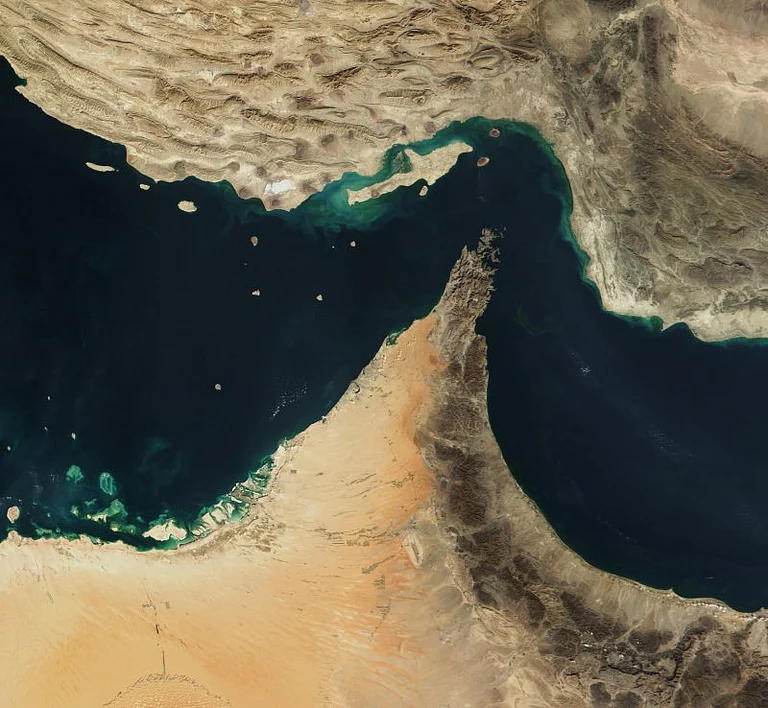
The President has also expressed frustration with NATO allies, whom he believes have not done enough to assist the United States in reopening the Strait of Hormuz. Controlled by Iran and Oman, the strategic waterway handles nearly one-fifth of the world’s total oil consumption and about one-third of global liquefied natural gas shipments.
Situated between Oman and Iran, the Strait of Hormuz connects the Persian Gulf with the Gulf of Oman and the Arabian Sea. Its geographic location makes it one of the world’s most critical maritime chokepoints. The strait is the only sea route through which crude oil from the Persian Gulf reaches global markets, while Iran controls its northern side.
NATO Secretary-General Mark Rutte said European leaders have “gotten the message” after Trump announced plans to withdraw 5,000 American troops from Germany.
Advertisement
It is against this backdrop that the US-China meet comes, with the stakes higher than ever, as the geopolitical reality has changed drastically and dramatically since Russian President Vladimir Putin, South Korean Kim Jong-Un, and Chinese President Xi Jinping met in September last year in a rare and significant display of diplomatic unity against the Western influence.
What’s On The Agenda?
Trump and Xi are expected to discuss Iran, Taiwan, artificial intelligence and nuclear weapons as they consider extending a critical minerals agreement during their upcoming talks, Reuters reported, some of the issues which have been a difficult topic of conversation for both.
A key objective for the United States is expected to be the creation of a more structured trade framework between the two countries. US Trade Representative Jamieson Greer has publicly floated the idea of a “Board of Trade” aimed at formalising and rebalancing bilateral trade flows, including identifying priority goods for import and export, as per the World Economic Forum.
Advertisement
Washington is also expected to seek continued access to critical and rare earth minerals, along with securing major commercial agreements. These could include a potential Chinese purchase of 500 Boeing aircraft and continued Chinese imports of US agricultural products.
Trump has also repeatedly called for a new nuclear arms control framework that would include China, arguing that existing agreements between the US and Russia no longer reflect present-day strategic realities.

China’s Mediation with Iran
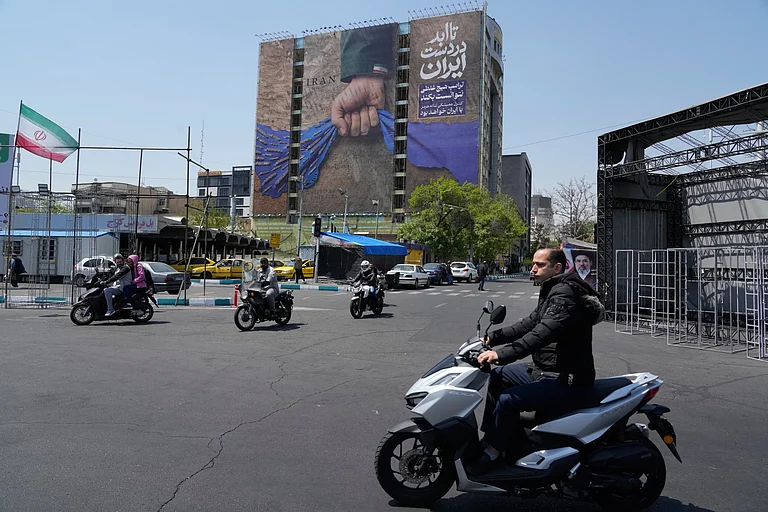
China’s diplomatic role in the Iran war has come under scrutiny following talks between the Chinese and Iranian foreign ministers last week. Although Beijing is not formally acting as a mediator in the conflict, both Washington and Tehran have acknowledged that China has played a significant role in efforts to de-escalate tensions.
Trump said he believes China helped bring Iran to the negotiating table, as he announced a pause in planned US strikes and pointed to progress towards a ceasefire.
Advertisement
However, in what can only be called critical timing, Iranian Foreign Minister Abbas Araghchi met Chinese counterpart Wang Yi in Beijing on May 6, highlighting the close ties between Iran and China.
Following the meeting, Iran’s foreign ministry said Araghchi briefed Wang on Tehran’s talks with Washington and stated: "Iran, just as it demonstrated strength in defending itself and remains fully prepared to confront any aggression, is also serious and steadfast in the field of diplomacy."
China’s foreign ministry said that "the current regional situation is at a critical juncture of transition from war to peace," adding that "China believes that a complete cessation of hostilities is imperative.”
As per media reports, White House officials are urging China to use its influence with Iran to reopen the Strait of Hormuz. US Secretary of State Marco Rubio called on Chinese officials to use Araghchi’s visit to press Tehran to ease restrictions on the strategic waterway. “I hope the Chinese tell him what he needs to be told,” Rubio said. “And that is that what you are doing in the strait is causing you to be globally isolated. You’re the bad guy in this.”
Advertisement
Rubio further argued that China has suffered more than the United States from Iran’s effective closure of the strait during the two-month-long war. China’s export-driven economy relies heavily on trade routes passing through the Strait of Hormuz. According to China’s General Administration of Customs, Beijing imports around half of its crude oil and nearly one-third of its liquefied natural gas from the Middle East, The Indian Express reported.
“It is in China’s interest that Iran stop closing the strait,” Rubio said.
The United States has also sought to persuade China not to block a new United Nations Security Council resolution condemning Iran’s attacks on ships transiting the Strait of Hormuz, after China and Russia vetoed an earlier proposal.

The Taiwan Issue
China has reiterated its dissatisfaction with US’ arms sales to democratically-governed Taiwan, which China claims as its territory. In December, the Trump administration approved arms sales of $11 billion to Taiwan, the largest ever. Chinese Foreign Ministry spokesperson Guo Jiakun on Tuesday told reporters in Beijing that China’s “firm opposition to US arms sales to China's Taiwan region is consistent and clear.”
Trump said on Monday that he intended to discuss US arms sales to Taiwan with Xi during his visit.
Trump, however, has appeared to downplay Washington’s commitment to defending Taiwan.
"He considers it to be a part of China," Trump said of Xi, "and that's up to him, what he's going to be doing."
Trump has also argued that Taiwan does not sufficiently compensate the US for its security guarantees, saying it "doesn't give us anything".
China, on the other hand, has indicated that Taiwan will remain a key issue in the talks. Yi said last week that he hoped the United States would make the "right choices" during a call with Rubio, BBC reported.
Beijing has also intensified military pressure on Taiwan, deploying warplanes and naval vessels around the island on an almost daily basis.
The Still Fresh Trade War
After Trump returned to power in 2025 and launched a global tariff war, relations between China and the United States also deteriorated, arguably becoming one of the worst-affected bilateral relationships at the time.
During his first term in 2018, Trump announced tariffs on $250 billion (£185 billion) worth of Chinese imports. He intensified those tariff policies after returning to office in 2025. Trump imposed 20% tariffs on Chinese goods, accusing Beijing of allowing the flow of fentanyl into the United States. On his so-called “Liberation Day”, he introduced an additional 34% levy on Chinese imports, pushing tariffs on China to some of the highest levels imposed on any country.
The measures disrupted Chinese businesses, causing goods to accumulate in warehouses, while American companies scrambled to secure alternative supply chains. Beijing responded with retaliatory tariffs, including duties on US agricultural products, severely affecting American farmers.
The trade war formally came to an end in October 2025, when Trump and Xi held their first meeting in six years on the sidelines of the APEC Summit 2025 on October 30, 2025. The two leaders met to extend a truce in an escalating tariff conflict that had briefly seen the US and China impose duties of 145% and 125%, respectively.
Despite the temporary easing of tensions, the Trump administration continued imposing sector-specific tariffs on China and tightened restrictions on Chinese technology exports ahead of the summit, while Beijing strengthened export controls on rare earth minerals.
Following their talks, Trump and Xi announced a one-year pause in the trade war. As part of the agreement, the US agreed to ease some tariffs, while China pledged to relax certain export restrictions on rare earths and resume purchases of American agricultural products.
It is in this context of history, geopolitical tensions and global realignment that the two superpowers are meeting, with the world watching closely amid a fragile ceasefire in West Asia and growing concerns over Taiwan.
Published At: