Pete Hegseth is expected to announce a 20 per cent reduction in US generals and admirals as part of a Pentagon leadership overhaul.
The proposed cuts follow months of departures involving senior military commanders and civilian defence officials.
The restructuring could change the way military commands are organised and how responsibilities are distributed across the US armed forces.
Pete Hegseth Says Pentagon To Fire Nearly 1 In 5 Generals, Admirals
Defense Secretary Pete Hegseth said in a speech on Wednesday that the Pentagon is eliminating roughly 1 in 5 generals and admirals during the second Trump administration through firing or position cuts, following through on Hegseth's pledge to fundamentally change how the Pentagon operates

Summary
At a military base in Virginia, the Pentagon is preparing to put its top brass under the knife. US Secretary of War Pete Hegseth is expected to announce a 20 per cent reduction in the number of generals and admirals across the US military, in the latest move to reshape the country's armed forces from the top down.
The announcement, expected at Marine Corps Base Quantico, comes as Hegseth pushes for a leaner military leadership structure and follows months of departures among senior commanders.

Why Is Hegseth Cutting The Number Of Generals And Admirals?
The planned reduction is part of Hegseth's broader effort to reorganise the Pentagon's senior leadership. CBS News reported that the defence secretary is expected to call for a 20 per cent cut in the number of generals and admirals, although the precise implementation of the plan has yet to be detailed publicly.
The move comes after a period of unusually high turnover at the top of the US military. At least 20 generals, admirals and senior civilian defence officials have been fired, pushed out or left their positions since Hegseth became defence secretary, CBS News reported earlier this month. Among those who have departed are some of the military's most senior commanders.
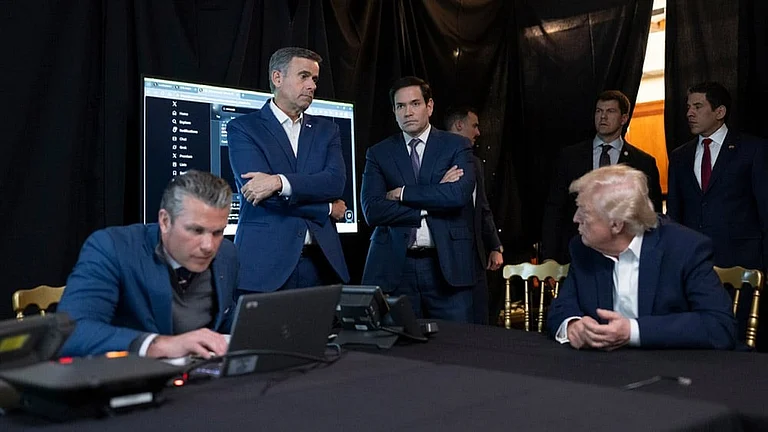
The turnover has included the Army, Navy and Air Force's highest-ranking officers, as well as leaders of important military commands. Some have been dismissed by Hegseth and President Donald Trump, while others have retired or resigned without publicly explaining their departures.
Hegseth had signalled before taking office that he wanted to challenge what he regarded as an overly bureaucratic military culture. He had also criticised senior officers over their approach to diversity initiatives and what he described as insufficient attention to combat readiness.
Advertisement

What Does The Pentagon Shake-Up Mean For The US Military?
The proposed cuts come at a time when the US military is dealing with multiple operational demands. Senior Pentagon officials have been overseeing US military operations and responding to wider national-security challenges while Hegseth has pursued changes to military standards, leadership and organisation.
The question is not simply how many stars will disappear from the Pentagon's ranks. A reduction in senior officers can alter how commands are structured, how decisions move through the military and how responsibilities are divided between headquarters and operational forces.
The scale of the turnover has already attracted attention. Gen. Chris Donahue, the Army's commander in Europe and Africa, announced his retirement earlier this year. Donahue had been involved in the US evacuation from Kabul and in advising Ukrainian forces after Russia's invasion of Ukraine.
Advertisement
Published At: