Perry Warjiyo has resigned as Bank Indonesia governor, ending a tenure that spanned the COVID-19 pandemic, global inflation and Indonesia's economic recovery
Senior Deputy Governor Destry Damayanti will serve as acting governor until a permanent successor is nominated by the President and approved by Parliament
The leadership transition is being closely watched because Bank Indonesia plays a central role in setting interest rates, maintaining rupiah stability and safeguarding Southeast Asia's largest economy
Perry Warjiyo's Exit: Why Indonesia's Central Bank Transition Matters
Perry Warjiyo's resignation ends a tenure marked by the pandemic and global inflation. His successor will inherit responsibility for steering Indonesia's monetary policy and financial stability

Summary
Bank Indonesia has begun a leadership transition after Governor Perry Warjiyo stepped down from office, with Senior Deputy Governor Destry Damayanti appointed as acting governor until a permanent replacement is selected.
The change is significant because Bank Indonesia sits at the centre of Indonesia's economic policymaking. As the country's central bank, it is responsible for maintaining rupiah stability, formulating monetary policy, safeguarding the payment system and contributing to financial system stability. Leadership changes at such institutions often attract close attention because they shape expectations around future interest rates, inflation management and broader economic policy.
Who Is Perry Warjiyo?
Perry Warjiyo has spent more than four decades at Bank Indonesia, making him one of the country's longest-serving and most experienced central bankers.
Born in Sukoharjo in 1959, Warjiyo graduated from the Faculty of Economics at Gadjah Mada University (UGM) in Yogyakarta in 1982 before pursuing higher education at Iowa State University, where he earned a Master's degree in 1989 and a PhD in 1991.
He joined Bank Indonesia in 1984 and built his career across economic research, monetary policy, foreign reserve management, international affairs, organisational transformation and central banking strategy. Before returning to Bank Indonesia in 2009, he served as Executive Director of the International Monetary Fund (IMF) from 2007 to 2009, representing 13 member countries in the South-East Asia Voting Group.
After returning to Bank Indonesia, Warjiyo became Executive Director of the Department of Economic Research and Monetary Policy, Assistant Governor for monetary, macroprudential and international policy, and Deputy Governor from 2013 to 2018.
Warjiyo was appointed Governor of Bank Indonesia in 2018 and was reappointed for a second five-year term in 2023. His first appointment came at a time when emerging markets, including Indonesia, were facing pressure from rising US interest rates, capital outflows and currency volatility.
During his career, Warjiyo also represented Indonesia at major international forums including the IMF, ASEAN, the Financial Stability Board (FSB) and the Bank for International Settlements (BIS). Since 2021, he has chaired the Asian Consultative Council of the BIS and has also served as Chairman of the Executive Committee of the Islamic Financial Services Board (IFSB).
Advertisement
Alongside his policymaking career, Warjiyo has authored several books, journals and research papers on monetary economics, central banking and international finance.
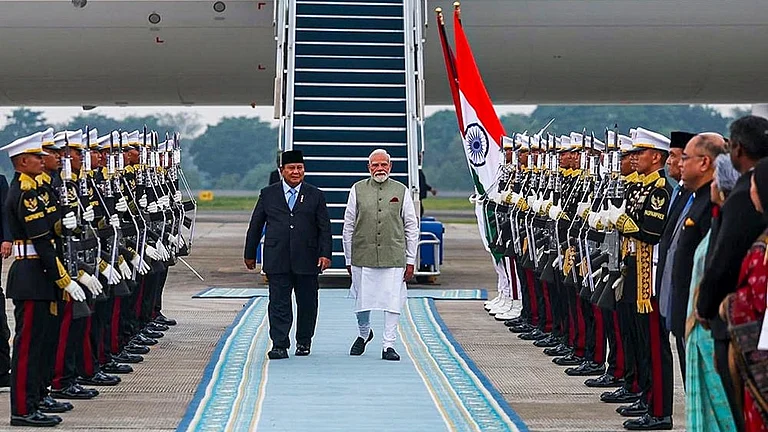
Steering Indonesia Through Global Shocks
Warjiyo's governorship coincided with one of the most turbulent periods for the global economy.
When the COVID-19 pandemic struck in 2020, Bank Indonesia introduced accommodative monetary policies, cut interest rates, maintained liquidity in the financial system and worked closely with the government to support economic recovery. In his 2020 Annual Meeting address, Warjiyo emphasised policy coordination and optimism as Indonesia sought to cushion the economic impact of the pandemic.
As economic activity gradually recovered, Bank Indonesia shifted its focus towards sustaining growth while accelerating digitalisation and financial innovation. In his 2021 Annual Meeting speech, Warjiyo highlighted the importance of synergy and innovation to support Indonesia's recovery from the pandemic.
The following year presented a different challenge. Russia's invasion of Ukraine, supply chain disruptions and rising commodity prices pushed inflation higher across the world. After maintaining an accommodative stance during the pandemic period, Bank Indonesia began raising its benchmark interest rate in August 2022 to contain inflationary pressures while preserving economic stability and confidence in the rupiah.
Advertisement
Warjiyo's 2022 Annual Meeting address focused on strengthening resilience amid global uncertainty and managing the impact of tighter global financial conditions.
By 2024, his priorities had expanded beyond immediate crisis management to supporting long-term economic transformation. His annual meeting speech that year centred on strengthening stability, accelerating payment system innovation and supporting Indonesia's broader economic development agenda.
Why Does His Exit Matter?
Central bank governors are among the most influential economic policymakers because they oversee decisions affecting inflation, interest rates, exchange rates and financial stability.
Under Indonesian law, Bank Indonesia's objectives are to achieve and maintain the stability of the rupiah. To fulfil this mandate, the central bank determines and implements monetary policy, regulates and maintains the payment system, and contributes to financial system stability through macroprudential policy.
Warjiyo became closely associated with Indonesia's monetary policy during successive global shocks, including the pandemic and the worldwide inflation surge. His departure therefore marks more than a routine leadership change. It marks the end of a period of policy continuity during which Bank Indonesia navigated unprecedented economic uncertainty while balancing growth objectives with price stability.
Advertisement
Although the central bank operates through a Board of Governors rather than a single individual, the governor remains its principal policymaker and public representative. As a result, leadership transitions are closely followed because they may shape expectations about the future direction of monetary policy.
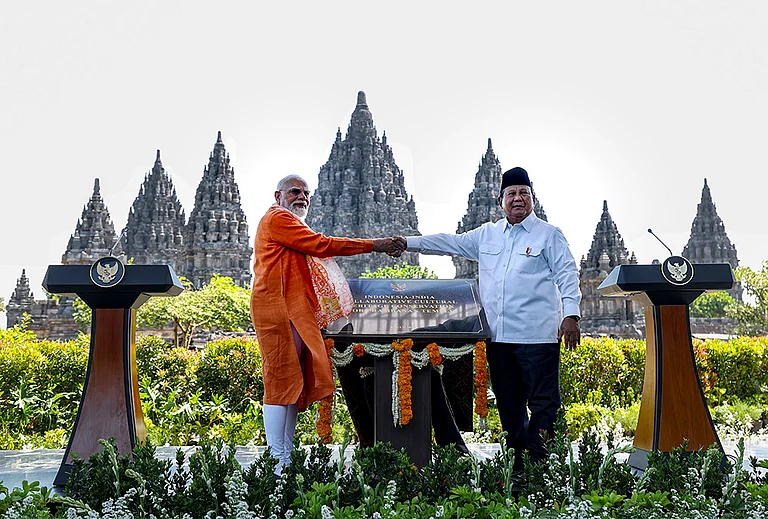
How Does Indonesia Appoint A Central Bank Governor?
The appointment process is governed by Indonesia's Law on Bank Indonesia.
Under Article 41, the President proposes candidates for Governor, Senior Deputy Governor and Deputy Governors, while appointments require approval from the House of Representatives (DPR). Members of the Board of Governors serve five-year terms and may be reappointed once.
The process is designed to balance presidential nomination powers with parliamentary oversight while ensuring continuity in the central bank's leadership.
What Happens Next?
Following Warjiyo's resignation, Bank Indonesia appointed Senior Deputy Governor Destry Damayanti as acting governor until a permanent successor is selected.
Advertisement
Indonesia's central bank law provides that when the office of governor becomes vacant, the Senior Deputy Governor assumes the governor's responsibilities in an acting capacity until a new appointment is made through the statutory nomination and approval process.
The President is expected to nominate a permanent successor, whose appointment must then receive parliamentary approval before assuming office.
During the transition period, the acting governor will be responsible for ensuring continuity in monetary policy decisions and the operations of the central bank.
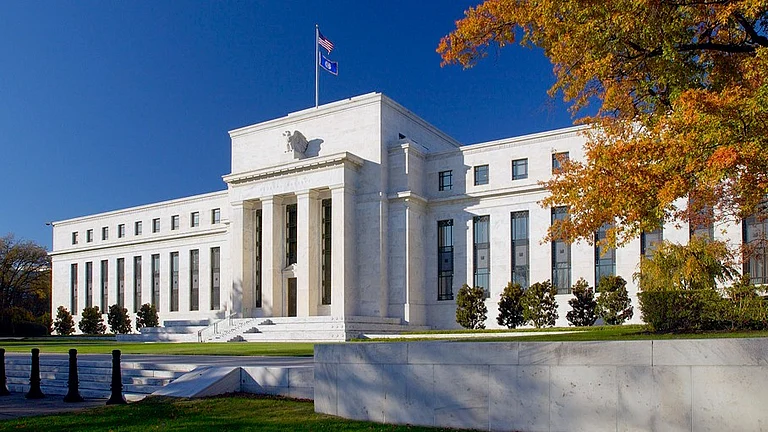
Why Markets Closely Watch Central Bank Leadership Changes
Leadership transitions at central banks often attract close attention because they can influence expectations about the future direction of monetary policy.
Bank Indonesia is responsible for formulating and implementing monetary policy to maintain rupiah stability. In carrying out this mandate, it sets benchmark interest rates, manages liquidity in the financial system and uses monetary tools to control inflation while supporting sustainable economic growth. The central bank also seeks to maintain exchange-rate stability, an important objective for an economy integrated with global trade and financial markets.
Because the governor leads the Board of Governors and communicates the central bank's policy direction, any change in leadership is closely watched by investors, businesses and financial markets. While Bank Indonesia's institutional framework is designed to ensure continuity in policymaking, a new governor may bring different priorities on interest-rate policy, inflation management, exchange-rate stability and the use of monetary tools.
For that reason, the appointment of Perry Warjiyo's successor will be monitored not only as a change in personnel but also for signals about the future direction of Indonesia's monetary policy and its approach to maintaining macroeconomic and financial stability.
The Bottom Line
Perry Warjiyo leaves Bank Indonesia after more than four decades at the institution and two terms as governor, having guided the central bank through the COVID-19 pandemic, the global inflation shock and Indonesia's economic recovery.
His tenure also saw Bank Indonesia place greater emphasis on policy coordination, financial resilience and payment system innovation during a period of exceptional global uncertainty.
As Indonesia begins the process of appointing a new governor, attention will turn to whether the next central bank chief maintains the policy continuity established under Warjiyo or signals a different approach to managing inflation, the rupiah and financial stability.
While Bank Indonesia's legal framework is designed to ensure a smooth transition, the choice of governor will remain important because the institution plays a central role in safeguarding confidence in Southeast Asia's largest economy.
Published At: