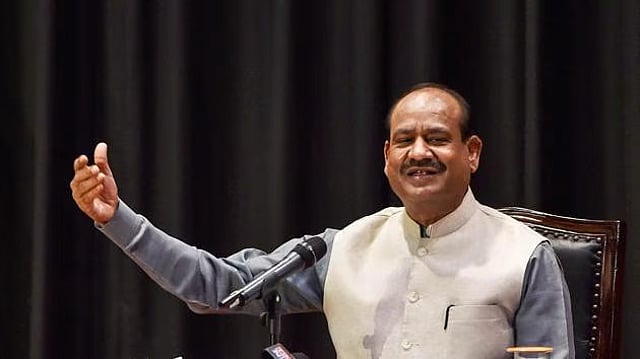
Lok Sabha Speaker Om Birla will represent India at the swearing-in ceremony of Tarique Rahman as Bangladesh’s Prime Minister.
The move signals India’s intent to maintain strong bilateral ties with Bangladesh across trade, security, and regional cooperation.
The ceremony in Dhaka is expected to draw key leaders and diplomats, highlighting Bangladesh’s role in South Asia.
Lok Sabha Speaker Om Birla To Represent India At Oath-Taking Of Bangladesh PM Tarique Rahman
The Awami League, which ruled for fifteen years under Sheikh Hasina, has been banned from the contest. The Jamaat-e-Islami-led alliance, which won 77 seats, will sit in opposition.
Summary
Lok Sabha Speaker Om Birla will represent India at the swearing-in ceremony of Bangladesh’s Prime Minister-designate Tarique Rahman.
Rahman is set to take the oath of office in Dhaka following his party’s victory in the recent general elections. The ceremony is expected to be attended by senior political leaders, diplomats, and foreign representatives, underscoring its regional significance.
India’s decision to send the Lok Sabha Speaker is being seen as a gesture of continued engagement and support for strong bilateral ties between the two neighbouring countries. New Delhi and Dhaka share close cooperation in areas including trade, connectivity, security, energy, and cultural exchanges.
Officials said India looks forward to working closely with the new government in Bangladesh to further strengthen the partnership and advance shared interests in the region.
Bangladesh remains a key partner for India under its ‘Neighbourhood First’ policy. The swearing-in ceremony is expected to highlight the importance of stable democratic transitions and regional cooperation in South Asia.
Two days after the Bangladesh Nationalist Party (BNP) secured a landslide victory in the February 12 parliamentary elections, the dust is finally settling on one of the most consequential political transitions in the nation's history. With 212 seats in the 299-member parliament, the BNP under Tarique Rahman has returned to power after nearly two decades in the political wilderness. The Awami League, which ruled for fifteen years under Sheikh Hasina, has been banned from the contest. The Jamaat-e-Islami-led alliance, which won 77 seats, will sit in opposition. The mandate is unambiguous. But what does it mean for Bangladesh's place in the world? How does the new Dhaka view its neighbours India, China, Pakistan, and its relationship with the United States? To answer these questions, one must listen not to campaign rhetoric, but to the signals emerging from BNP sources and the quiet diplomacy already underway.
For India, the BNP's victory is a moment of profound strategic anxiety. For fifteen years, New Delhi built its eastern neighbourhood policy around Sheikh Hasina's predictability. She delivered on security cooperation, transit access to the Northeast, and keeping a firm check on anti-India militant groups. In return, India offered unstinting political support and a studied silence on the steady erosion of democratic institutions inside Bangladesh. That era is over. And Dhaka's new leadership is signalling, with unusual candour, that the relationship must be rebuilt on fundamentally different terms.
Advertisement
Published At: