India’s human rights landscape in 2025 is strained, with worsening air pollution, deepening water scarcity and a continued decline in press freedom.
Air quality remains a significant threat, cutting Indian life expectancy by an average of 3.5 years, with Delhi and Kolkata among the world’s most polluted cities.
Water insecurity persists, as millions still lack reliable access, infrastructure remains inadequate, and poor urban households bear the high costs of clean water.
Press freedom continues to erode, with India ranking 151 in the 2025 index and journalists facing legal pressure, online restrictions and rising threats to independent reporting.
International Human Rights Day: India’s Growing Fundamental Rights Deficit
India enters a pivotal moment as environmental strain and democratic fragility raise questions about the nation’s preparedness and resolve to secure a healthier, freer future.

Summary
The year 2025 was marked by military conflict, uneasy ceasefires, and diplomatic promises, alongside major political shifts such as changes of government in the US and Canada and a vote of no confidence that shook Japan.
With Gen Z-led disaffection contributing to political upheaval in Nepal and natural disasters devastating Sri Lanka and Afghanistan, the observance of International Human Rights Day on December 10 feels more urgent than ever.
This year’s theme is ‘Our Everyday Essentials’, and in the context of India, the necessity of its acknowledgement demands immediacy. While we look at the larger picture, it is crucial to witness the daily lives of civilians.
India ranked 118th out of 147 countries in the 2025 World Happiness Report, which measures factors such as GDP per capita, social support, life expectancy, freedom of choice, generosity and perceptions of corruption.
While these are broad issues shaped by bureaucracy and governance, it is equally important to recognise the fundamental rights to clean air and safe water.
“The Supreme Court has reiterated several times that the right to a clean environment is actually the right to life. With Article 21, it is established that it is a basic human right of a citizen,” said environmentalist Vimlendu Jha.
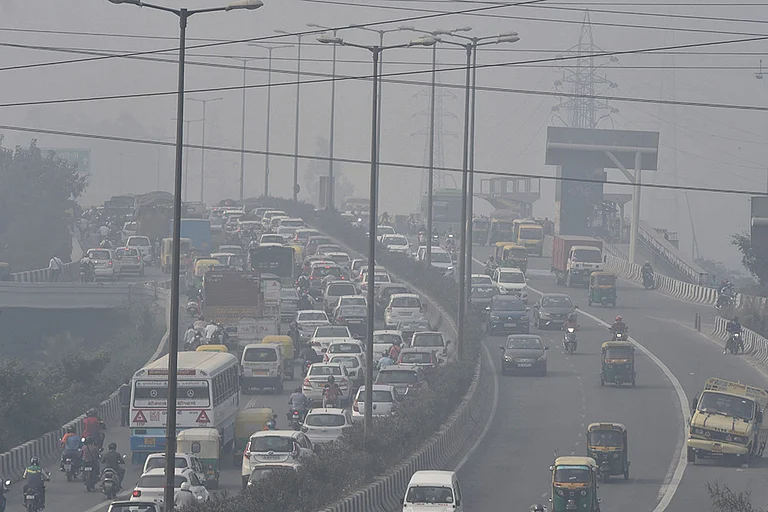
According to the Air Quality Life Index, across the world, particulate pollution shortens the average lifespan by about two years, making it more lethal than smoking and the single greatest external threat to human health.
South Asia remains the most polluted region, where dirty air cuts life expectancy by an average of three years — rising to more than eight years in the worst-affected areas.
In India, every one of 1.4 billion residents lives in an area where annual particulate levels exceed the WHO standard. Particulate pollution reduces the average lifespan of Indians by 3.5 years. By comparison, child and maternal malnutrition shortens life by 1.6 years and tobacco use by 1.5 years.
Advertisement
In the most polluted region — the Northern Plains — 544.4 million people could gain an average of five years of life if particulate levels met the WHO guideline, and 1.6 years if they matched India’s national standard.
To tackle the pollution, India launched the National Clean Air Programme in 2019, initially aiming to cut particulate pollution by 20–30 per cent from 2017 levels by 2024.
In 2022, the government strengthened the target to a 40 per cent reduction by 2026 and expanded the list to 131 cities. If achieved, these cities’ annual PM2.5 exposure would fall by 21.9 µg/m³ from 2017 levels, extending life expectancy by 2.1 years for residents of these cities and by 7.9 months nationally.
“Everything has been affected by air pollution. We've actually seen many doctors come forward and talk about how the pollution actually affects your brain and morbidity, and has a direct impact on people's well-being,” said Jha.
Advertisement
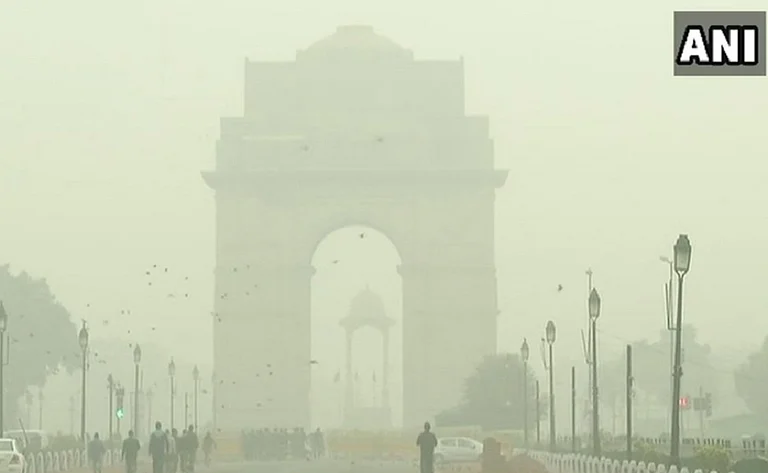
Like clockwork, this winter too, Delhi was shrouded in thick smog, once again topping global pollution charts. According to SwissIQ Air’s live tracker on December 9, two of the three most polluted cities were in India — Kolkata and Delhi — with Lahore in second place.
Between 2017 and 2024, India’s Byrnihat and Delhi ranked among the world’s most polluted cities, based on data aggregated from more than 80,000 monitoring points.
Jha said that in Delhi, there exists a “very, very dense, if not accurate, but dense monitoring regime.” He said there are at least 39 air quality monitors in Gurgaon, which perhaps has a similar population. But, only three air quality monitors are operational, and others are shut down.
The diagnosis of air pollution itself is fractured in the country, said Jha, noting that while air quality monitoring at stations is configured to stop at 500, the pollutants do not.
Advertisement
Water Pollution and Scarcity
According to NITI Aayog’s 2019 ‘Composite Water Management Index’ report, India is facing the most acute water crisis in its history, with nearly 600 million people living under high to extreme water stress. Conditions have worsened to the point that India ranked 120th out of 122 countries in the global water quality index.
“Our national security is dependent on our food security and our water security,” said S Masood Husain, ex-Chairman of the Central Water Commission.
He stated that access to drinking water is better in big and middle-class cities, especially since the Jal Jeevan Mission has provided drinking water facilities, which have used groundwater as a resource. However, “we have yet to provide drinking water facilities to all our citizens, to all of our population. That is the fact,” he said.
Husain noted that if drinking water is not available, if one has to walk two to three kilometres to fetch water, “that certainly affects the fundamental rights and that right to live, right to life.”
Advertisement
India, an agriculture-based country, has a complex relationship with water and its management. Husain said that India is using about 80 per cent of its total water resources for irrigation, and productivity is lower than in some comparable countries, such as China. While water is a state subject, Husain mentioned that the government must plan and present a budget that meets their needs.
As for domestic usage in big cities like Delhi, which he mentioned is a unique case, Husain stated that, even though water availability is adequate, there is a loss of water in the management system. “The amount of water Delhi gets is higher compared to other European and American cities, but somehow, we have not been able to manage it efficiently.”
With an ever-increasing population in the capital, the systems have to be upgraded, he said, mentioning that even the pipelines are not upgraded, “they are leaking.”
As a result, Delhi’s citizens have to pay for clean water out of their pockets. A recent Greenpeace India Water Access Audit (August 2025), based on a survey of 500 households across 12 bastis in Delhi, showed how families are paying a heavy price for water. With monthly incomes usually between Rs 6,000 and Rs 10,000, many families reported spending Rs 500 to Rs 1,500 on water each month, up to 15 per cent of their income.
“Sometimes, in our country, most of the time, they don't keep pace with the population or the increased requirements. That is the general case, not only in water, but in many of our important sectors of the economy,” said Husain, adding that water is dependent on land and other natural phenomena.
India needs a complementary approach to develop water, by increasing the per capita storage, which in “our country is very, very low at 200 cubic metres per capita.” Unless and until we have storage, we will not be able to manage water, he concluded.
India’s Press Freedom Has Taken a Nosedive
On the very first day of 2025, freelance journalist Mukesh Chandrakar was killed. His body was found two days later at a road construction site in Chhattisgarh. Chandrakar reported on corruption involving local contractors in the road-building business, DW reported.
The postmortem report showed severe injuries to his head, chest, back and stomach. Police suspected that the murder was motivated by Chandrakar's journalistic work.
In 2025, India ranked 151 out of 180 in the World Press Freedom Index, a report compiled by Reporters Without Borders (RSF), an international non-profit organisation. Its position has steadily declined over the years, slipping from 140 in 2019 to 142 in both 2020 and 2021, then further to 150 in 2022 and 161 in 2023. It ranked 159 in 2024.
Countries ranking below India in 2025 include Bhutan, Pakistan, Turkey, Palestine, China, Russia, Afghanistan, Syria and North Korea. RSF in 2024 also stated that at least 13 of the 28 journalists killed since 2014 were working on environmental-related subjects, mainly land seizures and illegal mining for industrial purposes.
“Press freedom is a fundamental human right because it is directly linked to the right to information, which enables citizens to make informed choices and exercise their freedoms meaningfully,” Kunāl Majumder, Program Coordinator, Asia-Pacific region, Committee to Protect Journalists.
Majumder noted that while Article 19 protects press freedom in India, over the last decade, the space for free and independent journalism has clearly narrowed. “This is not only about journalists being arrested or charged under tough security laws like the UAPA, or reports of surveillance. We are increasingly seeing what many describe as lawfare, where criminal laws, defamation cases and even tax surveys are used to pressure media organisations and individual reporters.”
He mentioned that at the same time, tighter online regulations and a growing number of takedown orders have made it harder for journalists to work freely on digital platforms.
“At least 15 journalists have faced UAPA investigations since 2014, and two of them, including Irfan Mehraj in Kashmir and Rupesh Kumar Singh, who reported on tribal issues, remain in jail as undertrials,” he mentioned, adding that India is also repeatedly flagged internationally for internet shutdowns and censorship that hinder reporting and public access to information.
The Committee to Protect Journalists has written to heads of government across Asia ahead of International Human Rights Day, urging them to immediately free reporters imprisoned for their work.
Statistically, Asia has the highest number of imprisoned journalists in the world. “Around 32 per cent of imprisoned journalists globally are from this region, with China and Myanmar among the worst jailers,” said Majumder.
Speaking about India's case, he said that for India to attain genuine press freedom, the authorities need to both recognise and protect the media's role. “This means stopping the misuse of law enforcement against journalists and newsrooms, addressing online threats through fair and transparent regulation, and taking proactive steps to ensure journalist safety.”
He added that while “India calls itself the world’s largest democracy and often refers to itself as the 'mother of democracies.” Democracy is not only about elections”.
It also relies on a free and independent press, which is often described as the fourth pillar of democratic society. Protecting journalism is therefore essential to protecting India’s democratic values, he said.
Published At: