Three International Criminal Court judges have filed a lawsuit in a US federal court challenging sanctions imposed by the Trump administration.
They argued the measures were unlawful and intended to pressure judicial decision-making.
The judges said the restrictions blocked access to financial services, travel and digital platforms.
ICC Judges Sue Trump Administration Over Sanctions, Call Measures Unlawful
The sanctions were imposed following the ICC’s arrest warrant for Israeli Prime Minister Benjamin Netanyahu and the court’s earlier Afghanistan investigation involving alleged war crimes by US troops.

Summary
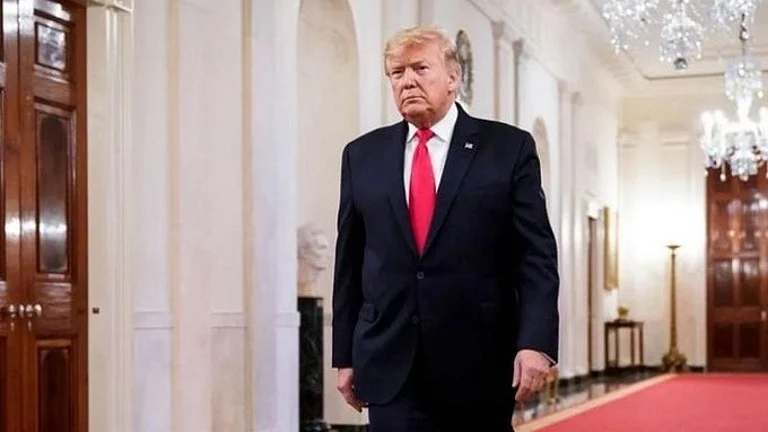
Three judges from the International Criminal Court (ICC) have filed a lawsuit against US President Donald Trump and his administration, challenging sanctions imposed on them last year and arguing that the measures were unlawful.
The complaint, filed in federal court in Manhattan on Wednesday, was brought by judges Kimberly Prost of Canada, Solomy Balungi Bossa of Uganda and Reine Adelaide Sophie Alapini-Gansou of Benin. The judges argue that the sanctions were intended to pressure members of the court and interfere with their judicial independence.
According to the lawsuit, the Trump administration’s sanctions amounted to an attempt to punish judicial decisions and influence future rulings.
“The Sanctions Regime … is designed to exert extra-judicial pressure on these judges and their colleagues on the ICC bench by targeting their financial and other personal interests, with the objective of punishing them for prior judicial decisions and coercing them into prioritizing their private interests over deciding cases on the basis of the law and facts,” the lawsuit said.
The judges further argued that the sanctions had severely disrupted their personal and professional lives.
“Being subjected to such sanctions under IEEPA is tantamount to the financial death penalty. Due to the sanctions, Judges Prost, Bossa, and Alapini-Gansou are no longer able, among other things, to use credit cards; access banking services; use common online platforms, such as Amazon and Google; book travel; and in some cases, obtain health insurance,” it said.
The lawsuit also claims the measures prevent the submission of evidence and legal arguments in ongoing and future proceedings before the judges.
The sanctions were imposed by the Trump administration in response to actions taken by the ICC, including the court’s issuance of an arrest warrant for Israeli Prime Minister Benjamin Netanyahu and an earlier decision to pursue an investigation into alleged war crimes by US troops in Afghanistan.
Advertisement
As part of the sanctions, the judges’ assets and property under US jurisdiction were blocked, while US-based individuals and entities were barred from conducting transactions with them, including through the “provision of funds, goods or services”.
The filing argues that the sanctions exceeded the authority granted under the International Emergency Economic Powers Act (IEEPA) and were not based on a legitimate national emergency or extraordinary threat.
Established in 2002, the ICC has jurisdiction to prosecute genocide, war crimes and crimes against humanity in member states or in situations referred by the UN Security Council. While the court’s authority extends across its 125 member countries, several states — including the United States, China, Russia and Israel — do not recognise its jurisdiction.
This is not the first confrontation between Trump and the ICC. During his first term, his administration imposed sanctions on then-ICC prosecutor Fatou Bensouda and one of her aides over the court’s Afghanistan investigation.
Advertisement
Published At:
Tags