Nepal hopes to claim $20 million from the fund after floods and landslides killed thousands and destroyed homes and infrastructure.
Nepal’s leaders estimate around $5 billion is needed to rebuild after the devastating floods.
Nepal faces competing climate fund demands, with nearly $3 billion requested but under $400 million available for disbursement.
How A New Climate Study On Nepal Floods Could Back $20 Mn UN Fund Claim
A new World Weather Attribution study linking climate change to Nepal’s deadly floods could strengthen its $20 million request from the UN Loss And Damage Fund

Summary
Nepal plans to use a new study linking climate change to last month’s deadly floods as the basis for a financial request from the United Nations’ Fund for Responding to Loss and Damage.
Nepal hopes to claim around $20 million from the fund, which supports countries affected by climate change. The request comes after massive floods and landslides swept through border towns and villages in Nepal and Tibet, destroying thousands of houses and energy infrastructure and leaving thousands dead or missing.
Around 1,400 people had died and 6,150 remained missing in Nepal as of Wednesday, according to official data cited by the BBC.
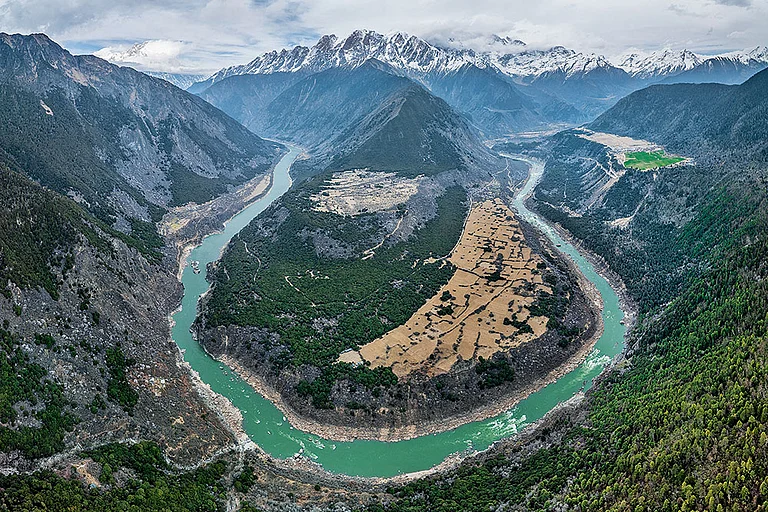
What Triggered The Floods
The floods were caused by the collapse of a rock wall and glacier ice near the peak of Langtang Lirung, a mountain on Nepal’s side of the Himalayas.
A new study by research group World Weather Attribution, published on Thursday, said climate change was a likely contributing factor in the avalanche of rock and ice that unleashed the floods.
The study described the disaster as a “compound event” involving rising temperatures, thinning glaciers, thawing permafrost and pre-existing geological weaknesses.
According to the study, temperatures in the area during July and August were around 1.5 degrees Celsius warmer due to human influence on the climate. Glaciers in the region had also been thinning by about half a metre a year. The study said this could weaken existing fractures and increase instability.
Heavy snowfall in October and November last year also contributed to a large amount of meltwater early this year. The study stressed that climate change was not the only cause of the disaster. Instead, it described climate change as a “destabilising factor acting on a pre-existing geological predisposition”.
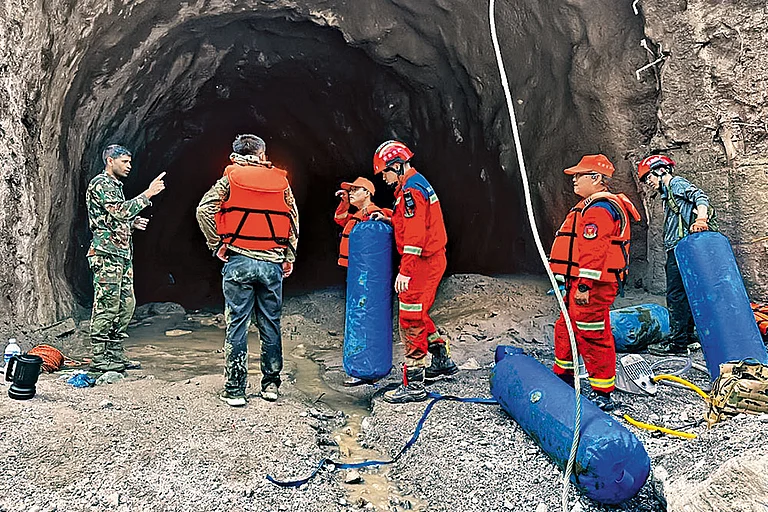
Why Nepal Wants Climate Funds
Nepal’s leaders have said the country needs around $5 billion to rebuild after the floods.
Advertisement
The UN Fund for Responding to Loss and Damage helps countries affected by climate change. It requires countries to submit evidence showing that the losses they suffered were caused by climate change.
Nepali officials had already been preparing satellite and drone images and preliminary reports to support their request.
The World Weather Attribution study is now being treated as the strongest evidence for Nepal’s claim that climate change was a significant factor in the collapse of rock and ice at Langtang Lirung.
“The report will be the main basis of our claim as it has detailed what role climate has played in this disaster,” Maheshwar Dhakal, spokesperson for Nepal’s Ministry of Agriculture, Forest and Environment, told the BBC.
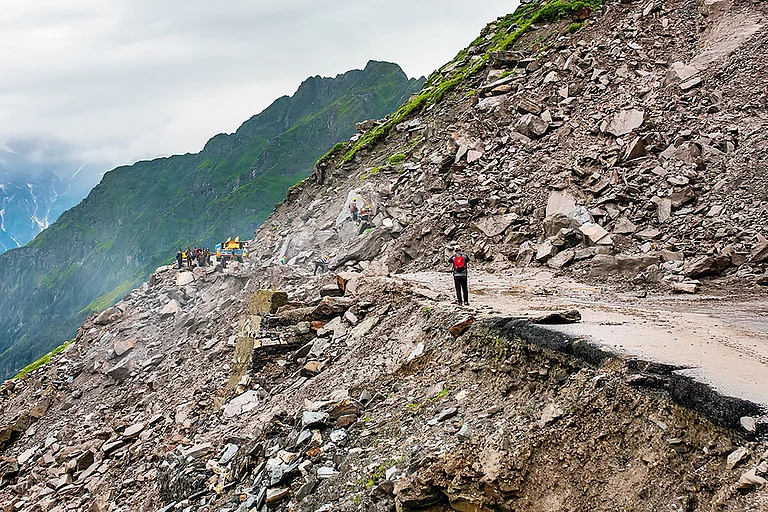
The Question Of Climate Compensation
Nepali authorities have said the country is one of the lowest contributors to greenhouse gas emissions but among the places most vulnerable to the effects of global warming.
Advertisement
Climate adaptation specialist Danya Liu of BloombergNEF told the BBC that Nepal had repeatedly used the term “compensation” for the recovery funds it needs.
She said the distinction pointed towards a “polluter-pays model”, rather than one in which countries affected by climate disasters bear most of the costs and depend on aid to fill the gaps.
In his first foreign trip as Nepal’s prime minister, Balendra Shah is scheduled to attend the United Nations General Assembly in New York next week, where he is expected to discuss the recent disaster and climate justice.

Can Nepal Get The $20 Million?
Nepal’s request comes as the UN fund faces competing demands from countries affected by climate change. Nearly 120 countries have already submitted claims to the Fund for Responding to Loss and Damage, with requests totalling nearly $3 billion.
Advertisement
However, the fund reportedly has just under $400 million allotted for disbursement.
Nepali officials said they had received wider support from some countries for the rapid disbursement of funds. Other countries, however, have stressed the need to follow established rules and procedures.
Officials responsible for the fund are scheduled to meet in December to decide which requests will be accepted and whether an urgent decision will be made for Nepal.

What The Study Says About Other Factors
The World Weather Attribution study also pointed to a possible role played by the 7.8-magnitude earthquake that struck Nepal in 2015 and triggered a rock-ice avalanche.
The study said the earthquake could have weakened the underlying rock mass, although it could not confirm its precise impact on the recent disaster.
The study has not been published in a peer-reviewed journal. According to the World Weather Attribution website, however, its studies use the same peer-reviewed method for analysing extreme weather events.
Advertisement
Its findings build on observations made by other experts after the disaster.
Simon Cook, a glacier expert at the University of Dundee, told the BBC that the study provided “some strong evidence” that climate change was a key factor, while saying it was not yet possible to establish exactly how the disaster happened.
He said more remained to be understood about the processes involved and how high-mountain regions could be monitored to provide early warnings of similar events in the future.
For Nepal, the study has now become central to its attempt to secure funds for reconstruction after one of the country’s deadliest recent disasters.
Published At: