Sexual violence against women transforming into a springboard for rage has been a common narrative trope.
The Indian censor board has hardly had any qualms about lengthy and graphic scenes of sexual assault on screen.
Through such tropes, the onus of social acceptability thus ends up shifting from the perpetrator to the survivor.
Through The Male Gaze: Silver Screen's Obsession With The Rape-Revenge Trope
The trope of transforming sexual violence against women into a springboard for rage that can only be channelled through counter-violence has long served as a popular framework in cinema, both globally and in India

Summary
Jothi (Sachana Namidass) is barely recognisable as she lies unconscious in a hospital bed. Her countenance, which once radiated confidence and strength, is shrouded in bruises. A broken Maharaja (Vijay Sethupathi) hovers over her, unable to look away from her injuries. His fellow colleague from the barber shop, Gopal thatha (Bharathiraja) limps into the room, weeping. “Why didn’t you inform me?” He asks Maharaja. “My heart aches to see this.” Maharaja shrinks quietly into a corner without a word. “If I were your age, I would find those mongrels, no matter where they are, and stab them to death. You’re a waste!” he exclaims at Maharaja and walks away. Consumed by guilt, shame and pain, Maharaja is left with nowhere to look.

Maharaja Poster IMDB
Nithilan Saminathan’s 2024 blockbuster Maharaja treads quite deliberately on the fine line between convention and anomaly as a rape-revenge thriller. While the scene above becomes the point of descension for Maharaja into an overdrive of violence to avenge his daughter’s rape, the film also establishes Jothi firmly as an empowered survivor. She is able to walk up to her perpetrator and tell him in no uncertain terms that she will move on from the violence. An otherwise protective father, who is capable of beheading villains, is forced to do her bidding. He refrains from killing Selvam (Anurag Kashyap) because she wants Selvam to know that it is she who is sparing his life.
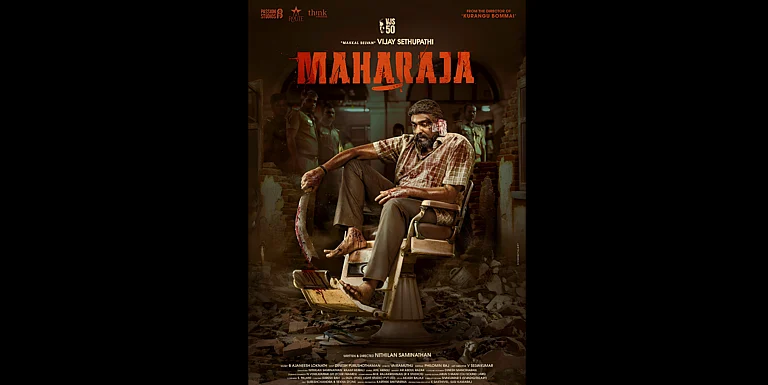
Yet, the film doesn’t stray too far away from larger trope. In a scene where the police and Maharaja identify one of the men who raped Jothi, Inspector Varadharajan (Natarajan Subramaniam) himself hands over a machete to Maharaja to kill the perpetrator. When a subordinate asks him whether he will get into trouble for doing so, he says that they will manage it, but this retribution is of utmost importance. “Wouldn’t we do it too, if it was our daughter?” Varadharajan asks him. While the siding of the state with the vigilante is a pivotal subversion, the scene ultimately reinforces the patriarchal idea that sexual assault is deeply entwined with a woman’s “honour”, and by extension, the “honour” of her family. It is no wonder then, that most films dealing with rape, especially Hindi films, term the act as “izzat lootna” (robbing of a woman’s respectability).
Advertisement
This extreme shock value—which underscores sexual violence against women and transforms into a springboard for rage that can only be channelled through counter-violence—has long served as a popular framework in cinema across the globe. Indian cinema, in particular, has used this narrative convention repeatedly through the decades across a range of cinematic genres, from action films, to family socials, murder thrillers and even horror. The Indian censor board, which doesn’t hesitate in wielding the scalpel on consensual scenes of romance or sexual intimacy, has curiously never had any qualms about rather lengthy and graphic scenes of sexual assault making their way into films.
Some sceptics argue in favour of the depiction of rape on screen. If rape is a social reality, then why should cinema hold back from reflecting it?
Some sceptics even argue in favour of the depiction of rape on screen. If rape is a social reality, then why should cinema hold back from reflecting it? On the surface, the argument may seem sound and tenable. But the deeper pitfall of this reasoning is that the stories we choose to tell are always determined by a gaze. And in the case of the rape-revenge film, more often than not, this gaze is patriarchal. The question isn’t whether rape or its consequences must be addressed in cinema, but how the depiction is framed and to what end.
Advertisement

For the longest time, Indian films have used a melodramatic framework to visualise rape on screen. The larger claim of showing rape scenes in cinema with the intent of social awareness falls flat when one looks at the element of titillation that governs the camera angles. From forcibly unclothing the woman to high-pitched screams, from clutching of hands and legs to impressions of survivors wrestling and resisting being held down and most disturbingly, the presence of witnesses who are either passive spectators or worse, active cheerleaders—all these have remained hackneyed symbolism of portraying rape in films. Rather than opening up a tabooed discussion on a rampant crime, such visualisation heightens the voyeuristic pleasure that is intrinsically associated with the mechanism of cinema. Such is the power of these visuals that they have also seeped into the imagery that is used by news media to represent news about sexual crimes. It essentialises rape as a character-defining act in a survivor’s life, reducing their being solely to victimhood. The onus of social acceptability thus ends up shifting from the perpetrator to the survivor.
Advertisement

Still from Raja Ki Aayegi Baaraat IMDB
The rest of the narrative that follows the rape in such films worsens the representation even more than the act itself. Rani Mukerji, who has now established herself as one of those stars who can single-handedly helm women-centric narratives, made her debut in Hindi cinema as a rape survivor who ends up marrying her rapist. In Raja Ki Aayegi Baaraat (1997), the court itself orders that she marries her assaulter, after she makes a rather impassioned speech about how she will be deprived of marriage and social acceptance because of her “tainted” status as a survivor. Such cinematic representation has done more damage than good to the cause of highlighting sexual violence against women in the country.

Bandit Queen Still IMDB
Even films, that have gained recognition for being “realist” and “restrained” while relaying stories of real-life survivors of sexual violence, suffer from a patriarchal saviour complex. In her 1994 essay The Great Indian Rape-Trick, author and activist Arundhati Roy offers a searing critique of Shekhar Kapur’s Bandit Queen (1994), seemingly based on the life of Phoolan Devi, even as its version of events were vehemently contested by her while she was alive. While Devi’s sexual assault by Thakur men remained a part of her life’s trajectory, her crimes and exploits went far beyond retribution for that one single act. However, as Roy rightly points out, the assault itself becomes a “centrepiece” in Kapur’s film, and all versions of Devi’s stories are made to fit the narrative in a way that turn the assault into the most defining moment of her life. Apart from the many other fallacies of the film, what this narrative choice does is rob the survivor of her agency over her own story.
Advertisement
A significant consequence of such framing then, is the overdrive to establish the image of a “pure victim”—someone who was hitherto innocent, virgin and high on the moral quotient. This is an imagination that is sold as much by cinema as it is by news. Think of a film like Aaghaaz (2000), where Govind’s (Suniel Shetty) sister Ratna (Shraddha Nigam) is raped by goons in their residential locality. When he meets her after the assault, a lengthy flashback of her childlike innocence plays out, making him even more distressed over what has transpired. Then think of the BBC’s 2015 documentary on Jyoti Singh, victim of the 2012 Delhi gang rape case, titled, India’s Daughter. This framing of a “pure victim” is crucial—it makes the rage and following outburst of violence justified. For the spectator, the effectiveness of this rage diminishes if the woman is confident, outgoing and in control of her own narrative. This is why Suzette Jordan, the survivor of Kolkata’s Park Street gang rape in the very same year, was not publicly perceived as the “nation’s daughter”. Then, as public discourse will have it, “she was asking for it”.

Bulbbul Youtube
It is when one thinks of these larger pitfalls of the rape-revenge trope that Roy’s scathing words hit even harder: “It’s hard to match the self-righteousness of a film-maker with a cause. Harder when the filmmaker is a man and the cause is rape.” This is not to say that there has not been a significant shift in contemporary cinema. In recent times, women filmmakers are attempting to change the visual language in which rape is conceived on screen, subverting many patriarchal conventions in the process. The most prominent example in recent memory remains Bulbbul (2020) by Anvita Dutt Guptan, which not only centres the survivor of sexual violence as the protagonist, but cleverly uses horror and myth to frame a narrative of vigilante justice. Bulbbul (Triptii Dimri) doesn’t just set out to avenge herself, but also every other girl and woman who suffers at the hands of men in her village. Her divine transformation into a “chudail” (witch) through powers bestowed by the goddess herself also subverts the myths around witchcraft, which continue to circulate in various parts of the country and are still used to hunt down women who do not toe patriarchy’s line. However, Dutt Guptan too cannot seem to register the need for this reclamation without subjecting her protagonist to extreme violence. The nearly two-minute scene of sexual assault that Bulbbul is subjected to after already sustaining injuries from a gruesome physical assault earlier is not only excessive, but also aesthetically stylised for dramatic effect. One continues to wonder then, whether it is possible to have a conversation about rape through cinema, where the story is the survivor and not the rape itself.
This article appeared as a part of Outlook's March 11 issue Femme Fatale which looks at how popular media has shaped narratives of violence against women over the years and rewrites the language of male gaze in media which commodifies and condemns the women who make headlines.
Published At: