Gurvinder Singh's new film, Rehmat, premiered in main competition at Locarno Film Festival 2026.
It adapts three short stories by acclaimed Punjabi writer Ajeet Cour.
Naseeruddin Shah collaborates with Gurvinder Singh for the first time.
Rehmat Review | Gurvinder Singh’s Film Offers An Antidote To Our Fractured Times
Locarno Film Festival 2026 | Naseeruddin Shah lends soul, mystery and ache to a dignified drama that maps three of Ajeet Cour’s stories onto present-day Punjab.

Summary
Gurvinder Singh’s Rehmat is a balm for these troubled times. Singh’s latest, premiering in Locarno’s main competition, has the heart and indelible humanity of the best films. Adapted from Ajeet Cour’s stories, the film’s quiet defiance springs from extraordinary empathy. It’s an invitation to consider the weight of Punjab’s political history through a lens that replaces resentment with openness that feels as free as the sky.
As customary to Singh, Rehmat funnels no background score to cushion moments but achieves its own mood and atmosphere. The opening stretch is a masterclass in staging tension, evoking something lurking in the wings. The quiet expanse of a house, the cover of night, the thunder and rains-each element knots in anxious anticipation of the hidden fugitive. The film starts inside a house, marked by grief and desolation. Seema (Diya Kamboj) has briefly moved back in with her mother (Mita Vasisht) who’s unmoored after her son got killed. Witnessing her distraught mother who needs company, Seema wonders if she should stay longer and skip a semester. Nights are interspersed with the mother waiting for the sound of an express train rolling by. They wrap their dinner and head to sleep. But something tugs at Seema. Tracing her steps to the storeroom, she’s startled by a man who’s broken in and laying low. He’s injured. He tells her he means no harm. The sincerity in his tone humbles her even as she is shaken. Initially he’s concealed from the viewer. We listen to his appeal.
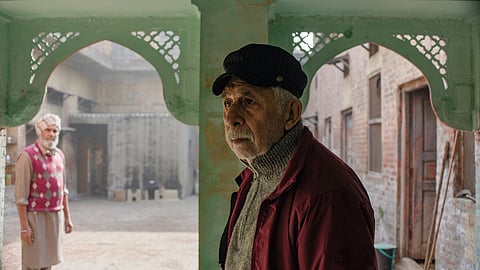
Still Pavo Films
As the first of three softly interknit chapters in Rehmat, Seema, despite tentativeness, takes a stance of radical empathy. The police are combing the neighbourhood for a ‘militant’. Seema’s sneaking in food, medicine and a couple of hours’ rest for the fugitive (Harwinder Aujla) isn’t framed as some feat of bravery. Rather, it’s a gesture of care for the vulnerable. It’s what the establishment is driven to suppress. Kamboj is a memorable portrait of a dilemma, a ball of nervous uncertainty. Her harbouring of a man on the run is interlocked with ensuring her mother doesn’t cross paths. The utter absence of a score sharpens the intensity. Every minute of extra time the fugitive requests is fraught. Singh complicates Seema’s quandary on an emotional level. However, on being confronted with a difficult choice, Singh retains hope. Vitriol disseminated by the State machinery runs dry when faced with people trying to look out for one another no matter the severity.
Advertisement
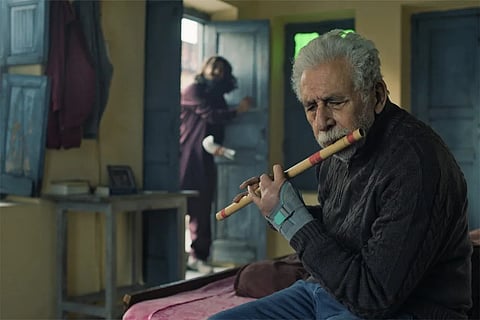
Still Pavo Films
Singh threads this section to what follows next. The fugitive’s family gains focus. His elderly parents are keening for news of his whereabouts. It’s been a year. They ask if their son, Balwinder, can be branded a criminal just for having a gun. Balwinder’s wife, Kiran (Navjot Randhawa), stolidly holds the fort, jostling to send her kids school. The bereavement, a crippling sense of directionlessness, especially haunt the son. There are bullies but also pockets of reassurance. In a particularly wrenching scene, the son breaks down in class. His school seniors incite him toward violence and revenge, but Singh’s film is always careful to foreground benevolence, a surge blazing a path out of the muck and morass.

Amidst all these churn, Rashid Ali (Naseeruddin Shah) arrives, a sudden blessing. A jovial visitor from abroad, he jokes about himself being God who’s on vacation. Cheekily, he tells most problems appear to be rising from this place (“some wanted a visa”, “some wanted their son saved from drugs”), so he thought of dropping by. Shah is absolutely delightful. A tender, wise film creeping up on you, Rehmat approaches his character with more than a tinge of impishness. Slowly, he gathers this solemn, undeniable air of deep history. He’s emblematic of the frayed majesty the derelict mansions he peers at.
Advertisement
Rehmat gradually spills out of domestic interiors, a tremulous realm of secrecy, onto the streets and lanes. It moves from urban scenes to rural Punjab, harking to the memory of a place. History simmers alive as Rashid walks through the village, taking in what once was, the changes, the violence and decay wrought. It lingers with him as he observes his childhood space anew. The trees too have viewed the vagaries of time.

In this polarised age, where every attitude to the other is vitiated by prejudice, Rehmat gracefully proposes a pushback. It’s about the generosity of strangers. It’s about love, kindness, solace, everything we hold dear and intimate that’s under threat today. As the State scrambles to erase, muffle and mute its past, replacing it with convenient, alternative retellings, Singh’s film deeply wants to clutch onto the faded, papering walls, insisting on a shared humanity which cuts past purported chasms. Wherever he goes, Rashid is allowed in. It’s an intimacy that hovers near familial care, spread by unfamiliar faces, the most casual passer-by.
Advertisement
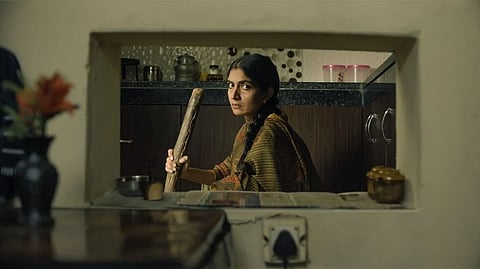
Still Pavo Films
Locals welcome Rashid like he’s their own. it’s the police who remind him to be wary, in view of the current political climate. With characteristic liveliness, he shuts them down. The villagers themselves become his biggest advocate, crowning him as their pride. The endless cycle of horror Punjab is stricken with could have compelled it towards spite. Yet, it chooses to turn away, embracing not suspicion but kinship and hospitality for the unknown other. There’s acceptance and warmth despite bullying, intimidation and absolute terror left in the wake of the separatist movement. The film acknowledges the abyss but not without a glimpse of faith in bridges and dialogue.
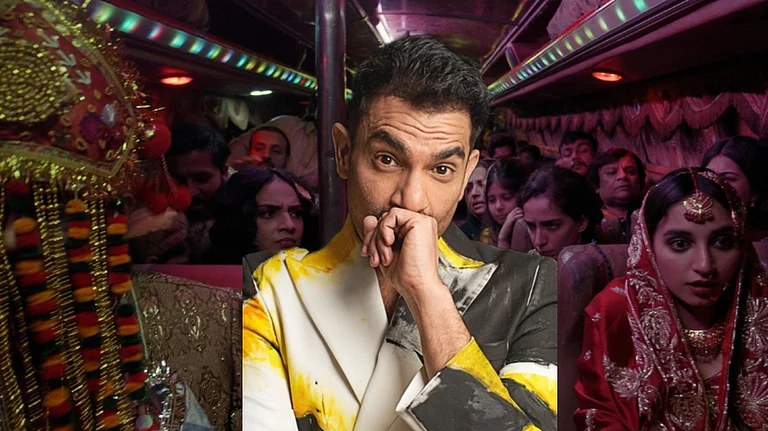
Shashank Walia’s camera keeps panning across the breadth of houses, establishing them as archives of the times. The walls carry feeling, emotion, throbbing with the witnessed, the forgotten. We’re urged to trail the emotional map of history and migration. Rashid arrives as a reinstatement of heritage that the country is intent on burying altogether. Shah infuses him with an elegiac edge. In a dolorous sense, he’s symbolic of the ravages Punjab has seen through the decades since Partition. Singh’s film casts a sobering assessment of a place, mottled communities that have been ripped apart, situating them within all that time, the past and false narratives have cut loose. Rehmat nudges a reconciliation. With quiet, unshakable power, it holds us rapt.
Advertisement
Published At: