Pyre follows a Kumaoni couple confronting old age and isolation after 28 years of waiting.
Padam Singh Kapri and Hira Devi bring lived-in performances to Vinod Kapri’s 2026 drama.
The film explores migration, abandonment and 65 years of companionship against an unforgiving mountain landscape.
Pyre Movie Review | Vinod Kapri’s Portrait Of Ageing And Abandonment Is Painfully Real
Padam Singh Kapri and Hira Devi bring an unvarnished honesty to this Kumaoni drama about an elderly couple, a son who never returns and a village slowly losing its people

Summary
There is something deeply unsettling about growing old in a place that the rest of the world has already begun to leave behind. Vinod Kapri’s Pyre (Chita), set in the Kumaon region of Uttarakhand, follows an elderly couple whose lives have narrowed to their home, their goats and the hope that their son will return from Mumbai. It is a film about ageing and abandonment, but also about what it means to keep living when the people and places you depend on are slowly disappearing.
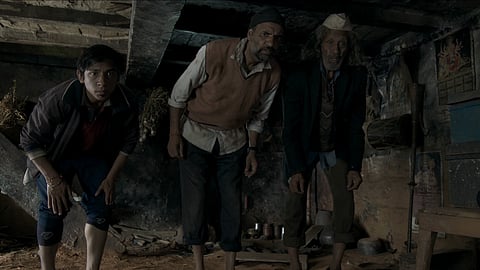
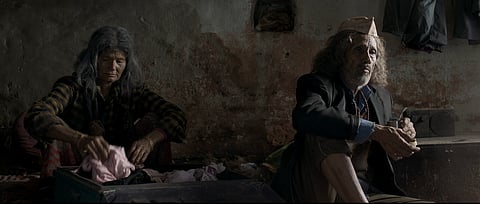
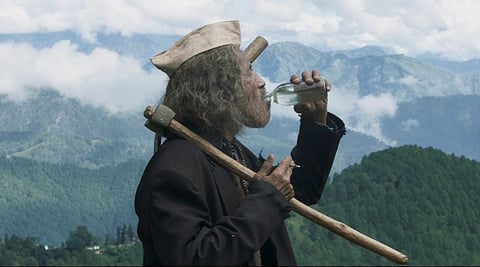
Padam Singh Kapri plays Padam Singh, an elderly shepherd known as Bubu, while Hira Devi plays Tulsi, his ailing wife. Their circumstances are established without much fuss. The house is in poor condition, the surrounding settlement is becoming emptier and even getting medical attention requires considerable effort. There are no picturesque mountain homes designed for a travel brochure here. The dirt, the isolation and the daily inconveniences are part of the characters’ lives. Pyre makes little attempt to beautify their circumstances, and this lends its world a welcome sense of reality.
A Still From Pyre YouTube
The film opens with an unsettling sequence involving a man and a woman on a mountain, before cutting to Bubu rushing out of his home to seek help. Tulsi has been unwell, and her condition becomes one of the immediate concerns of their everyday existence. The early scenes also establish the presence of alcohol in village life. Drinking is shown as an ordinary part of the social environment, with its consequences folded into the routine rather than treated as a dramatic spectacle. Kapri allows these details to accumulate, giving the setting a texture that feels observed rather than manufactured.
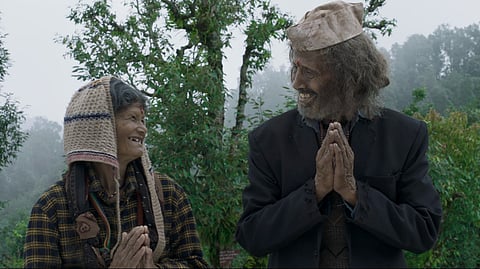
The heart of Pyre, however, is the relationship between Bubu and Tulsi. They have spent around 65 years together, having married when Tulsi was just ten. Their affection has survived a lifetime of hardship, and it is expressed through arguments, irritation and small acts of concern. Bubu can be short-tempered and difficult, yet his anger does not erase his attachment to Tulsi. He worries about her health and tries to find ways to help her, even as his own age and circumstances limit what he can do.
Advertisement
A Still Of Tulsi and Bubu YouTube
There is something recognisable about the way these two live together. They do not need grand declarations to establish their bond. Their familiarity comes through in their everyday exchanges, in the things they expect of each other and in the care that persists beneath their quarrels. Tulsi, meanwhile, appears to have reached a point where her will to live is fading. Their relationship becomes a moving reminder that love can remain strong even when the body begins to give up.
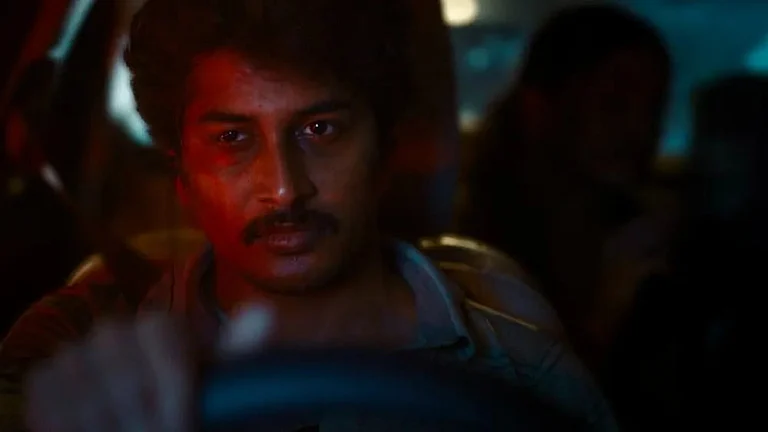
Their son, Hariya, left for Mumbai 28 years ago in search of work. He had promised his parents a different life, including the prospect of showing them the train journey that had taken him away. He never returned. His absence is not simply a family wound; it is tied to the larger problem of migration from the hills, where the lack of jobs and basic facilities pushes younger people towards cities. At one point, the stark reality of life here is summed up in the observation that there is no school, electricity or road. Even the postman does not regularly make his way up to these settlements.
Advertisement
Bubu understands that the village is running out of people. With more residents preparing to leave, he begins calculating how much time he and Tulsi might have left. His bleak assessment of the time remaining to live is among the film’s hardest-hitting ideas. It is not an abstract fear of death. It comes from knowing that the people who might have helped them are leaving, while their own ability to manage without assistance is diminishing.
A Still Of Hariya YouTube
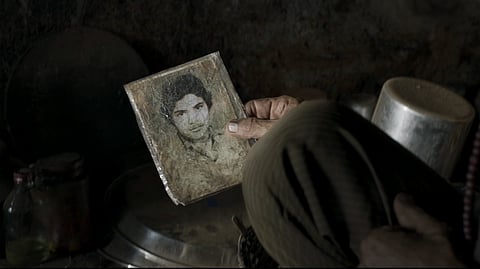
The prospect of Hariya’s return briefly changes everything. A letter brings news that their son intends to come home, and hope enters a life that has become defined by waiting. Bubu begins giving away his goats, the animals that represent one of his few remaining sources of money. As Tulsi responds to the possibility of seeing her son again, the couple’s future seems to open up. Yet the question hanging over this happiness is difficult to ignore: what happens to them after the reunion, and who will look after them once the excitement has passed? The film understands that a homecoming cannot automatically undo nearly three decades of absence.
Advertisement
When Hariya fails to arrive as expected, the disappointment is devastating. The couple’s renewed hope gives way to helplessness, and their vulnerability becomes painfully apparent when illness leaves them unable to care for themselves. A young person who helps them becomes an important presence in their lives. The contrast between the son they continue to await and the person who actually shows up for them gives the story much of its emotional force.
Kapri’s direction is at its strongest when he allows the circumstances to speak for themselves. Manas Bhattacharyya’s cinematography captures the mountain landscape without turning it into a postcard. The wide views establish the scale of the terrain, while the couple’s modest home and the increasingly deserted surroundings underline how far removed they are from the conveniences others take for granted. The film’s visual simplicity suits its subject. Its world feels worn down by time, with little separating the beauty of the landscape from the hardship of living within it.
Advertisement
A Still From Pyre YouTube
Padam Singh Kapri and Hira Devi are central to this effect. Their performances have an unaffected quality that makes Bubu and Tulsi feel like people encountered in real life rather than characters shaped for easy sympathy. Subhash Chandra, Shubham Chaudhary and Sadab Khan support the film, helping establish the community around the couple and the changing circumstances of the village. Mychael Danna and Amritha Vaz’s music complements the setting without needing to dictate every emotional response.
The film does lose some momentum in its middle stretch. Its deliberate pace occasionally makes the waiting feel repetitive, and the emotional weight of the couple’s circumstances can become overwhelming. Still, its central concern remains compelling. The title gains its full significance as Bubu confronts the possibility of his own end, bringing the story’s questions about loneliness, dignity and abandonment into sharper focus.
A Still Of Bubu YouTube
Pyre is an affecting film whose strongest moments come from its attention to ordinary lives. It does not offer easy answers about migration, family responsibility or the neglect of remote communities. Instead, it leaves us with the sight of two people who have spent a lifetime caring for each other, facing old age in a place that has fewer and fewer people left to care for them. Their love gives the film its warmth, while the world around them makes that warmth all the more difficult to hold on to.

Published At: