Rajkummar Rao leads a courtroom drama that examines justice beyond punishment.
Lalit Prabhakar brings chilling intensity to his portrayal of Ajmal Kasab.
Avinash Arun’s film revisits the 26/11 attacks with emotional weight and restraint.
Prahaar Review| Rajkummar Rao’s Ujjwal Nikam Fights For Justice Beyond Kasab’s Death Sentence
Directed by Avinash Arun, Prahaar: The Untold Story of Ujjwal Nikam explores the 26/11 Mumbai attacks through the courtroom battle between Rajkummar Rao’s prosecutor and Lalit Prabhakar’s Ajmal Kasab

Summary
There is a question at the heart of Prahaar: The Untold Story of Ujjwal Nikam that goes beyond whether Ajmal Kasab deserved the death penalty. What does justice mean when the man standing trial has already surrendered his humanity to an ideology that taught him to kill? Directed by Avinash Arun, the film approaches one of the darkest chapters in Mumbai’s history through the courtroom battle between public prosecutor Ujjwal Nikam and the man responsible for his most defining case. It is an emotionally affecting drama that finds its strongest moments in the psychology of terrorism, the pursuit of justice and the uncomfortable personal cost of professional obsession.
Rajkummar Rao plays Nikam, the prosecutor tasked with securing justice for the victims of the 26/11 Mumbai attacks. The film does not spend its entire runtime recreating the horrors of that night. Instead, it follows the legal proceedings, the investigation and the effort to understand the man sitting in the dock. Lalit Prabhakar plays Kasab, while Sikander Kher appears as Abbas Kazmi, the lawyer who agrees to defend him. Jaideep Ahlawat plays Zulfikar, a character who adds another dimension to the film’s exploration of the machinery that produces terrorists.
One of the film's most compelling ideas is that executing Kasab was not necessarily the hardest part of Nikam's job. Kasab was, in many ways, a small cog in a much larger system. He had been trained, manipulated and conditioned to believe that killing in the name of his cause was righteous. Death, even at the hands of the Indian justice system, was not something he appeared to fear. In his own distorted understanding of the world, it could even be an honourable end.

A Still From Prahaar YouTube
This is where Prahaar becomes more interesting than a conventional courtroom drama. Nikam’s challenge is not simply to establish Kasab’s guilt but to penetrate the psychological conditioning that allows him to defend his actions. The film examines how poverty, money, religious manipulation and systematic brainwashing can be used to manufacture a willing participant in violence. It does not ask the audience to sympathise with Kasab or excuse his crimes. Instead, it attempts to understand how a human being can be turned into a weapon, and what remains of his conscience once the process is complete.
Advertisement
The film's exploration of Kasab's deteriorating psychological state is particularly effective. His interactions with Nikam acquire a different significance as the proceedings unfold. The prosecutor is fighting for justice for the victims, but he is also trying to confront a man who has been trained to see himself as a martyr rather than a murderer. The distinction matters. A death sentence may punish a criminal, but making him confront the consequences of his actions is a different battle altogether.

A Still From Prahaar YouTube
Rajkummar ’s line, “Justice hurried is justice buried,” captures this distinction. The film understands the public appetite for swift punishment after a national tragedy, yet it makes a case for allowing the law to take its course. The courtroom exchanges and their twists and turns hold attention because the stakes extend beyond the verdict. Justice has to be established through evidence and due process, not merely delivered as a spectacle of national anger.
Advertisement
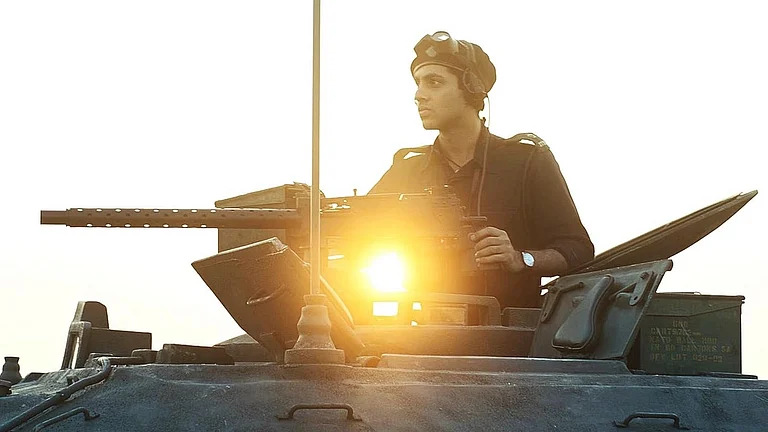
Rao brings the intelligence, temper and obsessive drive of Nikam to the screen. His Marathi accent is convincing, and his performance is particularly effective when the prosecutor has to balance courtroom precision with flashes of anger. There is a recognisable contradiction in his character: a man capable of extraordinary professional concentration who struggles to offer the same attention to the people closest to him.
Prabhakar is equally important to the film’s success. Playing Kasab requires him to convey menace without reducing the character to a one-dimensional villain. His performance traces the disturbing distance between the man who committed these crimes and the humanity that the process of radicalisation sought to destroy. The film allows the audience to register the damage inflicted on Kasab’s conscience without inviting sympathy for the violence he inflicted on others.

A Still Of Lalit Prabhakar YouTube
Ahlawat brings a different kind of weight to the narrative. Through Zulfikar, the film considers the ideological machinery behind terrorism and the world that shapes men into instruments of violence. Ahlawat understands the character’s place within this system and gives the role a convincing sense of conviction. His performance adds depth to the film’s larger argument that the problem cannot be understood by examining the individual criminal alone.
Advertisement

A Still From Prahaar YouTube
Kher also makes an impression as Abbas Kazmi. His presence introduces an important counterpoint to the prosecution, reminding us that defending an accused person is part of the legal process, regardless of the public outrage surrounding the case. The film finds a degree of mutual respect between the lawyers on opposing sides. That is an important choice. It recognises the difference between opposing a person’s actions and denying the principles that make a fair trial possible.

A Still of Sikander Kher YouTube
The film’s more personal conflict lies in Nikam’s relationship with his family. His professional dedication comes at a considerable cost. He is frequently absent from family life, consumed by cases even when important moments at home demand his attention. His wife, played by Wamiqa Gabbi has a tumour, yet he has been so occupied with his work that he has failed to understand the seriousness of her condition. His relationship with his son Aniket, played by Ritvik Sahore, is similarly strained, with anger and resentment standing between them. Aniket’s decision to leave his position as a junior in his father’s courtroom gives that conflict a tangible consequence.
Advertisement
There is an interesting gender question buried in this portrayal. Nikam’s brilliance and determination are undeniable, but the film also shows how his professional excellence is sustained by neglecting his domestic responsibilities. His wife and son are left to absorb the cost of his ambition. The narrative does not exactly celebrate this behaviour, presenting it instead as a fact of his life. Yet audiences have long romanticised the flawed genius whose work supposedly demands every waking hour. Would the same obsession be admired so readily if a woman prosecutor neglected her family to the same extent? It is worth asking, particularly because the film does not fully interrogate the imbalance it puts on screen.

A Still of Wamiqa Gabbi YouTube
The family drama occasionally feels underdeveloped, especially beside the more absorbing courtroom proceedings. Still, Nikam eventually spending time with his wife in hospital offers a necessary glimpse of the person beneath the public figure. These moments remind us that professional heroism does not automatically translate into emotional responsibility.
One of Prahaar's strongest choices is its refusal to turn the tragedy into an excuse for indiscriminate hatred towards an entire nation. The film distinguishes between the people responsible for terrorism and those who resist it, including individuals on the other side of the border who understand the destructive nature of the system. The lawyers' professional respect and the film's broader anti-war sentiment offer a welcome alternative to the usual rhetoric surrounding cross-border conflict.
The recreation of the attack at Chhatrapati Shivaji Maharaj Terminus is among the film's most affecting sequences. Rather than relying only on scale and violence, it brings the tragedy closer through the experience of ordinary people who suffered that night. This emotional counterweight gives the courtroom proceedings a human purpose. The victims are not simply names attached to a historic case; their lives are the reason the pursuit of justice matters.

A Still From Prahaar YouTube
The soundtrack strengthens the emotional impact, while Avinash Arun keeps the film grounded in its legal and human conflicts. At times, the pacing takes too long to find its rhythm, and the father-son subplot does not always feel as fully developed as the central case. The film could also have examined its supporting women with greater depth. These shortcomings prevent it from becoming the definitive courtroom drama it occasionally threatens to be.
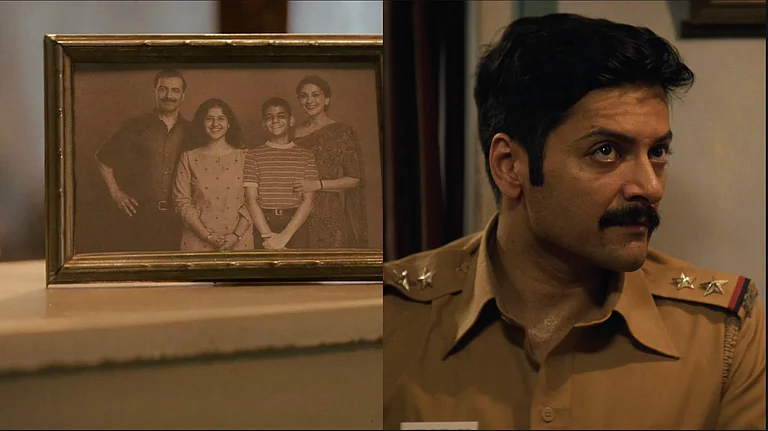
Nevertheless, Prahaar remains an engaging watch, anchored by committed performances and a compelling examination of what justice requires beyond punishment. It is at its best when it trusts the courtroom, the psychological conflict and the suffering of the victims to carry the story without manufacturing additional drama. The film may not answer every question it raises, but it understands that justice is more than revenge.
Published At:
Tags