Cross-industry movement has reshaped Indian cinema, challenging Hindi film dominance while spotlighting South Indian actresses as pan-Indian forces with distinct identities.
Despite linguistic and cultural barriers, these actors have navigated Bollywood on their own terms, often without abandoning the sensibilities that defined them in regional cinema.
This listicle features ten South Indian actresses who have built parallel careers across industries while retaining their individuality.
10 South Indian Actresses Who Made Their Mark In Bollywood
From language barriers to industry gatekeeping—these actresses navigated a resistant system and emerged with careers that cannot be tied down to one industry.

Summary
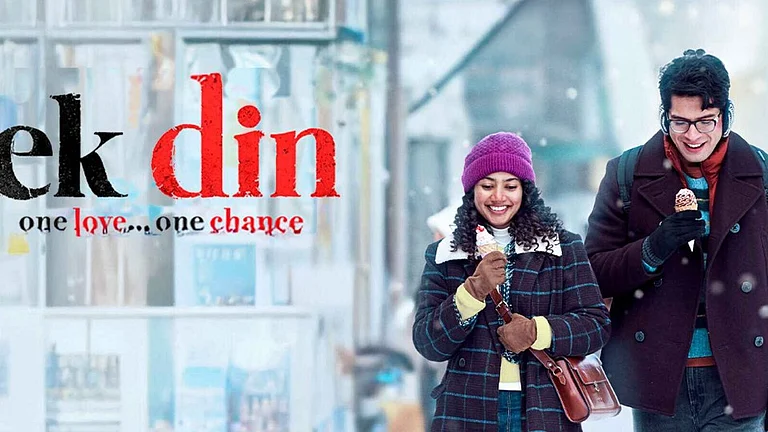
Sai Pallavi, well-known for her performances in Tamil and Telugu cinema, is now stepping into Bollywood with Ek Din, releasing on May 1, 2026, opposite Junaid Khan. At a recent promotional event, she apologised for her imperfect Hindi, admitting that the moment carried both excitement and a flicker of nerves. Her fumbling through Hindi and being met with indulgent admiration underlines a familiar imbalance. Fluency in Hindi is treated as a prerequisite for acceptance, a standard seldom applied in reverse.
Hindi cinema has long carried itself as the default “national” film industry. This claim feels increasingly fragile in the face of formidable South Indian industries that have shaped stardom and storytelling on their own terms. What was once a one-way migration: actors moving northward in search of scale, has turned into a far more dynamic and well-established circuit. This has resulted in a porous cinematic landscape where Indian star identity is negotiated across multiple regional industries, even extending to Hollywood.
For actresses in particular, this movement has rarely been frictionless. The Bollywood ecosystem expects assimilation, but offers limited space to retain linguistic or cultural specificity. Entry into Hindi cinema often demands adjustment of speech, adhering to beauty standards and even the pressure to carry their regional audience with them as proof of worth. Despite this, several women have negotiated these barriers with remarkable agility, building parallel identities across industries and being legible in more than one cinematic language.
This listicle features 10 such actresses who have left their mark on the regional as well as Bollywood industry:

Sai Pallavi X
Known for her assured performances and resistance to conventional glamour, Sai Pallavi built her reputation with films like Premam (2015) and Fidaa (2017), where she charmed audiences. She followed it with Maari 2 (2018) and Love Story (2021), where her performances consistently revealed a woman meant for more. Her upcoming Hindi projects, including Ramayana and Ek Din (2026), arrive after she has already successfully defined her terms.
Advertisement

Ileana D’Cruz X
With a career that took off in Telugu cinema through Devadasu (2006) and Pokiri (2006), Ileana D’Cruz entered Bollywood with Barfi! (2012), a performance that earned her the Filmfare Award for Best Female Debut. She occupied an unusual equilibrium—equally comfortable in commercial entertainers like Main Tera Hero (2014) alongside emotionally complex roles like in Rustom (2016). There is an ease to her screen presence which perhaps explains her longevity across industries.

Nayanthara X
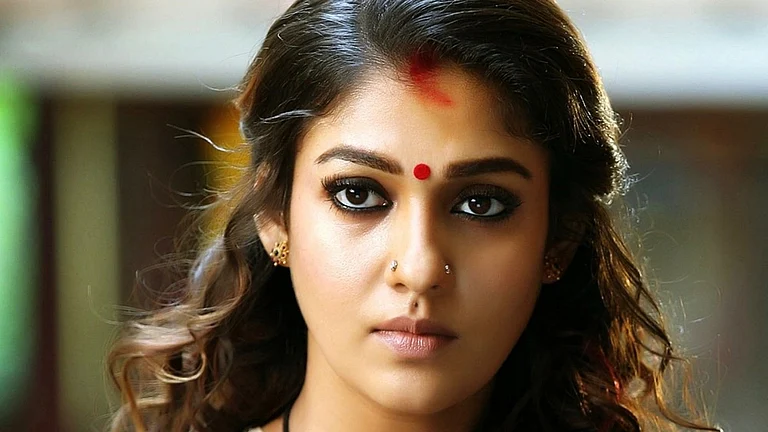
Often called the ‘Lady Superstar’, Nayanthara commands a rare autonomy in South cinema with films such as Raja Rani (2013) and Aramm (2017), where she frequently leads narratives without male anchors. She featured in major successes such as Ghajini (2005), Billa (2007), Yaaradi Nee Mohini (2008) and Boss Engira Bhaskaran (2010). Her Hindi debut in Jawan (2023) introduced her to a wider audience, though it only hinted at the scale of her influence down South. The film extended her reach, allowing her to inhabit a pan-Indian stardom that few achieve without compromise.
Advertisement
Rashmika Mandanna Instagram
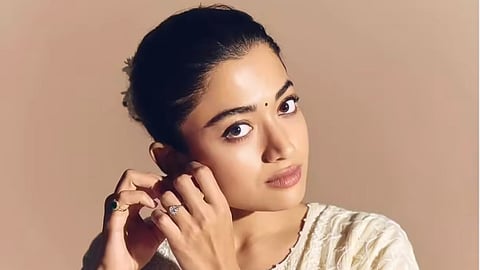
Rashmika Mandanna’s rise has been swift, powered by the success of Geetha Govindam (2018), Pushpa: The Rise (2021), Kuberaa (2025) and The Girlfriend (2025). Her transition into Bollywood with Goodbye (2022), Chhaava (2025) and Animal (2023) reflects an attempt to balance mass appeal with more layered parts. She brings a certain buoyancy to her performances though her challenge remains in finding roles that match the dynamism she displays in Telugu cinema.


Tamannaah Bhatia Vogue India
Tamannaah Bhatia’s career is defined by scale. From the grandeur of Baahubali: The Beginning (2015) and Baahubali 2 (2017) to lighter Hindi films like Himmatwala (2013), she has navigated vastly different cinematic worlds. Her adaptability is her greatest asset, though Bollywood has not always utilised her range effectively. Her recent films like Sikandar Ka Muqaddar (2024), Stree 2 (2024) and Vedaa (2024) have elevated her range. She has alternated between mainstream visibility and more intimate storytelling, sustaining relevance across formats.
Advertisement
Genelia D’Souza Deshmukh X
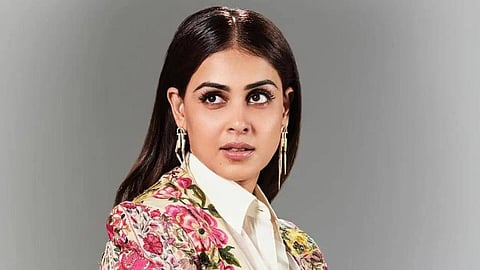
Genelia brought a distinctive effervescence to early 2000s cinema, with Bommarillu (2006) earning her widespread acclaim and a Filmfare Award (Telugu). In Hindi films like Jaane Tu… Ya Jaane Na (2008), she embodied a kind of youthful spontaneity that felt refreshing. Her career, though less prolific in recent years, has taken an upward turn with her most recent appearance in Sitaare Zameen Par (2025).

Parvathy Thiruvothu X
Beginning early, Parvathy stepped into cinema at 17 with Out of Syllabus (2006) and has since built a steady, thoughtfully chosen body of work. From the quietly assertive radio jockey in Bangalore Days (2014) to the guarded, self-contained queer woman in Her (2024), she has leaned towards parts that sit in complex and emotionally tense roles. Her Tamil films, including Poo (2008), Maryan (2013) and Thangalaan (2024) follow a similar line. In Hindi cinema, she made her debut with Qarib Qarib Singlle (2017), opposite Irrfan Khan, where the ease between the two performances carried the film and allowed her to carve a distinct space for herself in Bollywood.
Advertisement

Tabu IMDb
As a two-time national award winner, Tabu operates in a league of her own. With a formidable Hindi filmography including Maachis (1996), Chandni Bar (2001) and Haider (2014), she has consistently chosen performances that allow her to exhibit range and complexity. Tabu has also featured in quite a few Malayalam, Bengali and Tamil films too—like Iruvar (1997), Coolie No. 1 (1991) and David (2013). Her most recent outing in the South was alongside Allu Arjun in Ala Vaikunthapurramuloo (2020). Tabu is next set to appear in Puri Jagannadh’s action thriller Slumdog—33 Temple Road (2026). She has also begun shooting for Nagarjuna Akkineni's landmark 100th film, which is tentatively titled King 100.

Priyamani Instagram
A National Award-winning actor who has never quite followed the expected script, Priyamani first secured critical acclaim with Paruthiveeran (2007). Much of her earlier career has unfolded across Tamil, Telugu, Malayalam and Kannada cinema. Her work in Thirakkatha (2008) won her the Filmfare Award (Malayalam) and Chaarulatha (2012), where she delivered a dual performance, secured her the Filmfare Award (Kannada). She also appeared in Mani Ratnam’s bilingual Raavan (2010) and the political drama Rakta Charitra II (2010). Most memorably, the dance number “1 2 3 4” from Chennai Express (2013), gave her mainstream recall across audiences. More recently, her roles in Maidaan (2024), Article 370 (2024), Jawan (2023) and The Family Man (2019—) signals a continued engagement with Bollywood on her own terms.
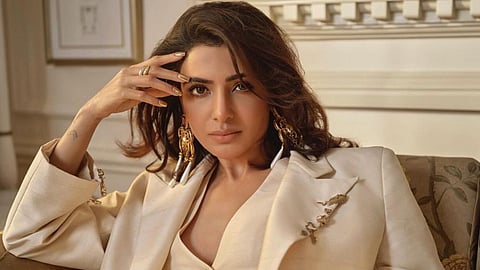
Samantha Ruth Prabhu Instagram
Samantha Ruth Prabhu entered the scene with Ye Maaya Chesave (2010), carrying a kind of emotional openness that immediately clicked with audiences. Instead of settling into that image, she kept pushing against it, choosing something as tonally unusual as Eega (2012), then leaning into full-scale commercial cinema with Theri (2016) and Rangasthalam (2018). With Super Deluxe (2019), she disrupted her own star image, choosing experimentation over likeability. By the time she arrived in Hindi with The Family Man: Season 1 & 2 (2019,2021), she had already expanded her audience and reframed how she is read across industries.
Published At:
Tags