India produced more onions than required, but weather damage and storage losses reduced market supplies.
Unseasonal rain caused moisture damage, while heat and humidity led to widespread onion rotting.
Government intervention aims to lower prices, but farmers fear losing better returns after losses.
India Produces More Onions Than It Needs. So Why Does Onion Inflation Never End?
India has produced a bumper onion crop, but unseasonal rain and storage losses have reduced market supplies, pushing up prices and exposing the vulnerability of the country's onion supply chain

Summary
India has produced more onions than its domestic requirement this year. Yet, retail prices have risen sharply, touching up to ₹60 per kg in some markets.
The contradiction lies in what happens after the crop leaves the field. Unseasonal rain during the rabi harvest and subsequent losses during storage have reduced the quantity of good-quality onions reaching mandis.
India produced 307.37 lakh tonnes of onions this year. However, according to the information available, the present price rise is linked less to overall production and more to weather-related damage and the rotting of onions kept in storage.
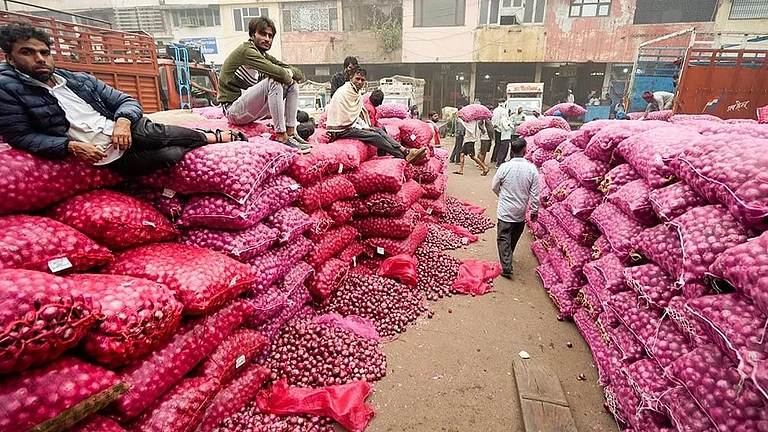
How Unseasonal Rain Affected The Crop
Heavy rain during March and April affected the rabi onion harvest and caused waterlogging in fields. Excess moisture entered the onions and later created problems when the crop was stored.
Heat and humidity during June and July worsened the situation. Moisture trapped within the onions contributed to fungal growth and internal rotting.
The result was that although the country had produced a large crop, a smaller quantity remained fit for sale in the market.

Storage Losses Reduce Market Supply
Around 25% of onions are normally estimated to be lost each year. This year, losses are estimated to have increased to between 35 and 40% because of moisture damage and rotting.
Around 110 to 120 lakh tonnes of onions are estimated to have been lost.
India consumes around 17 lakh metric tonnes of onions every month. With production estimated at more than 307 lakh tonnes, supplies initially appeared sufficient. But the loss of a significant part of the stored crop has reduced the quantity of marketable onions.
As fewer good-quality onions reach mandis, prices have risen.

Farmers Want Better Prices
The losses have also increased the cost burden on onion growers.
Advertisement
When a substantial part of the crop is damaged, the cost of seeds, fertilisers, labour and cultivation has to be recovered from the onions that remain saleable. The net cost of good-quality onions reaching mandis is estimated at around ₹30 to Rs 32 per kg.
Bharat Dighole, president of the Maharashtra Onion Growers Association, has said farmers need a wholesale price of at least ₹40 per kg to make a profit, as per India Today.
Maharashtra, India's largest onion-producing state, accounts for around 43 % of the country's onion production.
Farmers are now concerned that government intervention to reduce retail prices could affect their earnings after weather-related losses.
‘Kanda Express’
The central government has released buffer stocks to increase the availability of onions in markets facing rising prices.
Special ‘Kanda Express’ trains are transporting onions to major cities, including Delhi, Chennai, Kochi and Guwahati. The government is bearing transportation and storage-related losses and selling onions to consumers at a subsidised price of ₹35 per kg.
Advertisement
The intervention is aimed at increasing supplies, curbing hoarding and bringing down retail prices.
However, farmers fear that the move could again push prices down. They point to earlier periods when onions were sold in mandis for as little as ₹2 to ₹4 per kg, leaving growers unable to recover even their production costs.
India's latest onion price rise shows that high production alone does not guarantee stable prices. Weather damage and losses during storage can reduce the quantity of onions available for consumers, even when the overall crop is large.
Published At: