Rapid Action Force Inspector General Seema Dhundhia prohibited the use of Projectile Attack Guns, electric weapons, and electric shields during the Delhi deployment.
The decision followed a virtual meeting where Dhundhia pulled up commanders over the excessive use of force during the Sansad Chalo march at Jantar Mantar on 20 July 2026.
Social media videos captured RAF personnel deliberately knocking down and assaulting disengaged protesters during the demonstration.
RAF Inspector General Bans Pellet Guns In Delhi, Admits To Use Of Excessive Force
Social media videos showed RAF personnel deliberately knocking down protesters and assaulting disengaged individuals during the 20 July 2026 protest

Summary
Rapid Action Force (RAF) Inspector General Seema Dhundhia pulled up personnel and commanders during a virtual meeting on Wednesday over "excessive use of force" at Jantar Mantar, The Print reported.
Social media videos showed RAF personnel deliberately knocking down protesters and assaulting disengaged individuals during the 20 July 2026 protest. The actions drew intense scrutiny over the disproportionate response against the Sansad Chalo march.
RAF headquarters prohibited the use of Projectile Attack Guns (PAG), electric weapons and electric shields during the Delhi deployment, the report stated. Dhundhia directed personnel to strictly adhere to use of force guidelines and properly assess crowd dynamics.

Ban On Pellet Guns
A police officer told the news outlet, "She clearly instructed that during the current Delhi deployment, the situation has been analysed and PAG, Anti-Riot Gun (ARG), Electric Shock Weapon and Electric Shield will not be used or issued to the personnel till further orders."
According to the report, Dhundhia instructed all officers to refrain from making statements before the media.
He also directed field units to use approved crowd-control measures like lathi-charges and tear gas only in a graduated manner. Commanders must warn field units to ensure no unnecessary force is used against individuals moving past barricades or separated from the main crowd.
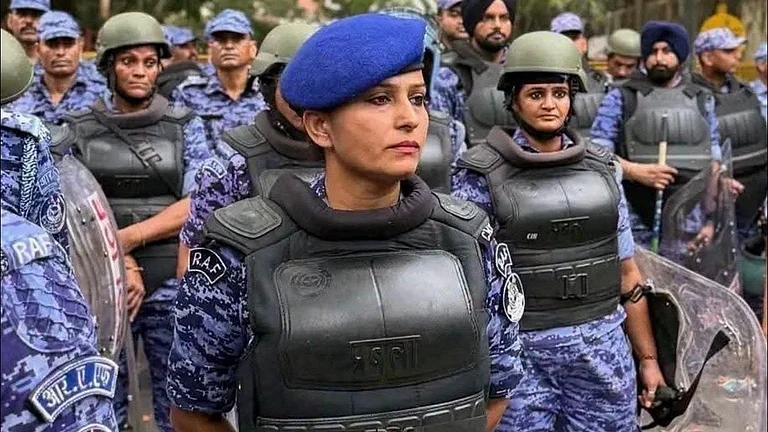
Distinct Approach For Delhi
The sector headquarters did not receive specific information regarding the operational strength and deployment of the 14 RAF companies deployed on Monday. Following the Monday march, the Central Reserve Police Force (CRPF) increased its footprint and airlifted more than a dozen companies to the national capital.
The report also stated that Dhundhia banned the immediate field deployment of personnel transferred from special operations zones without training in "Sensitive Policing" adding that officers must familiarise themselves with operational procedures and principles of crowd control before engaging protesters in the capital.
Advertisement
According to the report, a police officer said, "The IG emphasised that personnel transferring from the special operations zone such as Jammu & Kashmir, or other operational areas, possess a different work environment and operational perspective, but sectors such as Delhi, Bihar, Assam, and Maharashtra require a distinct and balanced approach to crowd control and public order management."
Published At: