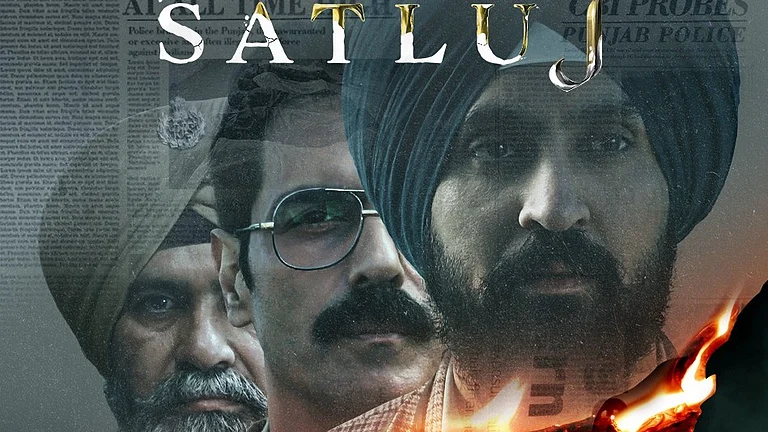
The removal of the Diljit Dosanjh-starrer film Satluj, originally titled Panjab '95, from an OTT platform has revived a long-running debate over Kanwar Pal Singh AKA KPS Gill, the former Punjab Police chief who led the state's counter-insurgency campaign during the peak of the Khalistan militancy.
Outlook Explains | Why KPS Gill Remains India's Most Controversial Police Chief
Revisiting KPS Gill, the 'Supercop' to his supporters, whose counter-insurgency campaign, controversies and contested legacy continue to divide opinion.

As the Director General of Police during Punjab's militancy, Gill is widely credited by his supporters with helping restore peace in the state.
However, he remains one of India's most controversial police officers, hailed by admirers as the "Supercop" who defeated militancy, while criticised by opponents over allegations of human rights violations and extrajudicial killings committed during the counter-insurgency campaign under his watch.
Why Supporters Call Him The 'Supercop'
Supporters of Gill argue that Punjab in the late 1980s and early 1990s was on the brink of total collapse. Militancy, backed by cross-border logistical support, had brought ordinary life to a standstill, with targeted killings, extortion and religious violence becoming daily occurrences.
Gill's strategy, often referred to as the "Gill Doctrine", transformed the demoralised Punjab Police into an aggressive counter-insurgency force. His supporters argue that the state's response succeeded where conventional political and military strategies had repeatedly failed.
Among the achievements credited to Gill are the dismantling of militant networks, the restoration of law and order and the creation of conditions that enabled Punjab to return to electoral politics.
One of the defining moments of his tenure came during Operation Black Thunder II in 1988. Unlike Operation Blue Star four years earlier, the operation flushed militants out of the Golden Temple without causing major damage to the shrine.
Supporters also credit Gill with creating the security environment that made the 1992 Punjab Assembly elections possible, paving the way for the return of civilian government.
Reflecting on the Khalistan movement in a 1993 interview with India Today magazine, Gill said, "There was never a movement for Khalistan. Even (Jarnail Singh) Bhindranwale rarely said so clearly. He would make a statement, then deny it and then deny the denial. Bhindranwale and his ideologues used the Two-Nation Theory, the same verbiage."
The Human Rights Allegations
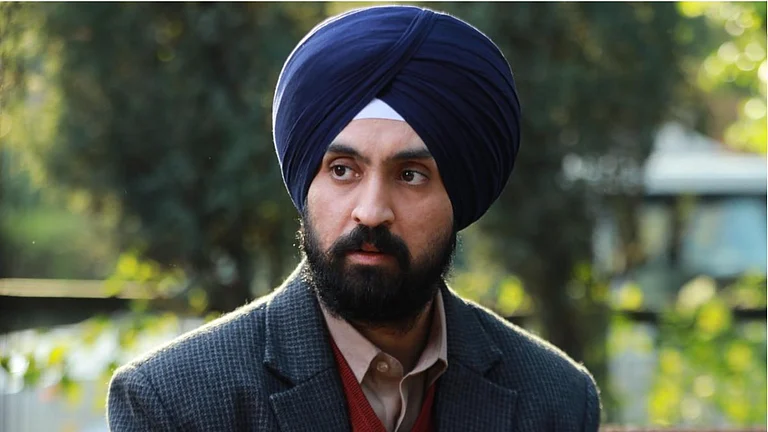
Human rights organisations present a starkly different account of Gill's tenure. The narrative showed in Satluj contends that while militancy was eventually brought under control, the methods employed by the security forces came at a significant human cost.
Advertisement
Critics allege that under Gill's leadership, the Punjab Police operated with near-total impunity, leading to widespread allegations of staged encounters, torture, enforced disappearances and secret mass cremations.
They argue that the restoration of peace was accompanied by serious violations of civil liberties and due process, claims that continue to fuel debate over Gill's legacy decades after the insurgency ended.
The Jaswant Singh Khalra Case
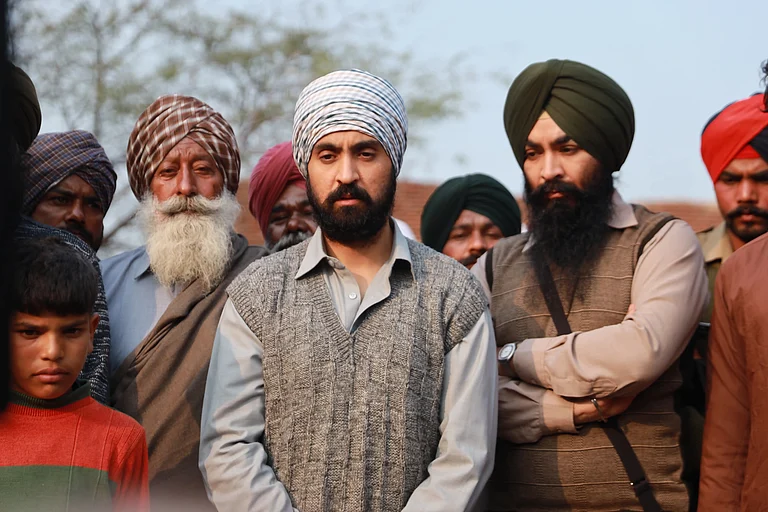
At the heart of Satluj is the story of bank manager-turned-human rights activist Jaswant Singh Khalra, whose investigations into alleged human rights violations became one of the defining episodes of Punjab's militancy years.
Khalra examined municipal records and claimed to have uncovered evidence suggesting that thousands of unidentified bodies had been secretly cremated by security forces.
In 1995, he was abducted and murdered by police personnel. His killing has since become one of the most prominent cases associated with the counter-insurgency campaign and continues to be cited by human rights groups as a symbol of alleged institutional excess during that period.
Advertisement
IPS Gill: Assam To Punjab
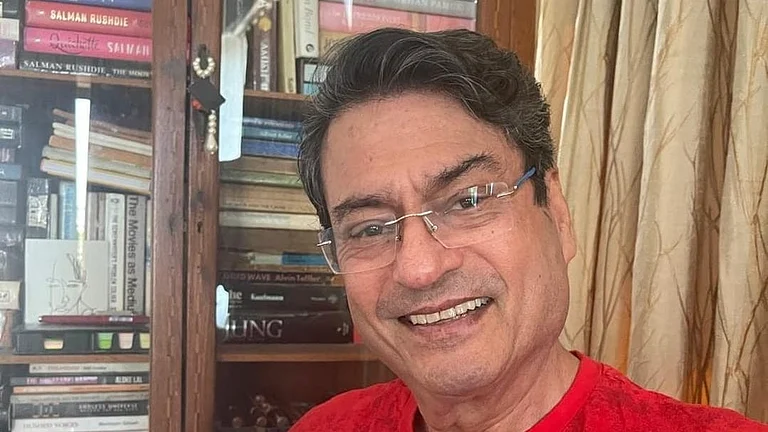
Gill was born in Ludhiana on December 29, 1934. Although born in Punjab, he grew up in Simla (now Shimla) after Independence. His father, Rachpal Singh Gill, was a senior government engineer, while his mother, Amrit Kaur, died when he was still a schoolboy. His father later remarried.
Gill graduated in English from Punjab University before joining the Indian Police Service in 1958 as part of the Assam-Meghalaya cadre, where he spent the formative years of his policing career.
Before his tenure in Punjab, Gill had already earned a reputation as a tough police officer in Assam. He served as Deputy Inspector General of Police during the Assam Agitation (1979–1985), the mass movement led by the All Assam Students' Union (AASU) against illegal immigration.
His tenure, however, became controversial following the death of Khargeshwar Talukdar, the 22-year-old AASU leader remembered as the first among the agitation's 855 martyrs. The episode marked one of the earliest major controversies of Gill's career and foreshadowed the debates that would later surround his role in Punjab.
Advertisement
Controversies After Retirement
After serving multiple extensions beyond the normal retirement age because of Punjab's security situation, Gill retired from the Punjab Police on December 31, 1995. "I'd been through three extensions. I can't be in Punjab forever," he told India Today magazine in 1996.
His retirement came only months after the assassination of Punjab Chief Minister Beant Singh in a suicide bombing carried out by the Khalistani outfit Babbar Khalsa International, an incident that also triggered criticism over security lapses.
Following retirement, Gill founded the Institute of Conflict Management in New Delhi and continued writing and speaking on terrorism and internal security.
However, controversy continued to follow him. In 1996, Gill was convicted in the sexual harassment case filed by senior IAS officer Rupan Deol Bajaj over an incident at an official party. The conviction significantly dented his public image.
Gill later served as president of the Indian Hockey Federation and remained an influential voice on national security issues.
Advertisement
In 2012, activists in the United Kingdom successfully campaigned against his participation in the London Olympics, alleging that he bore responsibility for widespread human rights violations during Punjab's militancy years.
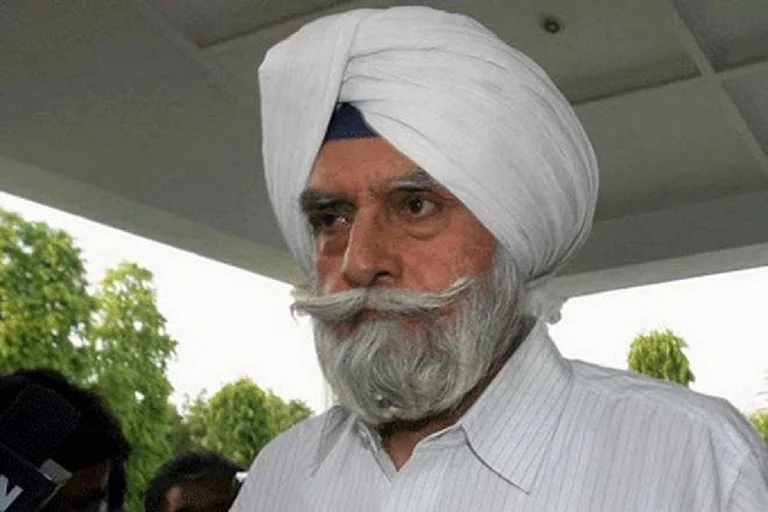
A Debated Legacy
Gill died in 2017, leaving behind one of the most polarising legacies in modern Indian policing. To his supporters, he was the police officer who helped defeat one of India's deadliest insurgencies and restore peace to Punjab at a time when the state appeared on the brink of collapse.
To his critics, he came to symbolise a counter-insurgency campaign marred by allegations of impunity, enforced disappearances, extrajudicial killings and human rights violations.
The renewed debate surrounding Satluj has once again brought these competing narratives into sharp focus, highlighting why Gill's legacy continues to remain one of the most fiercely contested chapters in India's modern political and policing history.
Published At: