FIRs against CJP protesters do not automatically establish guilt or conviction.
Pending cases can still affect passports, government jobs and overseas study plans.
Peaceful protest is constitutionally protected, though unlawful conduct can attract prosecution.
Outlook Explains: How Can An FIR Impact The Future Of Students Involved In CJP Protests?
The Constitution protects peaceful protest. Article 19(1)(a) guarantees freedom of speech and expression, while Article 19(1)(b) protects the right to assemble peacefully and without arms

Summary
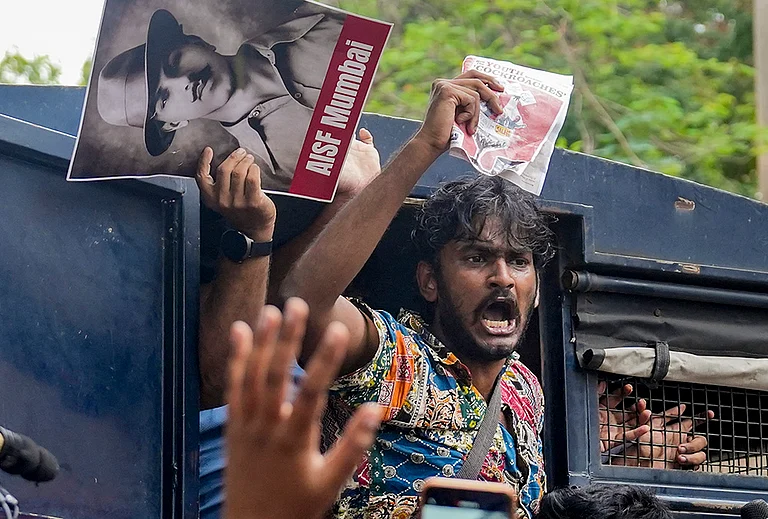
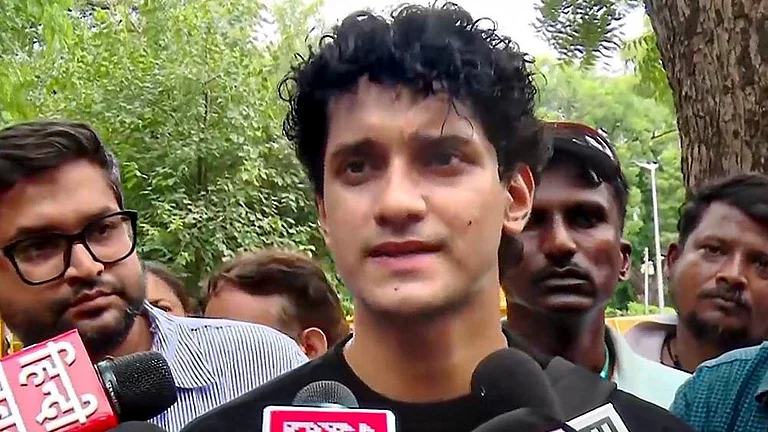
As police action against students and young people participating in protests called by the Cockroach Janta Party (CJP) intensifies, many of those booked are confronting a question with consequences far beyond the demonstrations: what does being named in an FIR mean for their future?
In Mumbai alone, close to 1,500 people were reportedly booked, as reported by Indian Express, over the past week in connection with the protests, with many young participants individually named in FIRs.
For several of them, this is their first interaction with the criminal justice system. An FIR, however, does not establish guilt. It only sets the investigation in motion. What follows depends on whether police eventually file a chargesheet, submit a closure report, the government seeks withdrawal of the case, or a court quashes the proceedings.
Is Participating In A Protest Illegal?
The Constitution protects peaceful protest. Article 19(1)(a) guarantees freedom of speech and expression, while Article 19(1)(b) protects the right to assemble peacefully and without arms. These rights are subject to reasonable restrictions, including those imposed in the interests of public order.
This means authorities can regulate the time, place and manner of demonstrations, but merely attending a peaceful protest does not automatically constitute a criminal offence.
The Bombay High Court reinforced this distinction in a 2025 protest-related case from Goa, observing: “Prosecutions must not be launched to stifle agitations that are part of the democratic process so long as people do not take the law into their own hands or indulge in violence or damage to public or private property.”
The court also stressed that the constitutional right to peaceful assembly should not be diluted through vague criminal allegations.
What Happens After An FIR Is Registered?
Once an FIR is filed, those named become accused in a criminal investigation and may be required to cooperate with police.
Many of the CJP-related cases reportedly involve bailable provisions connected to unlawful assembly. Being named does not necessarily mean immediate arrest.
Advertisement
After investigation, police can either file a chargesheet if they believe there is sufficient evidence or submit a closure report if no offence is made out.
If a chargesheet is filed and a court takes cognisance, the accused may have to execute bonds, appear during hearings and remain involved in the legal proceedings until the case is resolved.
Those named can also approach the High Court seeking quashing of an FIR if they argue that the allegations do not disclose any criminal offence.
Can An FIR Affect A Passport?
An FIR by itself does not automatically disqualify a person from obtaining a passport. Section 6(2)(f) of the Passports Act, 1967, allows authorities to refuse a passport when criminal proceedings are pending before a criminal court. Courts have repeatedly distinguished this stage from the mere registration of an FIR or an ongoing police investigation.
The difficulty usually increases once a chargesheet is filed and a court takes cognisance. In such cases, applicants may have to obtain permission from the concerned court before travelling abroad. Police verification can also flag pending cases, causing delays in issuance or renewal.
Advertisement
For students planning to study overseas, therefore, the stage of the criminal case becomes crucial.
What About Studying Or Working Abroad?
Visa and immigration rules differ from country to country, but many applications require disclosure of arrests, charges, convictions or pending criminal proceedings.
Countries including Canada, the United States, the United Kingdom and Australia ask applicants questions relating to criminal history. A pending case may lead to additional scrutiny even where there has been no conviction.
A protest-related allegation is not necessarily treated in the same manner as a serious offence involving violence, drugs or other grave criminal conduct. Much depends on the nature of the allegations, the status of proceedings and the immigration law of the country concerned.
Indian courts have also allowed accused persons to travel abroad for education in appropriate cases, subject to conditions and permission from the court.
Advertisement
Can It Affect Government Jobs?
A pending criminal case can come up during character and antecedent verification for government employment. However, an FIR does not automatically make a candidate ineligible.
In Avtar Singh vs Union of India, the Supreme Court held that employers must consider the nature of the offence, the circumstances of the case and its eventual outcome rather than applying a blanket rule.
Minor protest-related allegations may therefore be viewed differently from serious criminal charges.
What can create a separate problem is concealment. If an application specifically asks whether a candidate has faced arrest, prosecution or a pending criminal case, the information must be disclosed accurately. Suppressing such details can itself affect appointment.
Private employers may also conduct background checks, though there is no universal rule disqualifying anyone merely because an FIR exists.
Can The CJP Protest Cases Be Withdrawn?
Governments can seek withdrawal of protest-related criminal cases, subject to the legal process and, where required, court approval.
Advertisement
Withdrawal of cases and no further action against protesters was also one of the CJP’s key demands during talks with the Centre. The party called off its agitation after assurances that cases against protesters would be dropped and no punitive action would follow.
The Supreme Court has also provided interim protection, directing that no coercive action be taken against protesters until further orders, while allowing FIRs to remain on record. This means the cases have not automatically disappeared and must still be formally withdrawn, closed or quashed.
Published At: