Prime Minister Narendra Modi held his first telephonic conversation with Iranian President Masoud Pezeshkian since the US-Iran hostility truce.
Modi emphasized the importance of freedom of navigation through the Strait of Hormuz for Indian energy imports and global commerce.
India will send a special delegation led by Bihar Governor Syed Ata Hasnain and MoS Pabitra Margherita to Ayatollah Ali Khamenei's state funeral.
Modi Speaks To Iran President On West Asia Peace, Diplomatic Ties
The Prime Minister's Office stated, that Modi "reiterated India’s consistent position that all issues must be resolved through dialogue and diplomacy"

Summary
Prime Minister Narendra Modi spoke by telephone with Iranian President Masoud Pezeshkian on Tuesday, their first conversation since Tehran and Washington agreed to end hostilities. Pezeshkian and US President Donald Trump signed a memorandum of understanding to cease hostilities on June 17.
Modi hoped for "lasting peace in the region" and emphasized "the importance of freedom of navigation" through the Strait of Hormuz, a crucial corridor for Indian energy imports. In a subsequent post on X, Modi said he welcomed the negotiation progress and reiterated the necessity of secure navigation for global commerce.
The Prime Minister's Office stated, that Modi "reiterated India’s consistent position that all issues must be resolved through dialogue and diplomacy". The PMO added that Pezeshkian briefed Modi on regional developments and the way forward.
Delegation For State Funeral
An Iranian readout posted on X by its New Delhi embassy revealed Modi offered his formal sympathies, conveying condolences for the "martyrdom of the Supreme Leader and a number of Iranian civic officials and citizens during the recent war".
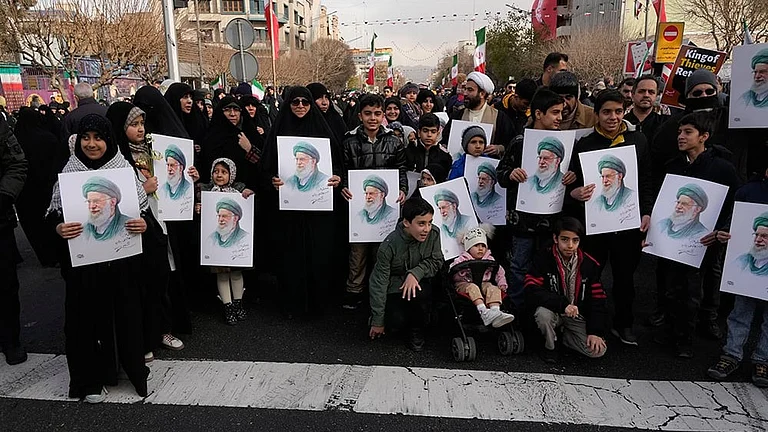
Ayatollah Ali Khamenei was killed during a joint US-Israeli air strike on Tehran on February 28. Ceremonies honoring the late leader commence in the capital on July 4, followed by his burial five days later in Mashhad, his birthplace. The phone call occurred a few days after Pezeshkian invited the Indian premier to the state funeral.
Modi and External Affairs Minister S Jaishankar are unable to attend the services due to an upcoming three-nation tour. India will instead send a special delegation led by Bihar Governor Lt General Syed Ata Hasnain (retired) and Minister of State for External Affairs Pabitra Margherita.
Hormuz Shipping Security Eases
More than 12 ships heading toward Indian ports safely passed through the Hormuz chokepoint following the June 17 pact. These include three India-flagged crude tankers, alongside multiple LPG and bulk fertiliser carriers.
Between 10 to 12 India-flagged vessels still remain within the Persian Gulf as regional warfare had heavily impacted the flow of energy resources into India. The prolonged hostilities also claimed the lives of several Indian citizens, including maritime workers operating in the area.
Advertisement
Maritime risks continue to persist. Maritime operators and crew members received directives to uphold rigorous vessel protection protocols, despite the recent lifting of the regional transit ban.

Strengthening Multilateral Diplomatic Ties
The talks also signaled towards expanding diplomatic engagement between the two nations. Per the Iranian embassy's readout, Modi formally invited Pezeshkian to attend the upcoming BRICS Leaders' Summit hosted by India, hoping it would bolster multilateral cooperation.
Pezeshkian "expressed appreciation for the constructive positions adopted by the Government of India and for Prime Minister Modi’s personal role in supporting peace, stability, and regional cooperation". The readout also quoted Pezeshkian saying that "the international community should work to consolidate this process so that aggression and the use of force have no place in international relations", while noting a convergence of views between the two capitals on various regional and international issues.
Advertisement
The two leaders previously spoke in March amidst escalating instability. Both nations maintained continuous diplomatic channels throughout the conflict. Recent official visits to Delhi included Iran's Foreign Minister Syed Abbas Araghchi in May for a BRICS foreign ministers meeting, Supreme National Security Council Deputy Secretary Ghadir Nezamipour last week (who also met the Prime Minister), and Petroleum Minister Mohsen Paknejad for a BRICS energy ministers meeting.
Earlier, Modi had praised the US-Iran understanding, noting the conflict caused severe global economic disruptions and widespread casualties, while expressing optimism that the agreement would restore regional stability and ensure freedom of commerce.
Published At: