CJP convenor Abhijeet Dipke sought state-wise data on government school conditions.
He asked for details on teacher vacancies, funding, repairs and basic facilities.
Dipke urged states to improve public schools on a “war footing”.
'Kids Being Treated Worse Than Animals’: Dipke Writes To Education Minister Of All States
CJP’s Abhijeet Dipke seeks state-wise disclosures on school infrastructure, staffing and spending under the ‘School Thik Karo’ campaign.

Summary
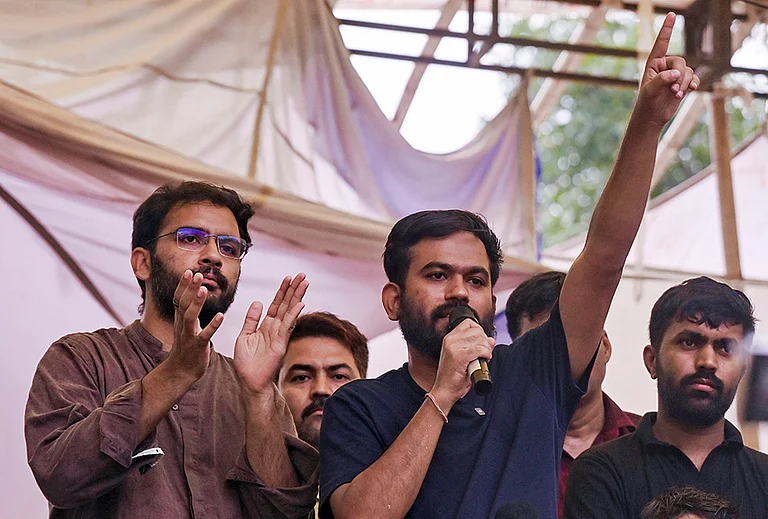
Cockroach Janta Party (CJP) founder and convenor Abhijeet Dipke on Monday wrote to education ministers of all the states, seeking detailed information on the condition of government schools, including infrastructure gaps, teacher vacancies and spending on public education.
Dipke’s letter comes as the party expands its focus on government schools through its recently launched ‘School Thik Karo’ campaign, under which CJP teams have been visiting schools in different states and flagging deficiencies in basic facilities.
Calling for greater transparency from state governments, Dipke said the condition of public education should be treated as an immediate concern rather than a long-term administrative issue.
Dipke Flags Basic Infrastructure Gaps
In his letter, Dipke referred to images and videos from government schools circulating on social media, saying they pointed to conditions that should leave citizens “deeply concerned.”
“The visuals emerging from government schools and circulating on social media should make all of us deeply concerned. No child in this country should be forced to study in such conditions. They are being treated worse than animals," Dipke said.
He questioned how children could be expected to learn in schools that lack essential infrastructure and linked the condition of public education to the country’s broader development.
“How can we expect our country to progress when children are still struggling for the most basic facilities required to get an education?” he questioned.
Dipke urged state governments to improve schools on a “war footing” and said ministries should “treat the condition of public education as an urgent priority.”
He also pointed out that nearly eight decades after Independence, students in several government schools continued to face shortages of facilities such as safe drinking water, usable toilets, adequate classrooms and benches.
Six Questions Put To State Education Ministers
Dipke said reliable public data was necessary before shortcomings in the school system could be addressed effectively.
“But before we can fix the problem, the people deserve to know where we stand today. Therefore, I respectfully request your ministry to publicly provide the following information,” he said in the letter.
Advertisement
The CJP chief sought answers from each state on six areas concerning government education.
He asked governments to disclose how many schools had been renovated during the past five years and how many still require repairs or complete reconstruction.
Dipke also sought figures on sanctioned teaching posts, the number currently occupied and the vacancies that remain unfilled.
The letter further asks states to provide details of funds allocated to government schools over the past five years and the amount that was actually utilised.
Dipke also sought an assessment of how many additional government schools would be required to provide children with reasonable access to quality education.
Another question concerns the non-teaching responsibilities assigned to government school teachers apart from classroom duties.
The final set of information sought relates to facilities available to students, including computers and digital-learning infrastructure, clean and functional toilets, and adequate sports equipment and facilities.

Advertisement
‘Not About Politics Or Any One Government’
Dipke sought to position the campaign as a wider public-education initiative rather than a political attack on individual state administrations.
“This is not about politics or any one government. This is about the future of our children," he said.
He added that basic educational facilities should not depend on a student’s family income or place of birth.
“Every child, irrespective of where they are born or how much their parents earn, deserves a safe classroom, clean drinking water, a functional washroom, a bench to sit on, and a teacher to teach them,” Dipke said.
He urged state education departments to make the requested information publicly available and take steps to ensure that poor infrastructure does not prevent children from receiving what he described as a dignified education.
Published At:
Tags