Jantar Mantar will host events during the India Biennale 2026, scheduled from December 4 to March 21, 2027.
Delhi Police denotified the area as a designated protest site on October 11, naming three alternative venues.
Built in 1724 by Maharaja Sawai Jai Singh II, Jantar Mantar became a prominent hub for public demonstrations.
Days After Denotification As Protest Site, Jantar Mantar To Host India Biennale 2026
The historic observatory, a long-standing site for public demonstrations in Delhi, will feature among the key venues for the December 4–March 21 biennale, days after its denotification as a designated protest site

Summary
For decades, Jantar Mantar has been a familiar address for protesters in Delhi, with demonstrators gathering at the historic site to raise issues ranging from corruption to farmers' rights. Now, days after the area around the monument was denotified as a designated protest site, it is set to feature among the key venues for the India Art, Architecture and Design Biennale 2026.
Scheduled to run from December 4, 2026, to March 21, 2027, the biennale will feature exhibitions and programmes across more than a dozen monuments and prominent locations.
The Culture Ministry has envisioned the event as an international platform showcasing art, architecture and design from India and more than 20 other countries. The 2026 edition is being planned on a larger scale than the inaugural biennale held in 2023.
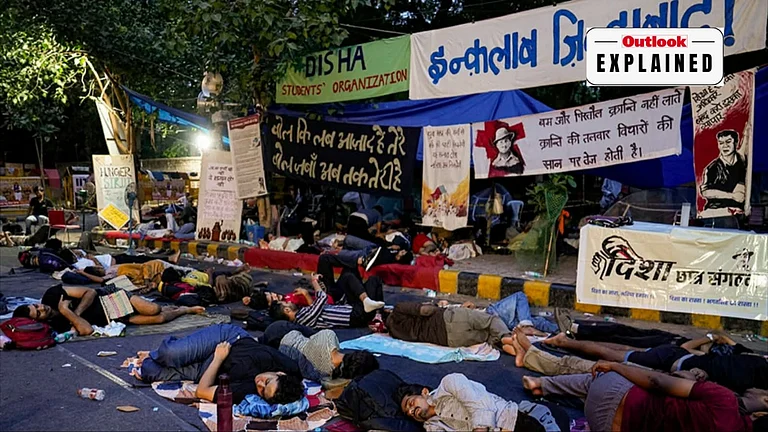
Jantar Mantar Denotified As Protest Site
The selection comes after Delhi Police, through an order dated October 11, 2026, denotified the area around Jantar Mantar as a designated protest site. Ramlila Ground, CBD Ground and Burari Ground were named as alternative locations for demonstrations.
The order came amid a standoff with the Cockroach Janta Party (CJP) over protest permission and heightened security ahead of a planned INDIA bloc march to the Supreme Court against Chief Election Commissioner Gyanesh Kumar over alleged irregularities in the Special Intensive Revision (SIR) process.
The decision renewed attention on the use of public spaces for demonstrations in the national capital. Jantar Mantar's location near Parliament and key government institutions has long made it a prominent site for protesters seeking to bring their demands to the government's attention.
How Jantar Mantar Became A Protest Hub
Before Jantar Mantar became a prominent demonstration site, the Boat Club lawns near Rajpath served as Delhi's main protest ground. Its proximity to Parliament and government offices made it a preferred location for large gatherings.
In 1988, thousands of farmers led by Mahendra Singh Tikait occupied the Boat Club lawns for days. The scale of the demonstration raised security concerns, and authorities gradually began restricting large gatherings in the area. By 1993, Jantar Mantar had emerged as an alternative venue for protests.
Advertisement
Over the years, the site hosted demonstrations by trade unions, civil society groups, activists and political organisations. These included protests associated with the anti-corruption movement led by Anna Hazare in 2011, as well as campaigns concerning farmers' demands, workers' rights and other social and political issues.

The Monument's Historical Significance
Built in 1724 by Maharaja Sawai Jai Singh II of Jaipur, Jantar Mantar is an 18th-century astronomical observatory containing large masonry instruments designed to observe celestial movements and measure time. Protected by the Archaeological Survey of India, the monument is recognised for its historical and scientific significance.
The first India Art, Architecture and Design Biennale was held at the Red Fort in 2023. The upcoming edition will expand the programme across more than a dozen monuments and prominent locations, with participation from India and more than 20 other countries.
Advertisement
Published At: