Baraiya linked rape to caste-based “scriptural” beliefs, suggesting perpetrators seek spiritual reward.
His comments referenced women’s beauty, drawing criticism for trivialising sexual violence.
Remarks condemned from Congress leaders, BJP, and social organisations
Why Congress MLA’s Remarks Highlight Caste In India’s Rape Discourse
The controversy highlights how sexual violence, especially against marginalised communities, is politicised, trivialised, and often met with inadequate accountability.

Summary
Caste system and gender hierarchy have shaped patterns of sexual violence, especially against Dalit women. And this reality is repeatedly reflected in National Crimes Records Bureau (NCRB) data, and countless cases that show how rape is used as a tool of caste domination. Still, the public conversation around rape remains distorted.
A controversial statement by Congress MLA Phool Singh Baraiya of Madhya Pradesh’s Bhander has sharp condemnation from across the political spectrum and civil society.
In an interview, Baraiya linked rape to caste and distorted belief systems, asserting that perpetrators from Scheduled Castes, Scheduled Tribes and OBC communities believe sexual violence brings spiritual merit.
He cited a text he called Rudrayamal Tantra, claiming it prescribes that “by having intercourse with a woman of this caste, you will get the reward of a pilgrimage.”
Baraiya went on to argue that rape is often committed by groups rather than individuals, and made shocking references to cases involving infants. He attributed such crimes to what he described as a “perverted mindset” fuelled by these beliefs, while also invoking the idea that women are judged on “beauty.”
“Who are the most victims of rape in India? Scheduled Castes, Scheduled Tribes, and OBCs,” he said. “The theory of rape is that if a man, regardless of his mental state, is walking down the road and sees a beautiful girl, it can distract his mind and make him rape a woman.”
He added: “It is written that by having intercourse with a woman of this caste, you will get the reward of a pilgrimage. Now, if he can’t go on a pilgrimage, then what is the alternative? Have intercourse at home, and you will be rewarded… He will try to rape her by grabbing her in the dark or light. A man cannot rape a woman without her consent. That’s why four-month-old and one-year-old girls are raped. He does it for a reward.”
The remarks have sparked outrage for trivialising sexual violence and dragging caste and religion into a crime that is universally condemned.
Advertisement

Condemnations & Accountability
A report by Equality Now, a global non-profit promoting women’s rights, and Swabhiman Society, a Dalit-led grassroots organisation, reveals a disturbing reality that violence, including rape and gangrape, has been systematically used as a weapon by dominant castes to oppress Dalit women and girls. Such violence is not isolated. It is a deliberate tool to reinforce structural gender and caste hierarchies.
Activists argue that addressing rape, particularly when it involves marginalised communities, requires confronting the deeper roots of power, patriarchy and caste.
Political leaders may have condemned Baraiya’s remarks quickly, but critics argue that condemnation alone is not enough. “People may think rape is a single crime,” says Manisha Mashaal, founder of Swabhiman Society.
“But for Dalit rape survivors, it is just the beginning of a lifelong chain of violence and struggle with mental abuse, fear, intimidation, threats, denial of basic rights, denial of education, and a decent livelihood. The list is long, and they remain victims throughout their lives.”
Advertisement
She adds that meaningful change requires more than statements. Internal party discipline, legal scrutiny of elected representatives accused of rape, and stronger protections for survivors are essential to shift not only rhetoric but outcomes.
But beyond the immediate backlash, the episode highlights how sexual violence, especially against women from historically marginalised communities, is spoken about, politicised and often mishandled.

Politicians & Rape Cases
Over the years, several elected representatives across party lines have been accused and even convicted in rape cases, raising serious questions about how political power intersects with gendered violence.
Kuldeep Singh Sengar (BJP): Former MLA convicted and sentenced to life imprisonment for the 2017 Unnao rape of a minor. The case drew national outrage for alleged police and political interference; the victim’s father died in custody.
Rahul Mamkootathil (Congress, Kerala): Arrested in 2025 in connection with a sexual assault case; the party expelled him amid allegations.
Advertisement
Hans Raj (BJP, Himachal Pradesh): Booked under the POCSO Act in 2025 after a complaint alleging sexual assault; he denied the charges.
Raj Ballabh Yadav (RJD): Former MLA convicted in 2018 for raping a minor girl.
Purushottam Naresh Dwivedi (BSP): Former MLA charged in 2015 for the rape of a minor; he later died in prison.

Dalit Victims And The Pattern
When rape is discussed in India, national statistics often obscure deeper caste-based vulnerabilities. Dalit women and girls are disproportionately affected, not only as victims but also as subjects of systemic injustice and social exclusion.
Some incidents have exposed how caste and gender combine to create a cycle of violence:
Hathras gang-rape and death (2020): A 19-year-old Dalit woman was allegedly gang-raped and brutally assaulted by four men from a dominant caste in Uttar Pradesh. The case sparked nationwide protests after activists accused the police of mishandling evidence and cremating the victim’s body at night without family consent.
Advertisement
Balrampur gang rape (2020): A 22-year-old Dalit college student was abducted, gang-raped, and left with fatal injuries in Uttar Pradesh. The accused were arrested and charged.
Madhubani gang rape and murder (2023–25): In Bihar’s Madhubani district, a special court sentenced two men to death in May 2025 for the gang rape and murder of an eight-year-old Dalit girl.
Sidhi, MP gang rape (2025): A 19-year-old Dalit woman was allegedly gang-raped by multiple men in Sidhi district; the case is registered under the SC/ST (Prevention of Atrocities) Act.
Meerut hospital rape of a 13-year-old Dalit girl: A Dalit minor was allegedly raped in a government hospital washroom; the FIR was filed under POCSO and SC/ST Acts.
The pattern is not anecdotal as the NCRB data shows that crimes against Dalit women remain alarmingly high, with a number of cases involving sexual violence and caste-based brutality.
Statistics from the NCRB reveal a surge of 45 per cent in reported cases of rape against Dalit women from 2015 to 2020. The NCRB reported in 2021 that, while more than 10 Dalit women and minor girls were raped every day, there were convictions in only 24 per cent of the cases.
Remarks and Backlash
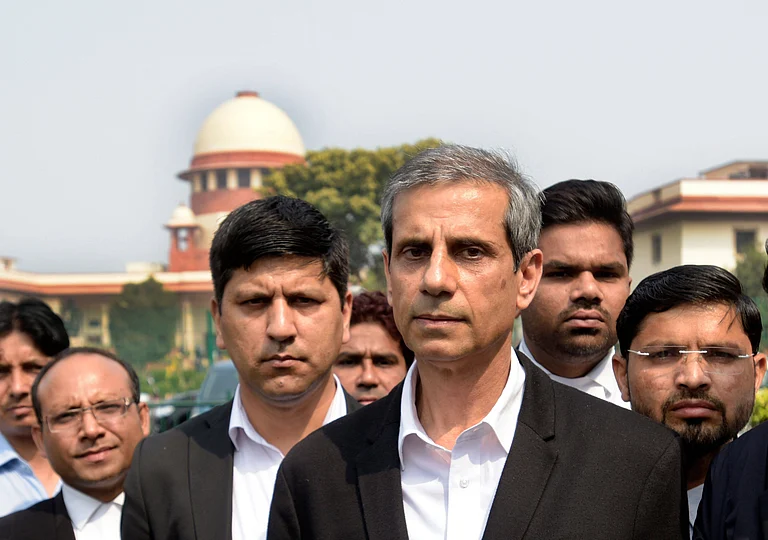
Baraiya’s comments drew condemnation from leaders and organisations across the board. Madhya Pradesh Congress president Jitu Patwari distanced the party from the statement, saying, “No rape can be justified in any way. Anyone who commits rape is a criminal. It cannot be linked to caste or religion.”
The BJP’s state media in-charge Ashish Agarwal called the remarks “misogyny, anti-Dalit thinking and a direct assault on humanity,” demanding accountability from the Congress leadership.
Social organisations also reacted strongly. The All India Brahmin Society (Madhya Pradesh unit) condemned the statement, with state president Pushpendra Mishra saying the remarks insult women and society at large, and demanded strict action against Baraiya.
Published At: