Congress alleges Modi’s Lok Sabha speech on "Vande Mataram" sought to "rewrite history" and politicise the discussion.
Party recounts historical role of Congress leaders and sessions in promoting the song despite opposition from the Muslim League and Hindu Mahasabha.
Congress Accuses Modi Of Giving Political Colour To ‘Vande Mataram’ Debate
Gaurav Gogoi says Congress elevated "Vande Mataram" to national song status and defends Nehru’s legacy against BJP criticism.
Summary
The Congress on Monday said Prime Minister Narendra Modi's address during the discussion on "Vande Mataram" in the Lok Sabha was aimed at "rewrite history" and give a "political colour" to the issue, asserting that regardless of the BJP’s attempts, it would not be able to tarnish the legacy of Jawaharlal Nehru.
The party maintained that it was the Congress which accorded "Vande Mataram" the respect it deserved and elevated it to the status of national song.
During the day-long discussion marking 150 years of "Vande Mataram" in the Lok Sabha, Congress deputy leader Gaurav Gogoi alleged that it is the prime minister's habit to repeatedly invoke India’s first prime minister Nehru and the Congress in his speeches.

"He took Nehru's name 14 times and that of the Congress 50 times during the debate on Operation Sindoor. When there was a discussion on the 75th anniversary of the Constitution, Nehru's name was taken 10 times and that of the Congress 26 times," he said.
Gogoi said that if any political party gave "Vande Mataram" the importance it merited, it was the Congress, adding that the party ensured the song was not reduced to a political slogan but granted formal recognition as the national song.
He noted that Rabindranath Tagore first sang "Vande Mataram" at the 1896 Calcutta session of the Congress.
"He (Tagore) wrote to Nehru that the privilege of originally setting the first stanza of Vande Mataram to the tune was mine when the author was still alive," the Congress MP said.
Gogoi added that at the 1905 Banaras session of the Congress, Sarala Devi Chaudhurani sang "Vande Mataram".
"An important amendment was made in this song which was that of population. The original song mentioned 7 crore, but in 1905, during the Banaras session, Sarla Dev Chaudhurani made it 30 crore and turned the focus of the entire country to Vande Mataram," Gogoi said.
Advertisement
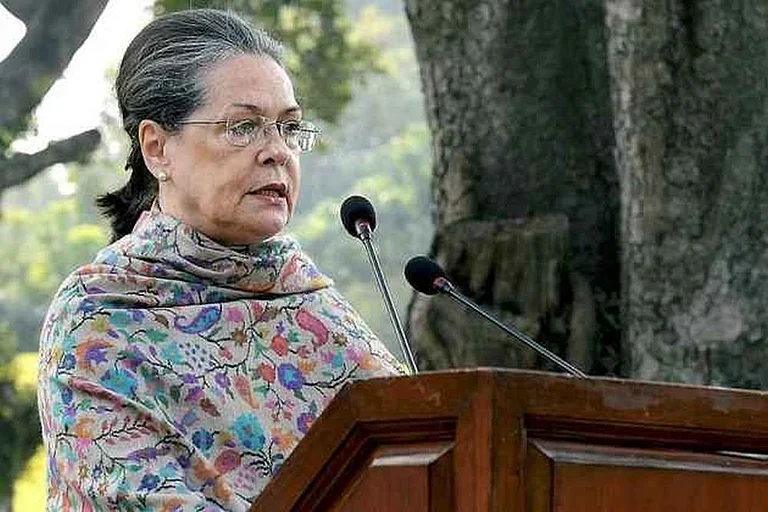
He said the prime minister's speech served two objectives — to revise history and to infuse the debate with partisan overtones.
"It seemed that your political ancestors participated in various movements against the British. So I saw the intention in the PM's speech to rewrite and revise history. The second objective was to give a political colour to this debate," he added.
The prime minister also referenced the Congress Working Committee and Nehru.
"This is his habit whenever he speaks on an issue, he keeps repeating the name of Nehru and the Congress," Gogoi said.
"I want to humbly tell him and his party that no matter how much you try, you will not be able to succeed in putting even one blot on Nehru's contribution," he added.
Gogoi further pointed out that it was the Muslim League that had called for boycotting the entire "Vande Mataram".
Advertisement
"Congress' Maulana Azad said, 'I have no problems with Vande Mataram'. That was the difference between the Congress and Mohammad Ali Jinnah. Despite the League putting pressure, a decision was taken in the 1937 session of the Congress that the first two stanzas of Vande Mataram will be sung at national gatherings," he said.
He added that the Muslim League and the Hindu Mahasabha opposed the Congress’ decision, but the party remained guided by public sentiment rather than their demands.
Published At: