When Roy wrote The End of Imagination, she embodied the phrase ‘personal is political’
In 2024, sedition proceedings were initiated against her
In 2025, she published her first memoir, Mother Mary Comes to Me
Arundhati Roy: Literary Icon, India’s “Troublemaker”
Since 1998, when she first wrote for Outlook, Roy has become a symbol of thoughtful dissent

Summary
Arundhati Roy is a literary icon and a formidable political voice. When she first wrote for Outlook in 1998, she was already a household name. Twenty-eight years later, her Booker Prize-winning work, The God of Small Things, remains one of the most-read Indian novels. But it is her political essays—lyrical, deeply empathetic, and uncompromisingly ethical—that have helped shape Roy’s enduring moral legacy.
In 1998, when Roy wrote The End of Imagination, she embodied the phrase ‘personal is political’. The essay is deeply personal, but it is about India’s Pokhran nuclear tests. “I am prepared to grovel. To humiliate myself abjectly, because, in the circumstances, silence would be indefensible,” she wrote in a stark commentary challenging the popular narrative of nationalism around nuclear tests at that time. The essay was passionate and rooted in a moral absolutism that is almost a cultural rebellion.
In an India that likes to get by, to adjust, to compromise, to curry favour with the powerful, Roy refused to censure her political rage and personal belief. She taught a whole generation that we must stand in solidarity with the powerless and snub our noses at tyrants. Amid the sea of 1990s Indian writers known for their intricate, lace-like sentences and opaque commentary on culture, Roy’s voice was distinctive for its fearless directness.

Thirty years later, Roy’s voice still stands out, though now she faces more challenges and her words carry greater consequences. She continues to write, producing essays, pamphlets, and books available in almost every vernacular language, printed and hawked across India by street vendors and legacy bookstores alike. Roy has stood out as one of the few Indian writers who have never taken action against copyright infringers.
As a result, she is also one of the most widely read authors in India. In 2025, she published her first memoir, Mother Mary Comes to Me, juxtaposing her private life alongside her ideas for public policy. Her non-fiction ranges from critiques of globalisation to strong condemnations of India’s human rights record, making her one of the country’s most recognisable dissenters.
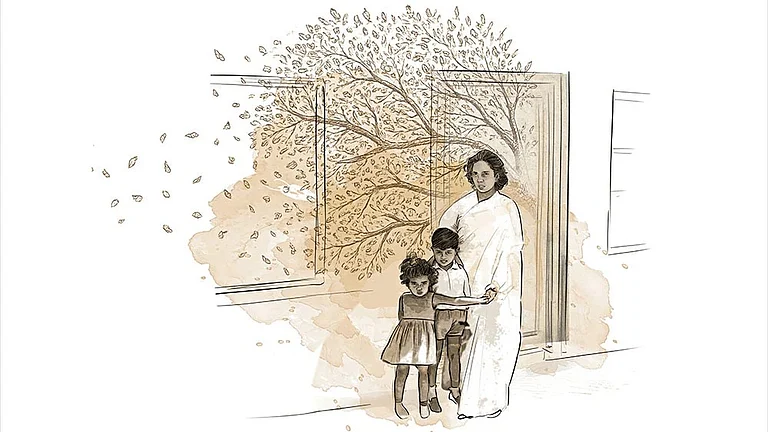
Roy’s frank and intimate commentary on India has come up against many legal and political challenges. In 2024, even after she was awarded the PEN Pinter Prize, Indian authorities initiated sedition proceedings against her for her decade-old comments about Kashmir. In 2025, the government banned some of her works in Jammu and Kashmir. This tension between Roy’s global reputation and the criticism she faces at home has shaped her persona as a writer and thinker. While India often seems to view her as a troublemaker, international festivals still invite her to represent South Asia’s literary tradition.
Advertisement
What has changed since those early Outlook essays? The tone is much the same; Roy still writes with force and rhythm, but her scope has expanded. In the 1990s, she was a novelist who began writing polemical pieces. Now, she is largely known as an essayist whose life itself has become a public statement. Her work has grown from focusing on single issues to offering a connected critique of militarism, capitalism, and caste.
In an India that is increasingly suspicious of thinkers or “intellectual terrorists”, Roy has become a symbol of thoughtful dissent. As Outlook marks its 30th anniversary, Roy’s journey shows how writers can change the conversation, and, perhaps, how they can live up to their words. She has gone from a striking new novelist in a bold and independent magazine to a keeper of the country’s conscience who refuses to give in to the comfort of self-confirmed, straightforward answers.
Advertisement
Published At: