Lok Sabha will debate the anti-paper leak amendment Bill for eight hours.
The government and Opposition reached consensus after Speaker Om Birla’s intervention.
Rahul Gandhi is likely to lead the Congress during Tuesday’s discussion.
After Days of Deadlock, Lok Sabha to Discuss Anti Paper Leak Bill Tomorrow
The Congress has agreed to participate in the discussion, with Lok Sabha Leader of Opposition Rahul Gandhi likely to lead the party’s response to the Bill.
Summary
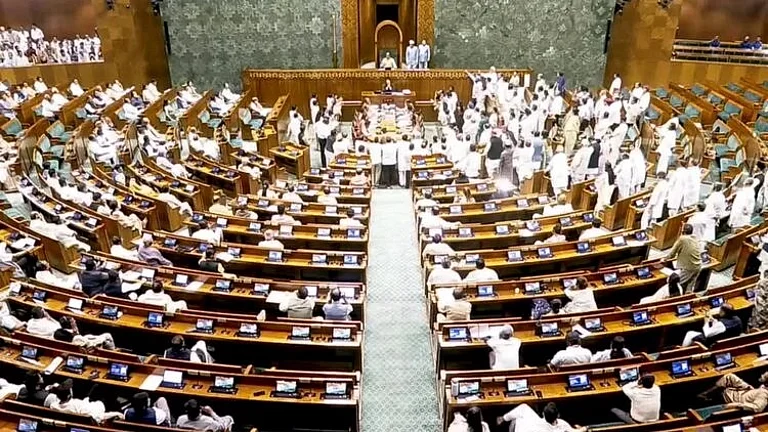
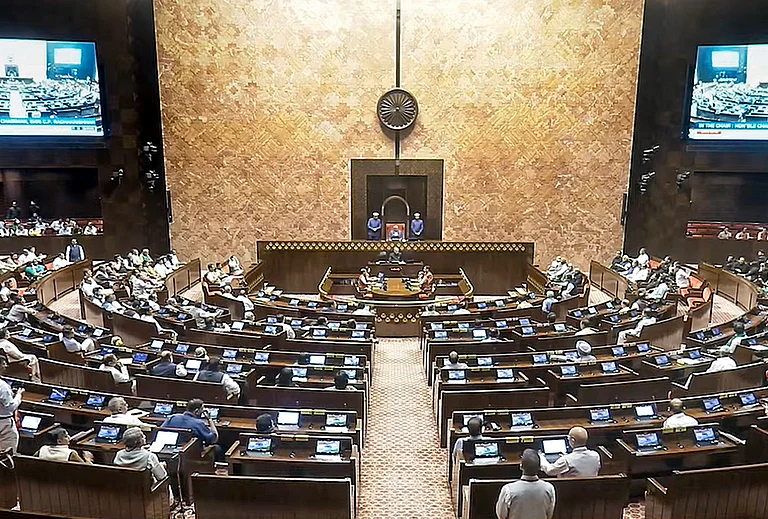
The Lok Sabha will take up the Public Examinations (Prevention of Unfair Means) Amendment Bill, 2026 for an eight-hour debate on Tuesday after the government and the Opposition reached an agreement to break the impasse that had stalled proceedings during the Monsoon Session.
According to sources cited by ANI, the deadlock ended after Lok Sabha Speaker Om Birla held consultations with floor leaders from the ruling alliance and Opposition parties. The discussions resulted in a consensus to allow a detailed debate on the proposed amendments to the anti-paper leak law.
The House is scheduled to meet at 11 am on Tuesday.
Rahul Gandhi Expected to Lead Congress
The Congress has agreed to participate in the discussion, with Leader of Opposition Rahul Gandhi likely to lead the party’s response to the Bill.
Congress MP Priyanka Gandhi Vadra is also expected to intervene during the debate.
According to ANI sources, Opposition parties will finalise their broader strategy at a meeting of their floor leaders in Parliament on Tuesday morning.
The discussion is likely to focus not only on the proposed penalties but also on the Centre’s handling of alleged irregularities in competitive examinations and the recent student protests over the NEET-UG 2026 paper leak.
Monday’s Proceedings Disrupted
The Lok Sabha was adjourned for the day on Monday after repeated disruptions by Opposition MPs prevented the House from taking up the planned discussion on the legislation.
Amid continued protests and sloganeering, the proceedings were suspended until Tuesday morning.
The subsequent agreement between the two sides has cleared the way for a full debate on the Bill, ending uncertainty over whether the legislation would be discussed during the ongoing session.
What Does the Anti-Paper Leak Bill Propose?
Union Minister Jitendra Singh introduced the amendment Bill following nationwide protests over the alleged leak of the NEET-UG 2026 question paper.
Advertisement
The legislation seeks to strengthen the Public Examinations (Prevention of Unfair Means) Act by prescribing harsher punishment for question paper leaks, organised cheating networks and groups involved in manipulating public examinations.
Under the proposed amendments, individuals found guilty of unfair practices could face a minimum jail term of five years, extendable to 10 years. The maximum fine has been fixed at ₹50 lakh.
The existing law provides for imprisonment of up to five years in such cases.
For organised examination-related offences, the proposed minimum punishment has been increased from five years to seven years. The legislation also provides for fines of up to ₹10 crore for organised criminal activity linked to examination fraud.
The Bill further proposes the creation of Special Fast Track Courts to ensure that cases registered under the law are investigated and tried without prolonged delays.
The government has presented the amendments as an attempt to dismantle organised examination mafias, strengthen accountability and rebuild public confidence in the country’s testing system.
Advertisement
The debate on Tuesday is expected to see the Opposition question whether tougher punishment alone will be sufficient without administrative reforms, stronger oversight of testing agencies and accountability for officials responsible for conducting major examinations.
Published At: