The Brihanmumbai Municipal Corporation will survey roadside trees across all administrative wards to identify and classify hazards.
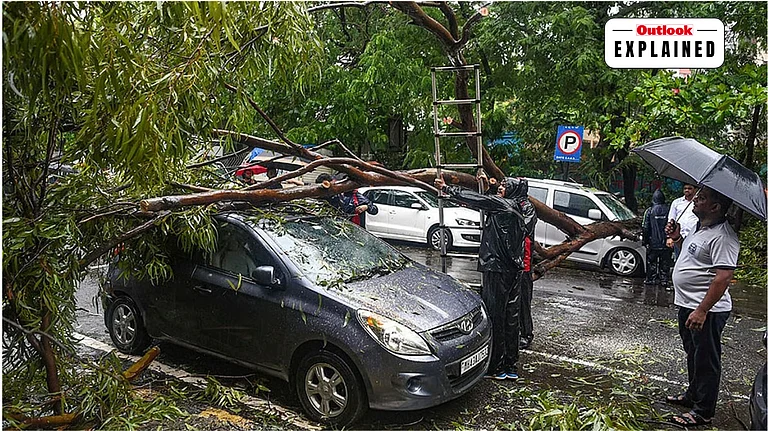
The decision follows a severe spell of monsoon weather between June 22 and July 6 that caused 830 tree collapses in Mumbai.
A citywide scientific database will record the age, species, structural condition, and expected lifespan of each roadside tree.
After a Plethora of Tree-Falls BMC Plans Scientific Survey of Roadside Trees
The civic body will categorise roadside trees into three risk levels: highly dangerous, dangerous or healthy

Summary
The Brihanmumbai Municipal Corporation (BMC) will scientifically survey roadside trees across all administrative wards to identify hazards before they strike. This decision follows a series of monsoon tree-fall incidents that killed several people, caused injuries and damaged properties.
Civic officials approved the plan during a high-level meeting on Thursday. The session brought together botanists, environmental researchers and tree experts to finalise the strategy. This initiative aims to protect the city's green cover while preventing future casualties.
Database and Risk Classification
The civic body will categorise roadside trees into three risk levels: highly dangerous, dangerous or healthy. This exercise will help build a comprehensive digital inventory tracking the age, species, physical structure, health, expected lifespan and location of each tree. Officials will use this data to plan scientific pruning and long-term preservation.
Botany students, botanists and tree experts will participate in the survey.
Civic officials plan to draft a tree care manual which will detail preservation, health, scientific trimming, routine upkeep and safety measures that residents must follow to prevent accidents. Specialists will help compile the guide, which the civic body will distribute to everyone involved.
Advanced training in scientific tree management could also soon be mandatory for BMC staff. Dr Avinash Dhakane, Additional Municipal Commissioner (Eastern Suburbs), proposed the instruction to help workers evaluate both visible tree structures and underground root networks, a Hindustan Times report said. Civic officials expect to make a final decision on the training programme shortly.
Scientific Pruning and Coordination
The meeting called for greater coordination among the BMC's roads, storm water drains, sewerage and gardens departments on tree conservation and pruning. This is crucial during road and utility works that often damage tree roots.
According to the report, participants recommended adopting scientific pruning practices through a dedicated Standard Operating Procedure (SOP), using modern equipment and providing regular training to civic staff. They also discussed framing clear guidelines for pruning trees on private properties.
Advertisement
Every tree collapse must trigger a scientific investigation, specialists said. They urged the civic body to analyse root damage, soil availability, drainage, root respiration, space constraints and nearby construction impacts rather than simply clearing away the debris.
Long-Term Conservation Strategies
Experts recommended that compensatory plantations undertaken after trees are felled for development projects should, as far as possible, be carried out within Mumbai. They stressed the importance of selecting suitable tree species, ensuring adequate space for root growth and protecting root systems during infrastructure projects.
Civic officials also discussed establishing biodiversity zones to encourage native flora. The plan includes finding appropriate spots for street-side planting, designing long-term tree preservation strategies to counter climate change and growing more bamboo in suitable areas.
Protecting the urban canopy requires collective effort. Specialists said the civic body cannot manage this task alone, urging residents to participate actively and raise public awareness. They also proposed researching mechanical supports for heavily leaning trees to stop them from falling.
Advertisement
Published At: