Protests have intensified across Pakistan-occupied Kashmir over political representation, inflation and governance, led by the JKJAAC.
Demonstrators are demanding political reforms and alleging a crackdown on dissent.
The unrest has drawn international attention, with India criticising Pakistan's response and rights groups urging restraint.
Outlook Explains | Why Pakistan-Occupied Kashmir Is Witnessing Its Biggest Protests In Years
Political representation, economic grievances and allegations of electoral irregularities have fuelled unrest in Pakistan-Occupied Kashmir, with protests facing a security crackdown

Summary
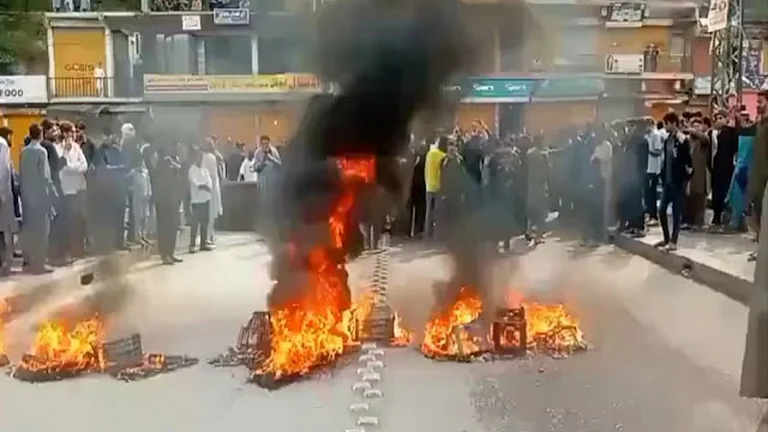
The latest unrest in Pakistan-Occupied Kashmir (PoK) has brought renewed focus on long-standing grievances over governance, political representation and the electoral process. Protests led by the Jammu Kashmir Joint Awami Action Committee (JKJAAC) have spread across towns including Rawalakot and Muzaffarabad, with the group alleging a deadly crackdown by Pakistani security forces.
Discontent over inflation, lack of accountability and governance issues intensified during the ongoing three-phase elections in PoK, which began on July 27 and are scheduled to conclude on August 11, as The Hindu Reported.
The JKJAAC alleges that security forces used assault weapons and sniper fire against protesters opposing the election process. The group claims that more than 50 people have been killed in the past week and has separately alleged that 86 people died in the crackdown till July 31.
The protests gained further momentum after the reported death of Osama Jaleel, a PhD scholar at Quaid-e-Azam University in Islamabad, who was allegedly killed in police firing in Rawalakot.
Why Are Elections Being Opposed?
At the centre of the protests is the structure of the PoK legislature.
The assembly has 53 seats, including 45 elected and eight nominated seats. Of the elected seats, 12 are reserved for refugees from the former princely State of Jammu and Kashmir who migrated after 1947. Voting for these seats is conducted by refugee voters living outside PoK.
Protesters argue that the reserved seats reduce local representation and allow Islamabad to influence regional politics. After their demands to remove these seats were not addressed, the JKJAAC called for a "long march".
The second phase of polling on August 2 also witnessed allegations of irregularities and rigging.

Jammu Kashmir Joint Awami Action Committee
The Jammu Kashmir Joint Awami Action Committee (JKJAAC) emerged after the COVID-19 pandemic as a movement against rising prices of essential commodities.
Advertisement
Over time, it expanded into a wider political campaign demanding greater representation for local communities and reforms in the region’s political system. The committee has led demonstrations across Rawalakot, Muzaffarabad and other areas.
The group has rejected attempts to link its movement with India-Pakistan tensions, saying the protests are a civil rights movement and "neither a proxy nor an extension of interstate rivalries".
The protesters are seeking the removal of the 12 reserved legislative seats, greater political representation and action on economic and governance-related concerns.
They have also accused Islamabad of failing to address the region’s developmental needs.
How Has Pakistan Responded?
The JKJAAC has accused Pakistani security forces of launching a crackdown against demonstrators, with protests reported mainly from Rawalakot, Muzaffarabad and Kotli.
The unrest has also renewed criticism of Islamabad’s relationship with PoK, with locals accusing mainstream political parties, including the Pakistan Peoples Party and Pakistan Muslim League-Nawaz, of failing to meet developmental expectations.
Advertisement
Pakistan Defence Minister Khwaja Asif also drew criticism after reportedly describing protesters as "enemies just like Indians".
India's Response
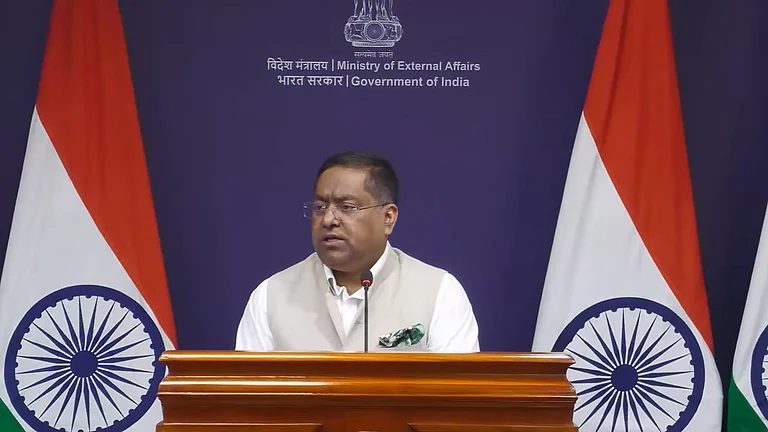
India has criticised Pakistan’s handling of the protests. On July 31, the Ministry of External Affairs said the crackdown had resulted in the deaths of more than 40 civilians and injuries to many others. It accused the "Pakistani Establishment" of showing disregard for the people of Pakistan-occupied Jammu and Kashmir.
On July 28, MEA spokesperson Randhir Jaiswal described the elections as an attempt by Pakistan to "camouflage its illegal occupation" and hide alleged human rights violations in the region.
India reiterated that Jammu and Kashmir and Ladakh, including areas under Pakistan’s control, are integral parts of India.
The Indian Embassy in the US also criticised a New York Times headline referring to "Pakistani Kashmir", stating that "there is no Pakistani Kashmir, only Pakistan occupied Kashmir".
Advertisement

International Scrutiny
The protests have been concentrated in Rawalakot, close to the Line of Control, adding a strategic dimension to the unrest. Kotli, Muzaffarabad and Rawalakot were among the locations India said it targeted during Operation Sindoor in May 2025.
Amnesty International has called on Pakistani authorities to restore communications and allow media organisations and independent observers access to the region. Leaders in the United Kingdom have also urged restraint, while non-resident Mirpuri Kashmiris have launched an online campaign against the reported crackdown.
Published At: