China has reported three deaths and 558 people missing after a disaster at Gyirong Port in Tibet
Road closures and damaged communications are making independent verification of the casualty and missing-person toll difficult
Tibet’s tightly regulated information environment adds another layer of difficulty to independently assessing the full scale of the disaster
Why Is China Keeping Tibet’s Flood Devastation Out Of Public View?
Chinese authorities have publicly reported the disaster at Gyirong Port in Tibet’s Shigatse, but restricted access to the affected area, disrupted communications and Tibet’s tightly regulated information environment have made independent verification of the devastation and missing-person toll difficult

Summary
Chinese authorities have released casualty figures, a preliminary assessment of the cause and details of the rescue operation following the disaster at Gyirong Port in Tibet’s Shigatse. However, access to the affected area has been restricted, communications were disrupted and Tibet’s online information system is subject to extensive state controls.
The result is a narrower but important information gap: there is official information about the disaster, but limited opportunity to independently verify its full scale.
By 8 am on Wednesday, the Tibet Autonomous Region government said three people had died and 558 were missing, including 260 foreign nationals, while two villagers had been rescued.
What Happened At Gyirong Port?
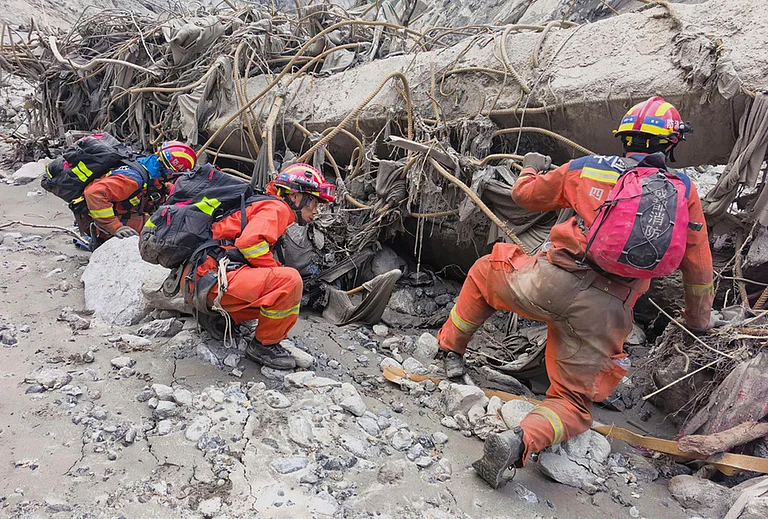
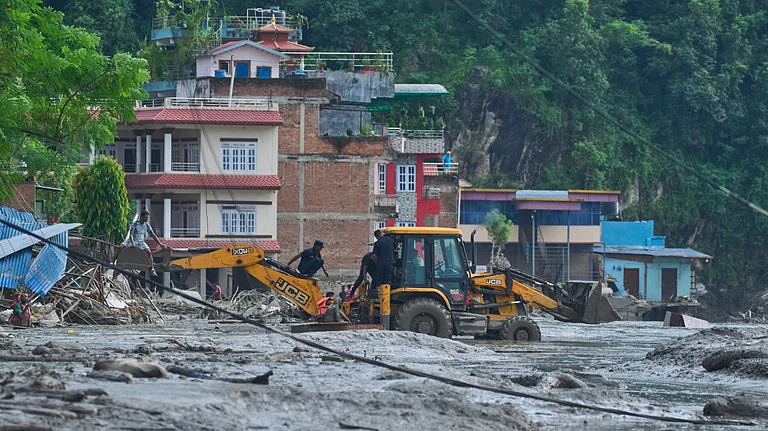
China’s Ministry of Emergency Management said that at about 10:30 am on Tuesday, a mudslide originating on the Nepalese side struck the Gyirong border area in Tibet’s Shigatse. It said the disaster caused casualties and people to go missing, prompting a national Level II emergency response. Hundreds of rescue personnel and equipment were sent to the area.
China’s Ministry of Natural Resources later offered a preliminary explanation.
The China Geological Survey said experts had determined that the disaster was triggered by a high-altitude glacier collapse in Nepal. Material from the collapse developed into a debris flow and travelled into the East Linyi River before reaching Gyirong Port. Chinese geological teams were deployed to assess the source area, downstream channels and other potential geological hazards.
The authorities also warned of continuing risks from landslides and rockfalls around the disaster zone.
What Does China Say About The Death Toll?
The official toll was still developing as rescue operations and identity verification continued.
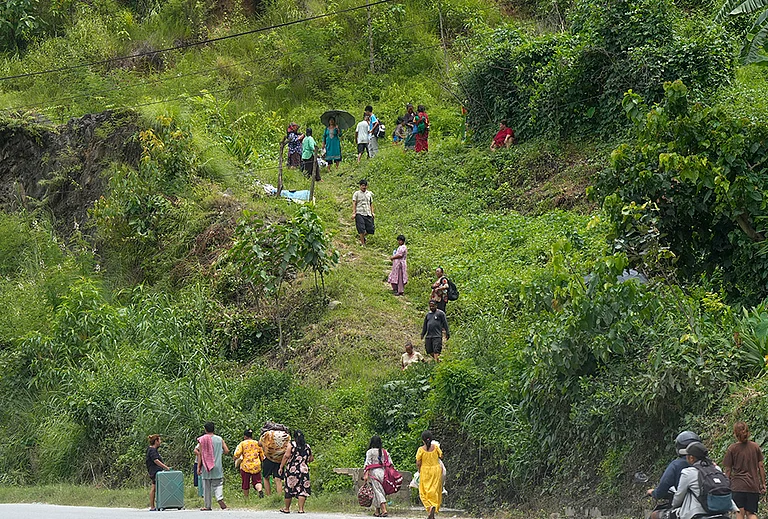
China’s National Immigration Administration said roads and communications at Gyirong Port had been disrupted, leaving some border personnel, workers and Chinese and foreign travellers out of contact with the outside world.
The regional government later said 1,200 rescue personnel had been deployed, 499 people had been accommodated and 555 affected tourists evacuated.
Advertisement
Why Is Access To The Area Restricted?
On Tuesday, authorities closed the road between Gyirong town and the border area in both directions. Only emergency rescue and support vehicles were permitted to pass, while other people and vehicles were barred from entering. Authorities also warned people not to travel to the restricted area.
The restriction was extended on Wednesday.
Authorities said landslides and falling rocks remained a continuing danger and therefore removed the original seven-day limit, keeping the road closed until further notice. Emergency rescue and support vehicles remained exempt.
The official justification was therefore safety rather than media control.
That does not prove that the restriction was imposed to suppress reporting. But it has a clear practical effect: members of the public and other non-emergency visitors cannot freely reach the disaster zone while the restriction remains in force.
That makes independent visual and eyewitness verification more difficult.
Advertisement
What Happened To Communications?
The disaster itself created another obstacle.
The Tibet Communications Administration said five communications base stations had gone offline and that emergency teams were sent to restore connectivity using satellite phones, emergency fibre-optic equipment and portable satellite communications systems.
The National Immigration Administration likewise said roads and communications at the port had been cut off.
People at or near the affected border area may therefore have been unable to contact relatives, journalists or others outside the region, independently of any separate information-control measures.
Communications failures can delay confirmation that someone has been evacuated, injured or killed, leaving families with fewer ways to establish the status of missing relatives.
How Is Information Controlled In Tibet?
The disaster occurred within an information environment that is already subject to formal regulation.
The Tibet Autonomous Region Network Information Security Regulations state that network-information security work in the region operates under the leadership of the Chinese Communist Party. They establish government supervision over online information and impose obligations on network operators to monitor content published by users.
Advertisement
The regulations prohibit the creation and dissemination of a range of material, including content authorities classify as threatening national unity, promoting separatism or terrorism, or distorting or defaming conditions concerning Tibet’s human rights, culture, history, ecology and natural resources. They also prohibit the dissemination of false disaster information.
Network operators are required to establish information-review mechanisms. Where prohibited information is identified, they can stop its transmission, restrict accounts, suspend updates or close accounts and report relevant material to authorities.
These rules do not establish that reports about the Gyirong disaster have been censored or falsified. They do establish that online information originating in Tibet operates within a regulated system in which authorities have powers to monitor and restrict content.
How Does Official Reporting Work?
Tibet’s official broadcasting rules add another layer.
The Tibet Radio and Television Bureau’s website regulations require information to go through a “three reviews and three checks” process before publication, including review for factual and technical errors as well as political and directional issues.
Advertisement
The regulations also require official website information to follow specified political and public-opinion orientations.
The rules therefore show that official reporting in Tibet operates within a formal review system, particularly for major or sensitive material. They do not, by themselves, establish that casualty reporting from Gyirong has been suppressed or altered.
What Does The Information Gap Mean?
Chinese authorities have publicly reported the disaster, including casualty and missing-person figures, rescue updates and a preliminary explanation of the cause.
But independent verification is more difficult. The road into the border area has been closed to non-emergency traffic because of continuing geological risks, while communications infrastructure was damaged in the disaster.
Those physical restrictions operate alongside Tibet’s formal information-control system. Regional regulations give authorities powers to supervise online information and require platforms to act against content classified as prohibited, while official broadcasting rules require information to pass through a formal review process.
None of this proves that casualty figures from Gyirong have been suppressed or falsified. It does, however, help explain why independent accounts of the disaster are harder to obtain and verify.
That matters particularly for the hundreds of people initially reported missing, including 260 foreign nationals. Establishing the final toll depends on determining the status of people affected by the disaster while rescue and verification operations continue.
The central issue, therefore, is not whether China is reporting the disaster. It is how much of that account can be independently checked while access to the flood zone remains restricted and information from Tibet remains tightly regulated.
Published At: