President Volodymyr Zelensky has replaced Oleksandr Syrskyi with Mykhailo Drapatyi as Ukraine's army chief
The move continues a broader pattern of wartime military leadership reshuffles in both Ukraine and Russia
From Zaluzhnyi and Reznikov to Popov and Surovikin, both sides have repeatedly changed top commanders amid battlefield and political pressures
Syrskyi's Dismissal Continues Russia-Ukraine War Command Shake-Ups
Ukrainian President Volodymyr Zelensky has dismissed his top army commander Oleksandr Syrskyi, replacing him with Mykhailo Drapatyi, following a series of leadership changes in both Ukraine and Russia throughout the four-year war

Summary
Ukrainian President Volodymyr Zelensky has dismissed Oleksandr Syrskyi as Commander-in-Chief of Ukraine's Armed Forces, replacing him with Mykhailo Drapatyi, according to a statement from the President's Office, following days of public protests over the dismissal of Defence Minister Mykhailo Fedorov.
The removal of Syrskyi marks the latest in a series of high-profile military command changes on both sides of the conflict, as Ukraine and Russia have repeatedly reshuffled their military leadership over the course of the war.
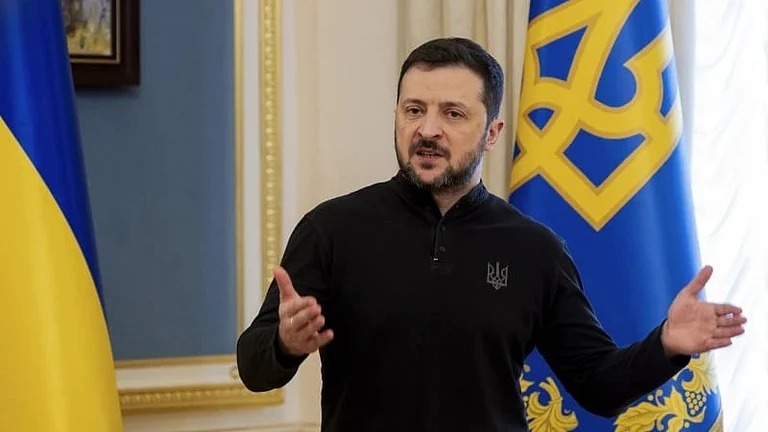
Who Was Oleksandr Syrskyi?
Syrskyi, 60, was born in Soviet Russia in July 1965 and studied at a Red Army academy in Moscow. In the 1980s, he was deployed to Ukraine, then part of the Soviet Union. After Ukraine's independence, he remained and studied at the National Defence University of Ukraine in Kyiv.
In 2014, he commanded Ukrainian troops fighting a Moscow-backed armed rebellion in the eastern Donetsk region. In 2019, he became head of Ukraine's land forces and led the country into war when Russia invaded in February 2022. In the early months of the war, he was named a "Hero of Ukraine", the country's highest honour, because of his successful defence of Kyiv.
Syrskyi is credited with planning Ukraine's counteroffensive around Kharkiv from July to September 2022, which became one of Kyiv's biggest victories and led to the recapture of the strategically significant Kupiansk and Izyum cities.
Why Was Syrskyi Removed?
The removal came after six days of protests in Kyiv caused by the removal of Defence Minister Mykhailo Fedorov, who had previously clashed with Syrskyi. Fedorov, who was seen by many as pivotal to the war effort, was removed from his post last week, leading to widespread anger across Ukraine. Before his dismissal, the former defence minister had accused Syrskyi of blocking his reform efforts.
Zelensky said his decision to replace Syrskyi was part of a broader modernisation of the army's command structure. "All priorities and the course for modernising the Army's command structure have been analysed," he said in his address, according to the President's Office. "I am grateful to Oleksandr Syrskyi and to every one of our warriors for Ukraine's strong front-line positions."
Advertisement
The protests highlighted unease over the removal of Fedorov, the architect of Ukraine's drone warfare strategy, who was widely credited with transforming Ukraine into one of the world's most innovative drone warfare powers. Demonstrators carried signs reading "Fedorov is a hero" and "Don't shoot our army."
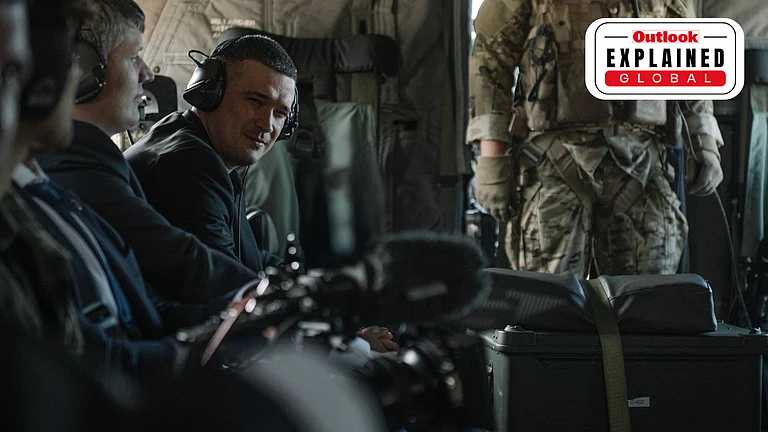
Previous Ukrainian Military Reshuffles
More than 10 Ukrainian generals have been fired from their positions over the course of the war.
In September 2023, Zelensky removed Defence Minister Oleksii Reznikov over corruption allegations, confirmed via a Verkhovna Rada vote. In February 2024, Zelensky dismissed Valerii Zaluzhnyi from his position as military commander-in-chief, appointing Syrskyi to take his place, according to a presidential decree. Zaluzhnyi had been the public face of Ukraine's war effort during its first two years and was widely respected by troops.
In June 2024, Zelensky introduced Andrii Hnatov as the new commander of the Joint Forces Command, replacing Yuriy Sodol, according to a presidential decree.
Advertisement
Russia's Own Command Turmoil
Russia has also experienced significant reshuffling in its own military leadership over the four-year war.
In August 2022, Vice Admiral Igor Osipov, who commanded the Black Sea Fleet, was fired. He was first suspended after the fleet's flagship Moskva was sunk in April 2022.
In July 2023, Moscow's military leadership dismissed Major-General Ivan Popov, commander-in-chief of Russia's 58th Combined Arms Army stationed in southern Ukraine, over his concerns for troops fighting without rest and criticism of Russian battlefield strategy.
Popov, in a video that appeared on Telegram, said he was fired after he criticised Russian Defence Minister Sergei Shoigu's handling of the war. Popov's unit was in charge of the Zaporizhzhia region, where the Ukrainian counter-offensive had progressed slowly. Despite that, Popov was removed and he said that while the Ukrainians could not hit them in the front, their own defence leaders struck them in the back.
Advertisement
"As many regiment and division commanders have said today, the Ukrainian Armed Forces failed to breach us on the frontline, but instead we have been struck from the rear by our own senior commander treacherously and despicably. Defanging the army at the most difficult and tense moment," Popov was quoted as saying by The Drive, citing a translation of the original video.
Popov complained about "the absence of counter-battery warfare, absence of artillery reconnaissance stations, and massive sheep's death of our brethren from the enemy's artillery". He also said that he remains in touch with "all soldiers, sergeants and officers of the Army".
In August 2023, Russia removed Sergey Surovikin, nicknamed "General Armageddon", from his post as commander of Russia's Aerospace Forces. Surovikin was linked to the Wagner mercenary group and was dismissed two months after its short-lived mutiny against Russia's military leadership. Reports emerged that Surovikin was among at least 13 senior officers detained for questioning, with some later released, and around 15 suspended from duty or fired in the wake of the Wagner mutiny.
Advertisement
Published At: