Hamas has announced it will dissolve its Gaza government and transfer civilian authority to a UN-backed technocratic committee under a US-brokered ceasefire deal.
The US-backed Board of Peace said it would judge Hamas by "actions, not promises".
It insisted that all weapons must ultimately come under the control of the National Committee for the Administration of Gaza.
Hamas Dissolves Gaza Government: Why Is It Refusing To Disarm?
The group has not agreed to disarm, leaving a major sticking point in negotiations with Israel and raising doubts over the implementation of the ceasefire's next phase.

Summary
Hamas has announced it will dissolve the administration that has governed Gaza for nearly two decades and transfer civilian authority to a UN-backed technocratic committee under a US-brokered ceasefire deal, marking its biggest political concession since winning the 2006 Palestinian legislative elections and seizing full control of Gaza from rival Fatah in 2007.
Why did Hamas dissolve its government?
The group said the move demonstrated its commitment to Gaza's reconstruction after years of war, but it stopped short of committing to disarm or hand over its weapons to an international force.
The administration is expected to be transferred to the National Committee for the Administration of Gaza (NCAG), a technocratic body created under the ceasefire framework.
The Board of Peace, a US-backed international body chaired by US President Donald Trump and established to oversee Gaza's post-war governance, reconstruction and security transition under a UN-backed peace framework, acknowledged Hamas' announcement but said it would judge the move based on "actions, not promises." In a statement on X, the board stressed that the NCAG must ultimately control all weapons in Gaza, in line with the ceasefire agreement.
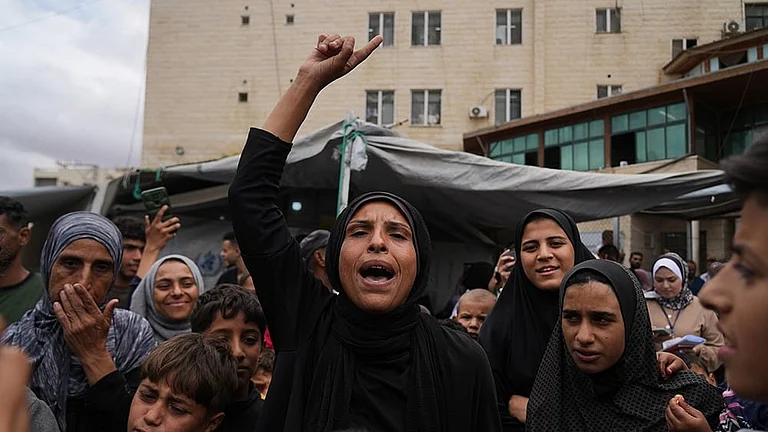
Why is Hamas refusing to surrender its weapons?
Although Hamas has agreed to let go of governance, it has not agreed to give up its military wing or arsenal.
At a news conference on Monday, Ismail al-Thawabta, director-general of the Hamas-run Government Media Office, said "only technical and professional staff" would remain in place to manage the enclave's day-to-day affairs, AP reported.
"All employees working in service provision are 'state employees' and are fully prepared to work under the National Committee for the Administration of Gaza," al-Thawabta said at Al-Aqsa Hospital in Deir al-Balah.
Hamas spokesperson Hazem Qassem described the move as "a positive step forward on the path to implement the ceasefire deal."
Israeli Foreign Minister Gideon Saar dismissed the announcement, arguing it was intended to avoid the issue of disarmament.
"As long as Hamas retains its weapons, any civilian government will of course operate as Hamas dictates," Saar wrote on X.
Advertisement
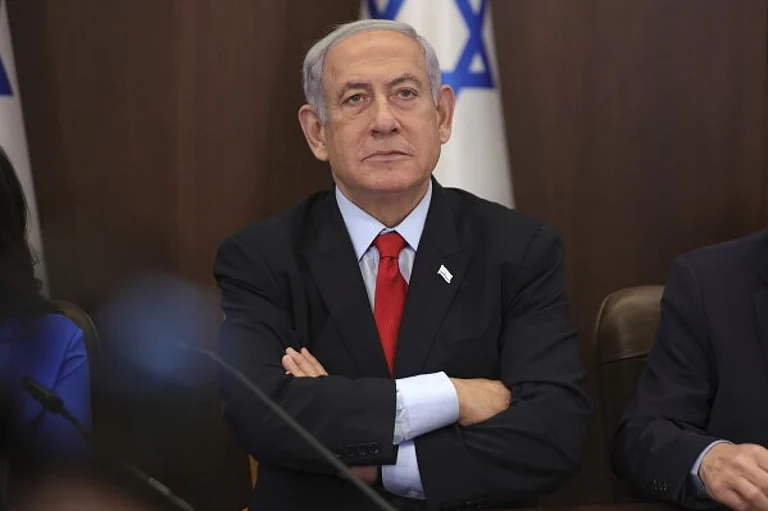
Why is Israel demanding Hamas' disarmament?
While Hamas has agreed in principle to transfer governance, it has not committed to unilateral disarmament, a central demand of both Israel and the United States.
The NCAG, which Hamas has offered to empower, has been unable to enter Gaza since its creation in January because Israel has blocked its deployment, raising uncertainty over when any transfer of authority can actually take place, Guardian reported.
Nine months after the ceasefire was signed, negotiations between Israel and Hamas remain largely stale over the agreement's second phase, particularly the issues of Hamas' disarmament and Gaza's reconstruction.
Hamas insists that the first phase of the ceasefire must be fully implemented before discussions on its weapons can begin.
Qassem told Agence France-Presse:
"Hamas has taken a new step in that it will no longer be in charge of the Gaza Strip, in order to remove any pretexts for the occupation, which continues its aggression and war of extermination."
Advertisement
Netanyahu had also recently said that he directed the Israel Defense Forces to increase control of Gaza to 70%. "We are currently squeezing Hamas; we now control 60% of the territory of the Strip - you know this. We were at 50, we moved to 60. My directive is to move to," he said
"Let's go step by step. First of all, 70. Let's start with that. We're pressing them from all sides, we'll deal with the remnants."
What happens next?
The first phase of Trump's peace plan halted the war, secured the release of Israeli hostages held by Hamas in exchange for Palestinian prisoners, and led to a partial withdrawal of Israeli forces from Gaza.
In mid-January, US Middle East envoy Steve Witkoff announced the launch of the second phase, which aims to permanently end the war through Gaza's demilitarisation and a full Israeli military withdrawal. However, negotiations have remained stalled.
Advertisement
The 20-point peace plan states:
"Israeli forces will withdraw to the agreed upon line to prepare for a hostage release. During this time, all military operations, including aerial and artillery bombardment, will be suspended, and battle lines will remain frozen until conditions are met for the complete staged withdrawal."
Despite the ceasefire, Israeli strikes continue almost daily. On Monday, at least five people were killed in Gaza in Israeli attacks.
Israeli Prime Minister Benjamin Netanyahu has repeatedly warned Hamas that it will be disarmed "either the easy way or the hard way."
Meanwhile, the Board of Peace has welcomed Hamas' decision to dissolve the "Emergency Committee" but reiterated that implementation will determine its assessment.
In its statement, the board said its evaluation would depend on "actions, not promises" and stressed that any transition must follow the agreed roadmap for governance, security and reconstruction.
It said discussions should now focus on enabling the NCAG to assume full governing authority and reiterated that the guiding principle remains "one authority, one law and one weapon."
Advertisement
The board added that all weapons must ultimately be consolidated under the NCAG's control, as required by the Comprehensive Gaza Peace Plan and UN Security Council Resolution 2803, and said the committee must be able to exercise its mandate independently and make the administrative and governance decisions entrusted to it.
Published At: