DRC's Bundibugyo Ebola outbreak has become the country's largest on record
Africa CDC is examining whether the virus has undergone genetic changes
Insecurity, displacement and limited healthcare access are complicating containment efforts
Ebola Virus Behind DRC Outbreak Could Be Mutating: Reports
The Bundibugyo virus outbreak has become the largest Ebola outbreak ever recorded in the Democratic Republic of the Congo, with more than 3,600 confirmed cases and 1,500 deaths reported as of July 30.

Summary
The Ebola virus behind a major outbreak in the Democratic Republic of the Congo (DRC) could be mutating, prompting health officials to investigate whether changes in the virus are contributing to the severity and spread of the outbreak, The Guardian reported.
Dr Jean Kaseya, director general of the Africa Centres for Disease Control and Prevention (Africa CDC), said the organisation was working with WHO Director-General Tedros Adhanom Ghebreyesus to examine whether the virus had changed. “To check if there is no additional issue, or maybe if the virus is not mutating,” Kaseya said, as per the report.
Outbreak Expands
The outbreak, caused by the Bundibugyo virus, began in the Mongbwalu health zone in Ituri province and has since spread across five provinces and 49 health zones.
According to the WHO, 3,605 confirmed cases and 1,587 deaths had been recorded in the DRC as of July 30, with 651 people recovering. The outbreak has surpassed the previous largest Ebola outbreak recorded in the country, which resulted in 3,317 confirmed cases between 2018 and 2020.
Ituri accounts for 88 per cent of confirmed cases and 82.6 per cent of deaths recorded in the current outbreak.
The WHO said 151 healthcare workers have also been infected, including 44 who have died.
Containment Efforts
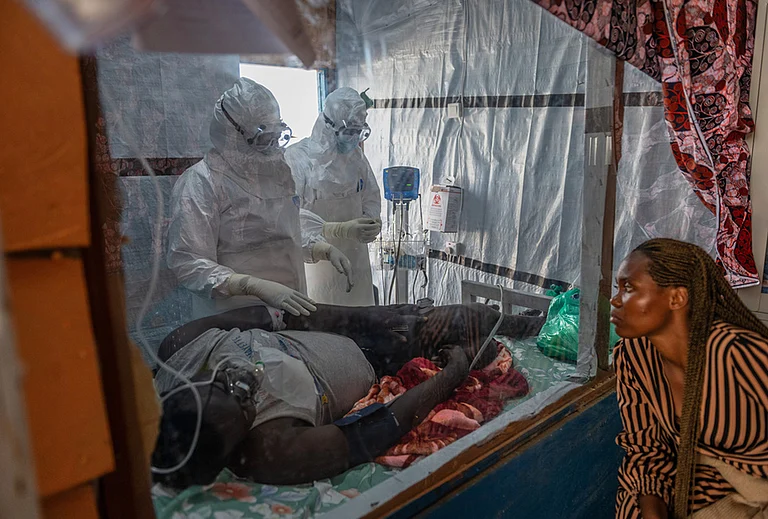
The outbreak has been complicated by insecurity, population movement and limited access to healthcare in affected areas. The WHO said response efforts include surveillance, laboratory testing, contact tracing, infection prevention and clinical care.
Uganda, which borders the DRC, declared its own Bundibugyo outbreak over on July 28 after 42 days without a new locally transmitted case. However, the WHO warned that the country remains vulnerable to imported infections while transmission continues in the DRC.
The WHO has assessed the risk within the DRC as very high and the risk to Uganda as high, while assessing the global risk as low.
Advertisement
Published At: