For an event that had been the subject of feverish speculation for the better part of three years, Apple's latest keynote delivered exactly the kind of theatre Cupertino does best, a slow-burn reveal that saved its biggest swing for last.
Apple Finally Folds: Inside The iPhone Duo Launch
After years of speculation, Apple has finally entered the foldable race with the iPhone Duo — alongside a refreshed iPhone 18 Pro, Apple Watch and AirPods lineup

Between a flagship chip refresh, a health-first Apple Watch and an AirPods update aimed squarely at the mass market, the real story was unmistakable: Apple has entered the foldable race, and it has done so on its own terms, several years after Samsung and the Chinese OEMs made the category mainstream.
The Main Event: iPhone Duo
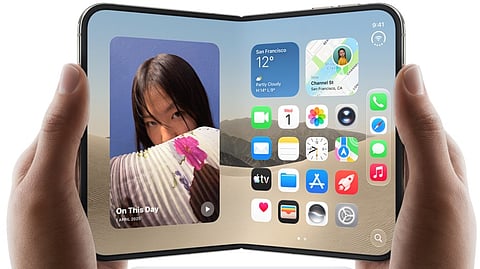
Every Apple launch has one moment engineered to dominate the news cycle, and this year it was the iPhone Duo, the company's first foldable iPhone.
The wait shows in the execution. Rather than rushing a me-too hinge phone, Apple has leaned into the two things it typically obsesses over before entering a category late: material engineering and software coherence.
The hardware brief reads like a masterclass in incrementalism disguised as innovation. A nano-texture finish tackles glare and, more importantly for a foldable, the visibility of the crease, historically the Achilles heel of the category.
The display stack itself is a small marvel of materials science: a stiff polymer cover, scratch-resistant coating, protective glass and a titanium plate held together by viscoelastic adhesives that let the layers move independently as the phone folds, without warping the panel.
The hinge, built from more than 100 precision components and assembled using AI-guided manufacturing and laser scanning, is Apple's answer to the crease-and-durability problem that has dogged the entire foldable category since Samsung's first Galaxy Fold stumbled out of the gate.
Powering it all is the new A20 Pro, tasked with the unusually demanding job of driving two displays simultaneously, a direct-die thermal design and vapor chamber are doing the unglamorous work of keeping that under control, with Apple claiming 35% higher sustained performance over the iPhone 17 Pro. A new in-house C2 modem, folding baseband, transceivers and power management into a single platform, rounds out the pitch for tighter vertical integration.
Advertisement
But hardware was never going to be the hard part for a company that ships as many phones as Apple does. The real bet is on iOS 27, redesigned around the idea that a folding iPhone should behave like a small iPad rather than a stretched phone.
Controls have moved to the sides for thumb reach, the dock has gone vertical, and the interface intelligently keeps content away from the hinge depending on how the device is held or partially folded.
The multitasking layer, side-by-side apps, dual windows of the same app, pinned video, is Apple's attempt to give the format an actual productivity case rather than a novelty one, while a StandBy mode that finally works unplugged turns the Duo into a bedside companion.
Early developer buy-in from Zoom, Slack and Netflix suggests Apple has done the unglamorous work of lining up its ecosystem before launch, a discipline that eluded competitors in the category's early years.
Advertisement
The takeaway for the market: Apple entering foldables, however late, is likely to do for the category what the original iPhone did for touchscreen smartphones: legitimise it for a mainstream buyer who was waiting for the crease, the price and the software to make sense simultaneously. Component suppliers, display makers and the Android foldable ecosystem should expect this to reset both design and pricing benchmarks.
The Main Event: iPhone Duo
The Steady Hand: iPhone 18 Pro
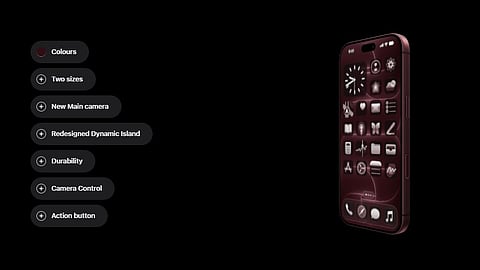
If the Duo is Apple's story about the future, the iPhone 18 Pro is its reminder that the core business still runs on annual, disciplined iteration. The A20 Pro's 2nm process, faster super cores, a 40%-quicker GPU and a Neural Engine that has doubled to 32 cores are all in service of a single narrative Apple keeps returning to: on-device AI headroom for Siri and third-party LLMs alike.
The camera system, a 48MP Fusion main sensor with genuine variable aperture, is the most consequential physical upgrade, promising roughly 50% more light intake in dim conditions without the usual trade-offs.
Advertisement
Equally notable is Reference Image, a provenance feature that timestamps sensor data at capture to create a tamper-evident record of a photo, paired with support for Google's SynthID.
In an era where AI-generated and AI-edited imagery is eroding trust in photography, this is Apple positioning the camera not just as a creative tool but as a credibility layer, a smart, low-cost hedge as authenticity becomes a genuine enterprise and journalistic concern.
Battery life posts its largest generational gain yet, and the new Siri, built on Apple's most capable on-device foundation model with Private Cloud Compute for heavier lifting, claims integration across more than 300,000 third-party apps and 2.5 billion daily requests. That figure alone signals how central Siri has become to Apple's AI narrative after a rocky couple of years of playing catch-up to OpenAI and Google.
The Steady Hand: iPhone 18 Pro
Wearables: A Health-First Apple Watch
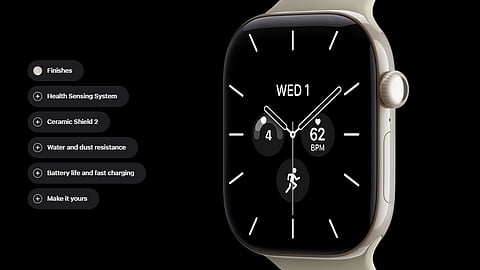
The Apple Watch Series 12 and Ultra 4 make the clearest case yet that Apple sees the wearable line less as a smartphone companion and more as a health-monitoring platform in its own right.
Advertisement
A reworked sensor array, larger green LEDs, ring-shaped photodiodes, more electrode surface area, enables background heart-rate readings every five seconds, a 60x jump in sampling frequency.
Paired with a new Health Age metric that blends Watch data with bloodwork, and an Apple Intelligence-powered redesign of the Health app, Apple is clearly angling for relevance in the preventive-health and insurance-linked wellness conversation, not just the fitness-tracker one.
The ambient-AI features, Sound Recognition, Live Rewind, Siri Recap, extend Apple's push into passive intelligence, with the company taking care to underline that raw audio is never stored, a nod to the privacy scrutiny such features invite.
Wearables: A Health-First Apple Watch
Audio: AirPods 5 Plays It Straight
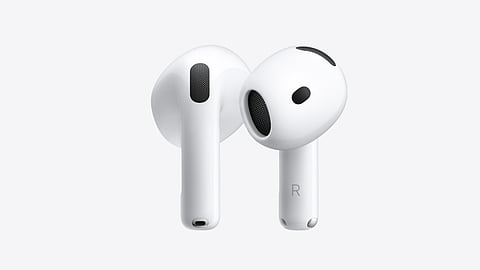
The AirPods 5 update is the least dramatic story of the day, and deliberately so, better ANC (50% stronger), adaptive EQ, hands-free Siri and live translation, at a $129 entry price with a $149 tier adding stem controls.
It's a volume play, designed to keep Apple's audio franchise, still the most dominant in the category, priced competitively as Chinese rivals close the feature gap from below.
Audio: AirPods 5 Plays It Straight
The Bigger Picture
Taken together, this was an event about Apple closing gaps rather than opening new ones, closing the foldable gap with Samsung and Huawei, closing the AI-assistant gap with Google and OpenAI, and closing the photo-authenticity gap opened up by generative AI.
None of these are first-mover plays. All of them are Apple doing what it has always done best: arriving late, engineering deeply, and betting that integration beats speed.
Whether the iPhone Duo justifies its inevitable premium pricing will be the real test, but for an industry that has spent three years wondering when Apple would fold, that question has finally been answered.
Published At:
Tags