‘The Goa I Photographed Has Largely Disappeared,’ Karan Kapoor
Serendipity Arts Festival returns to Goa from 13-20 December, 2026 for its 11th edition. One of the displays this year will be ‘My Goa 1976-1996: Photographs by Karan Kapoor’. Curated by Ram Rahman, the exhibition will showcase photographer, actor and model Karan Kapoor’s intimate portraits of everyday Goan life–fishermen, priests, musicians and neighbours. Kapoor spoke to Neha Kirpal about the exhibition, his family’s connection with Goa and how it has evolved over the years

What is the idea behind your photo exhibition at the Serendipity Arts Festival and what inspired it?
I took these photographs over a period of nearly 20 years, beginning when I was a teenager. I was simply photographing the people, places and everyday life around me in Goa, a place that had been part of my childhood. Over time, Goa has changed enormously. Going through my negatives, I realised that many of the people and places I had photographed were no longer there, and that I had inadvertently recorded a way of life that was disappearing. I approached Ram Rahman with the idea of bringing these photographs together and he agreed to curate the exhibition for Serendipity Arts Festival. It’s a very personal collection of photographs. I’ve also put together a book called Goa: A Place, A Time, as a tribute to my parents, who gave us such an extraordinary childhood in Goa.
Can you tell us more about your journey in photography?
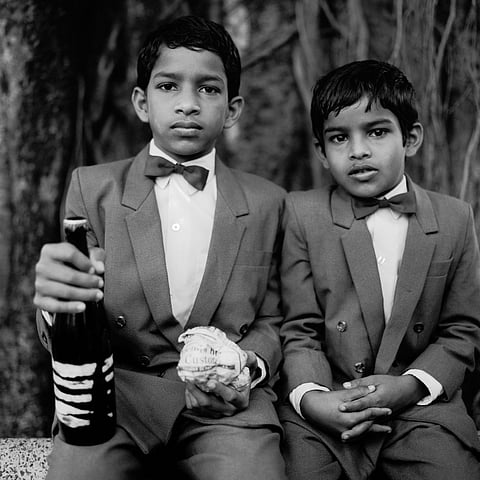
I started taking photographs when I was quite young, initially with a Kodak Instamatic. By my late teens, photography had become a serious interest. My background was in reportage. I was always interested in people, their lives and the stories around them. One of my earliest projects was photographing the Anglo-Indian communities in Bombay and Calcutta. In 1981, I met the American photographer Mary Ellen Mark in Calcutta. She encouraged me to continue photographing and gave me 20 rolls of Kodak Tri-X film. That was wonderful encouragement for a young photographer. I moved to London in 1988 and gradually developed a career in advertising and editorial photography, working internationally on campaigns for a variety of clients. But my early documentary photographs have always remained important to me. They were made entirely for myself, without a client, a brief or any commercial considerations.
Coming from a family of distinguished theatre practitioners, who were some of your biggest inspirations growing up?
Both sides of my family come from the theatre. My paternal grandfather, Prithviraj Kapoor, founded Prithvi Theatres, while my maternal grandparents, Geoffrey and Laura Kendall, travelled across India with their Shakespeareana theatre company. Growing up, we were surrounded by actors, directors, writers and artists. Theatre was simply part of our everyday life. My parents, Shashi and Jennifer Kapoor, were enormously influential, not necessarily in encouraging me to become a photographer, but in exposing us to different people, places and cultures. I was fortunate to meet some remarkable people through them. In 1980, I apprenticed with the cinematographer Govind Nihalani on the film Kalyug, which was a fascinating introduction to filmmaking. What I took from that upbringing was a curiosity about people and an appreciation of storytelling.
What is your earlier project ‘Anglo-Indians’ about?
I began photographing the Anglo-Indian communities in Bombay and Calcutta around 1980, when I was 18. I was fascinated by the community, particularly the older generation, who seemed to inhabit a world that was gradually disappearing. Their homes, clothes, traditions and their relationship with a changing India interested me. I spent time meeting people and photographing them in their homes and surroundings. It was never a formal documentary assignment. I was simply drawn to these characters and their stories. Many years later, I brought these photographs together with my Goa work in a project called ‘Time & Tide’. The two bodies of work seemed to belong together, both concerned with people, memory and a particular period of Indian life.

How deep is your family’s connection with Goa and your own association with it?
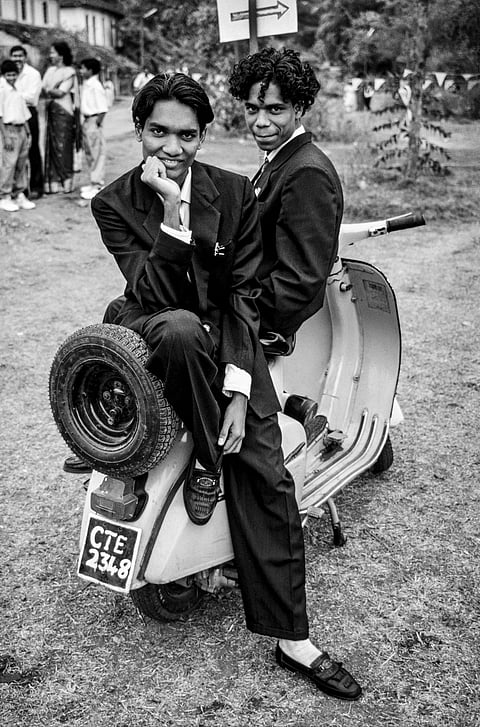
Our family first went to Goa in 1970, when I was eight. We stayed at the Mandovi Hotel in Panjim before discovering Baga, which was then a very quiet fishing village. We initially rented a house behind what became known as the Love House, a simple beach shack in Santo Vaddo, Baga. From the early 1970s, that shack became our family home during the holidays for more than 30 years. There was no electricity or running water, and we drew water from a well. My parents loved the simplicity of it. We spent Christmas, Easter and other school holidays there. We got to know the local families, fishermen and villagers. As I grew older, I travelled around Goa on my Royal Enfield motorcycle, carrying my Nikon and Hasselblad cameras, stopping in villages and tavernas, meeting people and taking photographs. Goa was never really a holiday destination for us. It was our second home.
How has Goa evolved over the years as observed through your lens?
The Goa I photographed has largely disappeared. When we first went there in 1970, Baga was a small fishing village. There were very few tourists and life revolved around the local community, the fishing boats, the church and the changing seasons. I was particularly drawn to the fishermen, village festivals, weddings, musicians and the older Portuguese-influenced houses. Over the years, tourism transformed the coastline. The little pathways became roads, the fields were built over and the beach shacks multiplied. I’m not suggesting that everything was better in the past. But looking at the photographs now, I’m struck by how much of that particular way of life has vanished. Some of the places in my pictures would be almost impossible to recognise today.
What are you currently working on?
At the moment, much of my attention is on the Goa exhibition and the accompanying book. Going through my archives has been a fascinating experience. You discover photographs you had forgotten about and sometimes an image that meant very little to you 40 years ago takes on a completely different significance. I still enjoy photographing people, whether through commissioned work or personal projects. I’m also interested in revisiting more of my earlier documentary work. There are thousands of negatives in my archive and I suspect there are other stories waiting to be rediscovered.