Indie films have always aspired to secure both a theatrical release and a digital OTT debut.
This ambition is realized through innovative production approaches and the support of those willing to invest in and trust indie voices.
The following article features interview excerpts from Ranjan Singh, Shiladitya Bora, Chhatrapal Ninawe, Rajat Kapoor, Nishu Dikshit and Pooja Porte.
The Ever-Persistent Spirit Of Indie Cinema : Mapping Production & Distribution Trends
The “indie” has long remained both an aesthetic and systemic outlier. Yet through it all, the industry endures—continually discovering creative, innovative and logistical pathways that empower the art of guerrilla storytelling.

Summary
For a filmmaker, the dream has always been to witness the luminous dance of their film on the silver screen. But in India, this dream is often denied to those who come without a strong studio backing. However, in the recent past, a small but resolute group of independent filmmakers have finally begun to crack their way through the gatekeeping of theatrical viewership. This year, Tanmaya Shekhar’s Nukkad Naatak (2026) joined the ranks of such films as a self-funded, independently marketed project that enjoyed a monumental run in Indian theatres. The film’s resonant voice extended beyond traditional indie circles, drawing in audiences who embraced it and championed it through word of mouth. Filmmaker Aranya Sahay’s Humans In The Loop (2024) too became one such film, which charted a rare trajectory from humble roots to an Oscars campaign trial. After the film’s festival premiere, Sahay invited people to host interactive screenings at universities, cultural centres and film clubs across the country to over thirty venues. Each screening sparked its own wave of Instagram posts and reviews, carrying the torch forward. At one such community screening in Mumbai, the film caught the attention of Kiran Rao and ethnographic filmmaker Biju Toppo, who later came on board as executive producers. This led to a limited theatrical release followed by a wider audience reach on Netflix.
Last year, several other indie films broke traditional systemic barriers to reach theatre audiences and prestigious award ceremonies. Be it Karan Tejpal’s Stolen (2023), Raam Reddy’s Jugnuma: The Fable (2024), Lakshmipriya Devi’s Boong (2024), Payal Kapadia’s All We Imagine As Light (2024) or Rohan Kanawade’s Sabar Bonda: Cactus Pears (2025)—these indie films exceeded both creative and logistical expectations. Parallel and independent cinema in India has always adapted and thrived precisely because it has rarely been granted institutional acceptance or sustained alternative exhibition within the industry. Rajat Kapoor, behind films like Raghu Romeo (2003), Mithya (2008) and Aankhon Dekhi (2013) talks about how indie filmmaking is as much about keeping your fingers crossed as it is about doing all the hard work: “For some intangible, almost crazy reason, people have always kept making independent films despite the pitfalls. That’s what keeps the indie spirit alive. Every film carries its own fate—even if you do everything right, if it doesn’t reach audiences who champion it through word of mouth, it simply won’t make it.” There’s no shying away from the fact that financial aid has and will remain the most prominent part of what decides audience visibility. In fine print, though, the mantra remains clear: innovations in both filmmaking and marketing become the driving force empowering an indie film’s reach. N
Advertisement

Recently, Kanu Behl’s Agra (2024) struggled to secure adequate screens in multiplexes. In response, several filmmakers and producers signed a petition in its support. While the effort brought together collective voices and briefly increased the number of screens, the intervention ultimately remained largely ineffective in altering the film’s broader theatrical fate. Producer Nishu Dikshit, who backed Kaisi Ye Paheli (2025), highlights the importance of show timings as much as obtaining screens in increasing visibility of such films: “Big films get prime time show timings by default. If our indie films are stuck with odd weekday hours, it’s as good as not having a show.” Even after a festival run, independent films often release in limited theatres with very few shows and higher ticket prices, making them accessible only to restricted audiences. Karan Kandhari’s Sister Midnight (2024) is a case in point—a film that garnered praise internationally, yet remained difficult for theatrical audiences to discover before it was released on Prime Video. While Agra managed a limited theatrical release in India, the fate of films like Honey Trehan’s Panjab 95 and Sandhya Suri’s Santosh (2023) remains undecided, left at the mercy of regulatory bodies such as the CBFC. The question remains: Is the traditional release model still worth negotiating with or does the future lie in building parallel circulation systems outside it?
Advertisement
With the rise of social media, it briefly became easier to market films and reach large audiences at a cheaper cost than print. But when the economy of attention is spread across several platforms and content forms—alternative creative strategies become the most valuable tools for survival. Ranjan Singh, the producer and distributor behind films like Bad Girl (2025), Songs Of Forgotten Trees (2025), Jugnuma: The Fable (2024) and Nishaanchi: Part 1 & 2 (2025) spoke instead about the main culprit: “The problem isn’t just exhibition and getting more screens, which is what many of the filmmakers I spoke to, who signed that petition, are talking about. The larger issue is marketing money. Where do you raise it from?” If not monetary aid or marketing muscle, the simple act of promoting each other’s films can help independent cinema reach audiences. Yet, a sense of unanimity within the indie film circuit remains largely absent.
Advertisement

Agra (2024) IMDb

Jugnuma: The Fable (2024) Prime Video
Singh helped expand multiplexes across cities during the early boom, when the goal was simple: release as many Indian films as possible. Earlier, it was slightly easier to market films and secure theatrical runs. Independent hits like Bheja Fry (2004), Khosla Ka Ghosla (2006), and Do Dooni Chaar (2010) acquired by UTV performed strongly. Around 2012, multiplexes began prioritising big releases—programming, show counts and pricing followed that shift. As he notes, multiplex owners currently aren’t invested in actively supporting independent cinema; they respond mainly to audience demand and cost recovery. The onus now lies on the indie filmmaker to innovate, collaborate and find platforms for their film to thrive in. Pooja Porte, a producer & aggregator in the industry calls this an opportunity to move beyond inherited limitations: “Learning how to self-market has become an essential survival skill where indie filmmakers are no longer only content creators but also curators, and community-builders.”
Advertisement
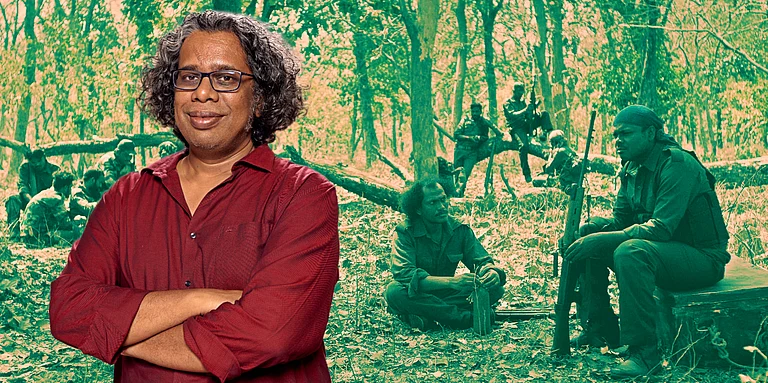
Multiplex chains like PVR Inox and Cinepolis are largely concentrated in Tier I and Tier II cities. For many eager cinephiles in smaller suburban towns and cities, the big-screen experience becomes an aspiration—compromised on a touch-screen phone or transformed into a family day out to the nearest city with a multiplex. With Picturetime’s inflatable theatres enabling access in remote regions, Chhatrapal Ninawe’s award-winning Marathi film Ghaath (2023) reached surrendered Naxalites in Gadchiroli, where it was shot and whose lives it draws from. Backed by Shiladitya Bora’s Platoon One Films, the Berlin-premiered film ran a parallel theatrical journey alongside the festival circuit, marking a quiet but revolutionary moment for indie cinema. Bora implies that India’s multiplexes, limited to 3–5 screens, restrict programming, highlighting the need for superplexes and alternative circulation, as the European arthouse model isn’t viable here. Similarly, Laalo (2025), produced by Vetrimaaran and presented by Anurag Kashyap, became the first-ever ₹100 crore indie Gujarati film. It was taken by its makers to villages and small towns—the film’s success eventually skyrocketed through the grassroots circulation. For regional films like Ghaath and Laalo to travel to international audiences, while also reaching rural ones feels like a collective achievement for independent cinema.
Independent cinema today competes not only with other indie titles but also with big-budget commercial projects for digital viewership, placing it in an especially precarious position. Across formats—series, documentaries or feature films—OTT has expanded revenue pathways for indie filmmakers. In some cases, it has even enabled theatrical releases if audience response is strong, as with Manoj Bajpayee’s Sirf Ek Bandaa Kaafi Hai (2023), which premiered on Zee5 before its cinema run. At the same time, an informal mandate has emerged: many OTT platforms now expect a theatrical release before considering a film. Dikshit notes, “This is merely for eligibility, not assurance. Filmmakers still have to invest in marketing and distribution, sometimes at costs rivaling the production budget.” She also points out that with OTT’s rise, overall theatrical demand has dropped. With formulaic mainstream films released amid uncertain box-office returns, theatrical distribution is becoming an increasingly precarious model. Director Ninawe argues that indie cinema must be treated as an experimental space not just by independent filmmakers but also by mainstream producers and distributors. As older films are recycled through nostalgia re-releases, indie cinema could instead become a laboratory for understanding what contemporary theatrical audiences truly respond to.

2025 saw some of the best Indian indie cinema, including Dibakar Das Roy’s Dilli Dark (2025), Varsha Bharath’s Bad Girl (2025), Vipin Radhakrishnan’s Angammal (2024), Raam Reddy’s Jugnuma: The Fable (2025) and Jayant Digambar Somalkar’s Sthal (2023). Audiences responded fairly positively—watching these films both in theatres and later on OTT or even through pirated copies. Bora expressed his admiration for the indie form, saying, “Independent filmmaking is not low budget, it’s not lesser than something else and it’s not a charitable cause. The truth is that people watch films because they are excited by what they see, not because they want to ‘support’ an indie.” But one thing is clear: most of these films relied heavily on word of mouth and co-existing support systems, which are far from consistent.
Singh emphasises, “As a producer, I’ve tried putting directors together. For Jugnuma: The Fable (2025), I got sixteen directors to come together and promote the film. So it was possible then, but it might not be possible for the next film.” There’s an urgent need for an association for indie filmmakers, producers and distributors—similar to the Screenwriters’ Association (SWA)—to negotiate screens, timings and shows. But even before that, the community should focus on promoting each other’s films and actually going to theatres to watch one another’s work. Porte also suggests several pathways to empower the reach of independent films: “Independent films could partner with single-screen cinemas for limited, curated runs and revenue sharing—similar to how regional films operate.” Another approach she suggested is for filmmakers to sell bulk tickets in advance to schools, organisations and film communities. Once a minimum number is reached, the screening is confirmed, reducing financial risk.

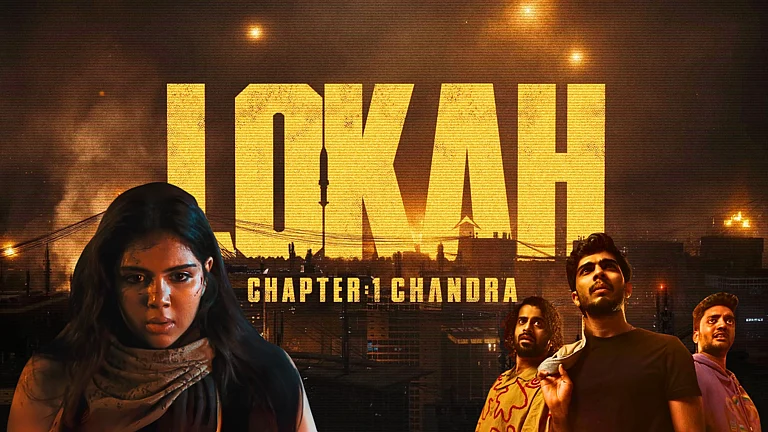
Unlike the late 2000s, today fewer writers engage with indie films and the media shares responsibility—an ecosystem thrives only when its creators are actively supported. Beyond this, independent films benefit from traditional patrons, grants, filmmaking labs and a growing emphasis on international collaborations. France, for instance, has emerged as an important partner, particularly through filmmakers like Shuchi Talati, Payal Kapadia and Neeraj Ghaywan. Alongside institutional support, several actors and producers actively champion independent voices. Rana Daggubati’s Spirit Media enabling the theatrical run of All We Imagine As Light (2025), Kiran Rao backing films like Ship of Theseus (2013) and Dulquer Salmaan supporting Lokah Chapter 1: Chandra (2025) show how indie cinema gains momentum with the right allies. Through UTV Spotboy and later Phantom Films, Anurag Kashyap too, consistently supported films like Stolen (2023), Masaan (2015), Bhavesh Joshi Superhero (2018) and Tumbbad (2018) etc. , functioning as a longstanding cultural intermediary mentoring new voices and sustaining dissent beyond star-centred cinema.
Rather than waiting for validation from closed systems, there is a need to construct open and adaptive pathways to audiences. Rao herself, is also actively developing an alternative distribution system called “Kindling Kino”, where independent filmmakers would have a platform to showcase their films, retain ownership of their IP and receive a share of profits. Another key support for independent cinema is government backing. While NFDC has initiated some efforts, a broader and more consistent role could significantly strengthen the sector. Funding remains the toughest part of independent filmmaking but it must be approached with openness and initiative as an essential part of the creative process. The current moment is critical. When filmmakers collaborate, pool resources, and negotiate access collectively, distribution ceases to be merely transactional and becomes both a creative and political act. This subtle, yet essential transformation has the potential not only to sustain Indian independent cinema but also to lay the foundations for a resilient ecosystem.
Published At: