Randeep Hooda turns 50 with five standout films marking his evolution.
Sarbjit remains among Randeep Hooda’s most transformative performances to date.
Swatantrya Veer Savarkar earned Hooda his first National Film Award.
Randeep Hooda Turns 50: 5 Best Films That Showcase His Evolution As An Actor
As Randeep Hooda turns 50, we look back at his best films that trace his evolution from a promising debutant to one of Bollywood's most intense performers and an award-winning filmmaker.

Summary
Randeep Hooda has never been an actor who seemed interested in playing it safe. From his debut in Monsoon Wedding to roles that demanded drastic physical transformations and psychological immersion, his career has been defined by a willingness to disappear into difficult characters. On his 50th birthday, his filmography offers a fascinating record of that evolution. He began with a critically acclaimed ensemble film, sharpened his craft through theatre and gradually built a reputation as one of Hindi cinema's most dependable performers when a role demanded intensity. His journey has now taken him beyond acting too, with Swatantrya Veer Savarkar earning him the National Film Award for Best Debut Film of a Director.
Randeep Hooda Best Films: From Supporting Roles To Career-Defining Performances

Raja Ravi Varma From Rang Rasiya IMDb
Ketan Mehta’s Rang Rasiya gave Hooda the opportunity to play one of India’s most celebrated painters, Raja Ravi Varma. The period drama required him to bring both artistic passion and the rebellious spirit of an artist navigating social restrictions. Hooda approached the role with conviction, earning a Filmfare nomination for Best Actor.
It remains one of those Randeep's movies that showed how comfortable he could be with characters far removed from his own image. The performance is passionate without becoming theatrical, making Ravi Varma feel like a man driven as much by his convictions as by his art.

A Still From Saheb, Biwi Aur Gangster IMDb
Tigmanshu Dhulia's Saheb, Biwi Aur Gangster was an important turning point in Hooda's career. As Babloo, a gangster who becomes entangled with a married woman, he brought menace, confidence and a rough-edged charm to the character.
Hooda's presence was difficult to overlook even in a film packed with strong performances from Jimmy Sheirgill and Mahie Gill. The role established his ability to make morally complicated men compelling rather than simply intimidating. It also became one of his most appreciated early performances.

A Still Of Mahavir From Highway Instagram
Imtiaz Ali's Highway offered Hooda a completely different challenge. As Mahavir, the brooding trucker and kidnapper who develops an unexpected bond with Alia Bhatt's Veera, he had to communicate much of the character's inner life through restraint.
Advertisement
His performance worked because Mahavir was never reduced to a conventional villain. There was anger, vulnerability and buried trauma beneath his hardened exterior. Hooda reportedly stayed away from Bhatt for around 25 days to maintain the emotional distance between their characters during filming.
Highway became another reminder that Hooda could command a film without needing the conventional trappings of a leading man.


A Still Of Sarabjit Singh IMDb
If there is one performance that best represents Hooda's willingness to physically and emotionally surrender himself to a role, it is Sarbjit. He played Sarabjit Singh, the Indian prisoner whose years in a Pakistani jail became the center of a deeply emotional biographical drama.
Hooda underwent a dramatic physical transformation for the role, losing a substantial amount of weight before rebuilding his physique within the same year. The transformation attracted attention, but it was the performance itself that made the role memorable. His gaunt appearance, physical fragility and emotional intensity captured a man broken by imprisonment yet still holding on to his sense of self.
Advertisement
The performance was widely regarded as one of his finest, with critics particularly noting the combination of his physical transformation and character work.

A Still Of Swatantrya Veer Savarkar IMDb
Swatantrya Veer Savarkar represents the latest and perhaps most significant evolution in Hooda's career. He did not merely headline the biographical drama. He also directed it, taking on one of the most demanding creative responsibilities of his career.
His portrayal of Vinayak Damodar Savarkar involved another major physical transformation and required him to inhabit the character across different stages of his life. Whatever the debates surrounding the film and its subject, it marked an important moment in Hooda's journey, demonstrating that his ambitions extended beyond performance.
That transition was recognised at the 72nd National Film Awards in 2026, where Hooda won the award for Best Debut Film of a Director for Swatantrya Veer Savarkar. It is worth noting that the National Award was for his directorial debut, not for acting.
Advertisement
Randeep Hooda's Evolution
Hooda's career is interesting because it has never followed a straight commercial trajectory. After making his debut with Mira Nair’s Monsoon Wedding in 2001, he continued to take on an eclectic mix of characters. He worked in films such as D, Once Upon a Time in Mumbaai, Jannat 2, Jism 2, Murder 3, Kick and Sultan, moving between mainstream cinema and more performance-driven projects.
But the roles that have endured are often the ones where he has had to completely change his physicality or temperament. Whether it was the intimidating gangster in Saheb, Biwi Aur Gangster, the emotionally guarded Mahavir in Highway, Raja Ravi Varma in Rang Rasiya, or Sarabjit in Sarbjit, Hooda has repeatedly chosen characters that give him something to wrestle with as an actor.
His 50th birthday therefore feels less like a milestone at the end of a journey and more like a marker in an evolving one. From a young actor making his way through Monsoon Wedding to an established performer capable of carrying demanding biographical roles, and now a National Award-winning director, Hooda has built a career on transformation.
Advertisement
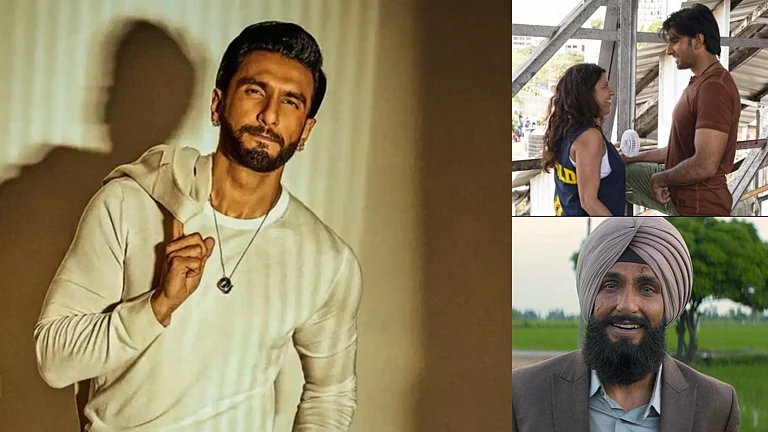
As Randeep Hooda turns 50 on August 20, these five films offer a snapshot of that journey. More importantly, they show why his best performances have never really been about simply looking the part. They have been about inhabiting it.
Published At: