Peter Max died on Monday at a hospital in Manhattan.
Max's bold, psychedelic style featuring cosmic landscapes, floating peace symbols, and vibrant colours defined American youth culture and the 1960s hippie movement.
His early life was marked by flight from Nazi Germany to Shanghai, followed by a relocation to Israel before reaching America.
Peter Max, The 1960s Psychedelic Pop Artist And Leader In 'Flower Power' Movement, Dies At 88
His Jewish upbringing and global refugee journey deeply influenced his work, with his legacy commemorated at the Shanghai Jewish Refugees Museum.

Summary
Peter Max, the pop artist whose dreamy, boldly coloured works helped define the 1960s US hippie movement, passed away at 88. He died on Monday (September 14) at a hospital in Manhattan, and a spokesperson for his family confirmed the death on Wednesday (September 16).
"My father was my best friend. I feel incredibly blessed to have been so deeply loved and to be his daughter. I hope that alongside his remarkable artistic legacy, people will remember his kindness, his gentleness, and how much he genuinely cherished putting joy into the world," his daughter said in a statement, according to The Jerusalem Post.
His bold commercial style turned him into an art powerhouse and made his work part of American youth culture.
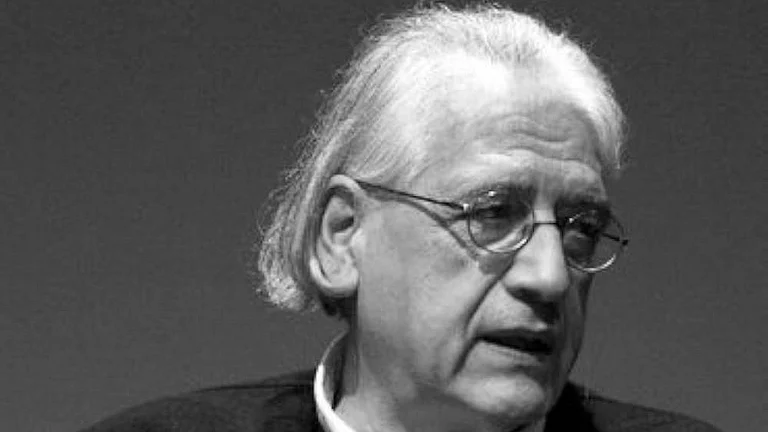
Who was Peter Max?
He was born in Berlin in 1937 as Peter Max Finkelstein. Born to Jewish parents, his early childhood revolved around escaping Nazi Germany.
His parents escaped with him to Shanghai. The Chinese city sheltered thousands of European Jewish refugees during the Nazi period. In 1948, the family departed for the newly created State of Israel and made their home in Haifa.
Jewish and Israeli influence
Max lived in Israel for roughly three and a half years, learned and spoke Hebrew and began taking painting lessons under a Viennese artist.
He later recalled that his Jewish upbringing included observing Passover, Purim and Yom Kippur. Those experiences sat alongside the migrations that had already taken him from Berlin to Shanghai and then to Israel.
Max credited Jewish enclaves across Shanghai, Israel and eventually Brooklyn with steering his creative path and personal growth. "I think that my Jewish heritage shaped me as an artist most by the love and caring I got from the Jewish community," he said in a 2017 interview with the Wisconsin Jewish Chronicle.
Advertisement
About Peter Max's legacy
That refugee journey remained central to his public legacy. Material connected to Max has been displayed at the Shanghai Jewish Refugees Museum, which documents the community that sheltered Jews fleeing Europe.
A 2022 profile captured his later years. It portrayed the Jewish immigrant as a creator whose psychedelic style grew into an unmistakable symbol of mainstream American culture.
During the 1960s and 1970s, his vivid, surreal creations became central to youth culture alongside rock 'n' roll. Canvases featured cosmic vistas, explosive stars, hovering doves, multi-hued butterflies and billowy clouds, evoking the feel of an acid trip in what period slang dubbed "really groovy".
The Beatles, Jimi Hendrix and Mick Jagger were among Max’s portrait subjects, and also counted as his friends.
His ties to Israel surfaced repeatedly in his art. Among his Jewish and Israeli-themed works was 36 Rabins, a series of portraits of assassinated prime minister Yitzhak Rabin.
Advertisement
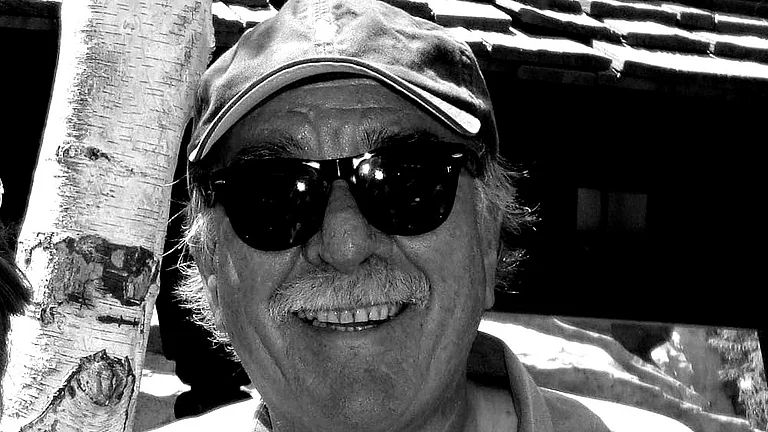
Max is survived by his daughter, Libra, and his son, Adam.
Published At:
Tags