Edoardo Gabbriellini’s The City of The Living premiered in Venice Film Festival 2026.
Emanuele Maria Di Stefano leads the subversive dramatic re-enactment of the 2016 murder of Luca Varani.
The film is an Orizzonti selection at Venice.
The City of the Living Review: A Sadistic True-Crime Breeds Edoardo Gabbriellini’s Chilling Anti-Voyeuristic Study
Venice Film Festival 2026 | Emanuele Maria Di Stefano powers this murky, sexually ambiguous Orizzonti title which retraces the 2016 murder of 23-year-old Luca Varani.

Summary
True-crime narratives trade in lurid shocks. They have this unseemly, grotesque fascination that inadvertently replaces human consideration. The rush for dramatic re-staging bleeds out any concern for the victim, what their fuller story preceding the tragedy might be. The event itself becomes the driving lens through which we view an entire life. Premiering in Orizzonti Competition at the Venice Film Festival, Edoardo Gabbriellini’s The City of The Living’s greatest triumph is that it wholly goes beyond this limiting approach, constantly finding the complex, fledgling humanity of the victim.
A young life is full of contradictions, yearnings, a desire to prove oneself outpacing wiser dealings. Youthfulness comes with the charming arrogance of trying to follow a swirl of impulses, even if they jar against more adult convictions. When nascent and fresh, we feel especially confident and hopeful of staking out into new territory. There’s an audacity that throws caution to the winds when it chances across teasing possibilities. This can appear both brash and recklessly attractive, a spirit that gradually dims as the years build on.
Still PiperPlay
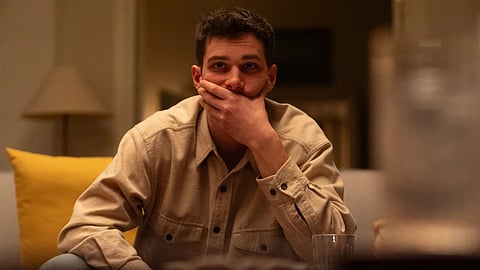
The shocking sadistic murder of 23-year-old Luca Varani in 2016 rocked Rome. Based on Nicola Lagiola’s 2020 eponymous bestseller that revisited the case, The City of the Living is an incredibly immersive chronicle of a life cut off too soon. A smart, intuitive filmmaker, Gabbriellini sets the bases but also leaves ambiguity aplenty at the edges. As much as we are acquainted with Luca (Emanuele Maria Di Stefano), there’s also ample space embedded for arresting, deliberately imprecise strokes. The mark of adroit characterisation reveals in the gulf between what we are told and that which stays elusive but incites intrigue. The screenplay brushes past the gratuitous and evokes a fascinating, flawed portrait of a youngster navigating the world.
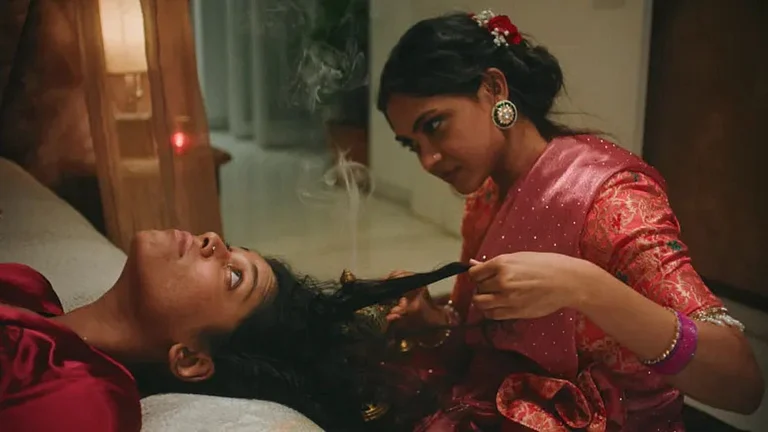
Luca is in night school but he’s not quite interested. He has an on-off relationship with his girlfriend, Marta (Gaia Merlonghi). They have been together for a while. Despite the vagaries of young love, there’s a genuine connection between the two. They care for each other in spite of all the frustrations and disappointments. Luca is at that drifting stage of life where he’s still foraging for a surer sense of himself, what he wants from the world, his relationships. Neither does he heed his father’s advice. He drops out of school and embarks on locating odd gigs to get by. He’s restless, desperate and raring to go exploring, giving himself over to what the city of Rome can help discover. Gabbriellini doesn’t immediately shoot into the seamier side. Due attention is devoted to the things that chafe at Luca regarding his purpose, his meandering pursuits.
Advertisement
The film wants to know him intimately yet affords a lot of blanks wherein we can bring our assumptions and draw conclusions. This compelling balance between sharing an intense embodiment and a considerable distance is one of the film’s strongest, cleverest suits.
Still PiperPlay
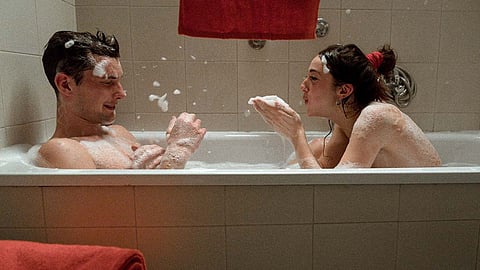
Much of the film relies on Stefano, who’s tremendously captivating. There’s never a concerted effort to wheedle our sympathies merely on account of the inevitable. The shading of that knowledge haunts the viewing experience but Stefano tries to rake in an emotionally fulsome encapsulation of youthful uncertainty. We are given free rein to follow Luca as he seeks to blend into its alleys, the secrets housed in regular apartments. An underworld slowly emerges. Scope for making some extra cash, speedier than usual work, lures Luca into being an escort for queer male clients. Occasionally, he might not be expected to perform, but just watch another’s sexual gratification, which compounds the act.
Advertisement
The City of the Living consciously resists prurience in a tale that easily invites it. Luca views escort work as a way of being able to take his girlfriend out to fancy dinners more frequently. Relationships are also about economics. Luca doesn’t come from privilege. He lives within tightened means, but has loving adoptive parents Silvana (Simona Senzacqua) and Giuseppe (Valerio Mastandrea). But he wants more.
Luca does feel beset by a bunch of ego issues and gets offended at being possibly perceived that he can’t afford to take his partner out for pricey dinners so much. Even as Marta pleads transparency and just honest dialogue, the burden of masculinity and its attendant expectations stymies Luca’s sincere love for her. There are misunderstandings and hurt. No one is in the know of Luca’s clandestine parallel life, his moonlighting to earn quick, hefty money in exchange of sexual favours.
The City of the Living pulls back from probing Luca’s own probable queerness, framing his hidden identity as a practical negotiation. It’s not interested in spelling out Luca’s thoughts and inner paradoxes. In all his thrusting need for freedom which goes to dangerous extremes, the character comes alive through Stefano’s impossibly beguiling, effortlessly melded-in performance. It’s a clear frontrunner for the Orizzonti acting awards. The City of the Living expertly weaves an unsettling undertone into Luca’s tentative interactions with his clients, laying the ground for what’s to come. When it does arrive, the effect is unforgettable. Gabbriellini ducks provocation for a more potent, immensely moving epilogue of life that must trod on despite the horror of the remembered. Merlonghi leaves an unshakable imprint in this final mile, an indelible symbol of mourning that also picks up the scraps and shows others a light. This deeply sensitive drama touches a raw, splintered chord.
Advertisement
Published At: