Written and created by Suresh Triveni and directed by Amrit Raj Gupta, Daldal releases on Amazon Prime Video on January 30.
It is a seven-episode crime thriller led by Bhumi Pednekar.
The series follows Rita Ferreira, a Mumbai police officer as she investigates a serial killer case.
Daldal Review | A Grim Cop Drama That Loses Steam Early On
Daldal could have been a sharper critique of how institutions fail vulnerable children, how complex trauma and gender bias shapes our lives. Instead, it ends up reinforcing some of the very associations it seems to interrogate.

Summary
Written and created by Suresh Triveni (Tumhari Sulu, Jalsa) and directed by Amrit Raj Gupta, the seven-episode crime thriller Daldal arrives with all the right ingredients and an impressive cast led by Bhumi Pednekar. Like the vast offerings of modern-day prestige cop dramas, this gritty series too wants to say something profound about the intersections of gender, crime and power. But despite a promising start, Daldal becomes a victim of its own self-seriousness. It is altogether too grim, too stiff, and ultimately somewhat confused in what it wants to say and how to treat its protagonist.
The Amazon Prime series follows Rita Ferreira (Bhumi Pednekar), a Mumbai police officer who smokes weed to cope with her many demons, smiles rarely, and treats her job as the only stable relationship in her life. Rita is shaped by something more insidious to articulate than straightforward violence—narcissistic parental abuse from an obnoxiously disciplinarian mother. It is an important distinction, and one of the show’s more thoughtful ideas: trauma as something more complex and normalised rather than overtly brutal.

Daldal Still Youtube
Rita is elevated to the post of DCP as a move to garner feminist brownie points. When a seemingly good samaritan is found murdered on a beach, raw chicken stuffed into his mouth, Rita gets pulled into a quicksand of a serial killer case. A second killing follows soon after, echoing the first. As bodies pile up, the investigation should have become more intense—except, the killer is revealed at the end of the first episode. Thereby, what could have been a whodunnit becomes a whydunnit.
Daldal opens strong. The first episode’s raid on a red-light area, where Rita orchestrates the rescue of young girls, is tense. It establishes the series’ visual language and its bleak moral universe with confidence. Unfortunately, the momentum slips soon after. Once the identity of the killer is revealed, the narrative pivots more toward gender politics, trauma, addiction and psychological excavation. This is intriguing territory but not explored effectively.
Advertisement

Daldal Still Youtube
Rita herself is a familiar archetype: hyper-competent, emotionally sealed off, and visibly irritated by human frailty. Think Don Draper without the charisma. Her private anguish is not countered by charm or wit. Furthermore, Pednekar plays Rita with an almost deliberate meanness in the early episodes, especially in her interactions with her junior, Indu Mhatre (Geeta Agrawal Sharma). Indu clearly adores Rita in a distinctly matronly way, which makes it even more discomforting to see their unequal power dynamics play out through the series.
Where Daldal truly falters is in its handling of gender politics through the serial killer’s backstory. The killer is shown to have endured extreme childhood trauma. There are early warning signs of psychopathy too, particularly violence toward smaller animals. However, the series repeatedly gestures toward gender dysphoria as a contributing factor to this descent into madness instead of it simply being a red herring for the cops.
Advertisement

Daldal Still Youtube
The problem is not that dysphoria is part of the character’s history, but that the show blurs the line between correlation and causation. Trauma, abuse and abandonment are stacked alongside gender nonconformity in a way that implies a dangerous linkage which, given the contemporary prejudice towards trans, queer, and gender dysphoric individuals, can send out the wrong message.
Daldal could have been a sharper critique of how institutions fail vulnerable children, how complex trauma and gender bias shapes our lives. Instead, it ends up reinforcing some of the very associations it seems eager to interrogate. The writing does not offer enough clarity to ensure that the audience understands where the show stands.
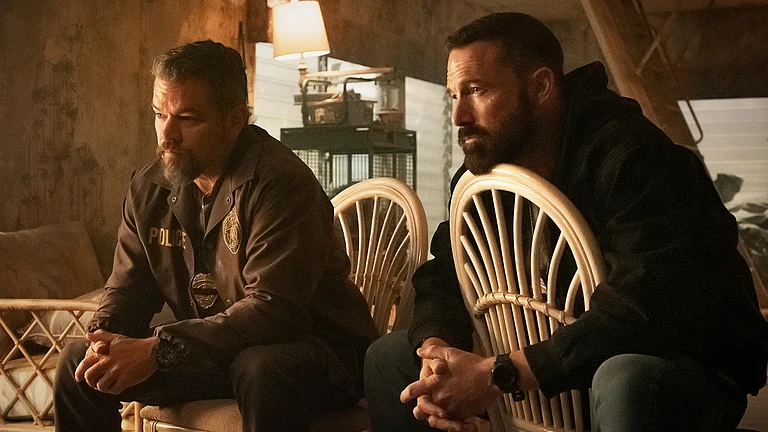
The series has inspired moments. However, as the story progresses, both direction and writing falters. Scenes linger without adding anything new and thematic beats are repeated rather than developed. Darkness alone does not make a drama profound. By the finale, the show feels uneven in its execution. Ultimately Daldal is watchable in parts (especially if you speed through scenes towards the end), but never quite able to rise above the muck it so carefully constructs.
Advertisement
Debiparna Chakraborty is a film, TV, and culture critic dissecting media at the intersection of gender, politics, and power.
Published At: